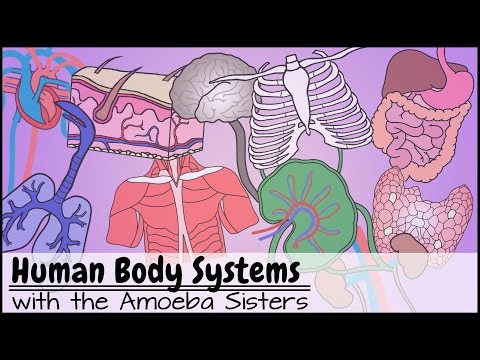
Organ systems are one of the highest levels of structural organization in an organism, second only to the organism itself. An organ system is a group of two or more organs working together to perform a certain function.
Some examples in the human body are the respiratory system (lungs and heart working together to help us breathe), the nervous system (brain and spinal cord working together to help transmit signals), and the digestive system (stomach and intestines working together to help us digest food). Each of these systems is not just made up of organs. They have a lot of other pieces to connect all the parts together and help the system work.
The organ systems in organisms are like parts of a machine. If one of them fails or breaks, the whole machine will stop working correctly. For example, if your respiratory system failed and you could not breathe, your cardiovascular system would fail because your heart could not carry the oxygen you inhaled to the rest of your body.
Though we commonly think of organ systems as being just in the human body, other organisms have organ systems as well, including small organisms like mice and even ants. Many of the organs that humans have, like a heart, lungs, and stomach, can also be found in other organisms. However, some organisms also have organs and organ systems that are drastically different from human body structures.