Illustrated · 2 min

+2 contributors


Elements of a Pedigree
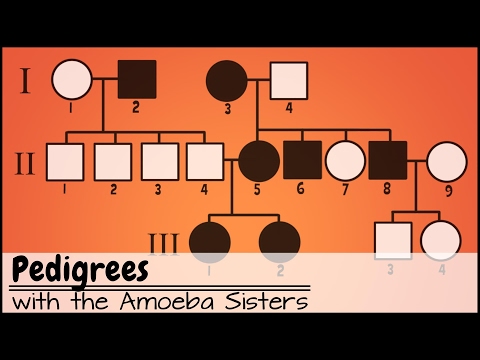
A pedigree is a diagram used to observe inheritance patterns in an existing population. The term comes from an Anglo-French phrase meaning "crane foot". It was probably called this because the branching lines of the chart look like the foot of a crane. This type of analysis is very helpful when controlled crosses are difficult, time-consuming, or unethical.
This branching diagram typically starts with two parents at the top and moves down with the following generations.

Image source: By Gabi Slizewska
Usually, the squares represent males and circles represent females. The diagram above is also color coded so that purple individuals have the trait or disease that is being studied. Sometimes the symbol will be half colored. This means that the individual doesn't have the trait but carries an allele for it.
The relationships between people are shown below.

Image source: By Gabi Slizewska
Pedigree Analysis
There are four main inheritance patterns that can be predicted using a pedigree:
1. Autosomal dominant
2. Autosomal recessive
3. X-linked dominant
4. X-linked recessive
An autosomal trait is found on any chromosome other than the sex chromosomes (X or Y). On the other hand, a sex-linked trait is controlled by genes found only on either the X or Y chromosome. Typically, we only talk about traits on the X chromosome (X-linked) because it contains far more genes than the Y chromosome does. Using a pedigree, we can also find out if a trait is dominant or recessive.
The first step to analyzing a pedigree is to see who is affected. If both males and females are (about) equally affected by a trait, then it is most likely an autosomal trait. If the trait is seen mostly in males or mostly in females, then it is probably X-linked. Y-linked traits can only affect males.
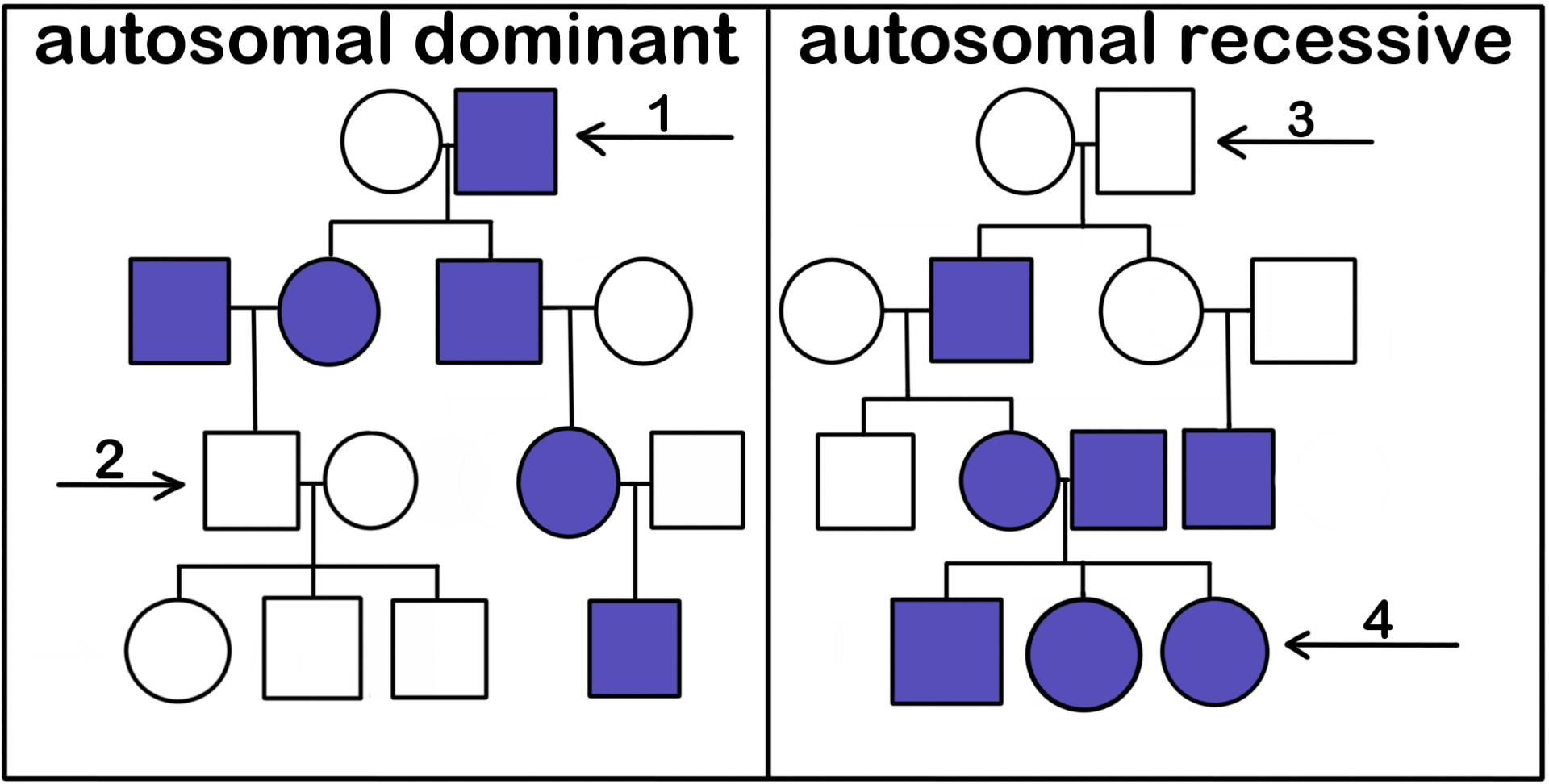
On the left is a pedigree for an autosomal dominant trait, and on the right is a pedigree for an autosomal recessive trait. The arrows show key points that can help you distinguish between these two inheritance patterns when looking at a pedigree diagram. Read on to see how.
Image source: By Gabi Slizewska
Autosomal Dominant:
- Affected children must have at least one affected parent (arrow 1 in the diagram above)
- Two affected parents can have an unaffected child (arrow 2)
Autosomal Recessive:
- Parents don't have to be affected, but both must at least be carriers (heterozygous for the trait) (arrow 3)
- Two affected parents will only have affected children (arrow 4)
- This trait often skips generations
- The trait will also appear more often in children of related parents (consanguine, also known as incest)
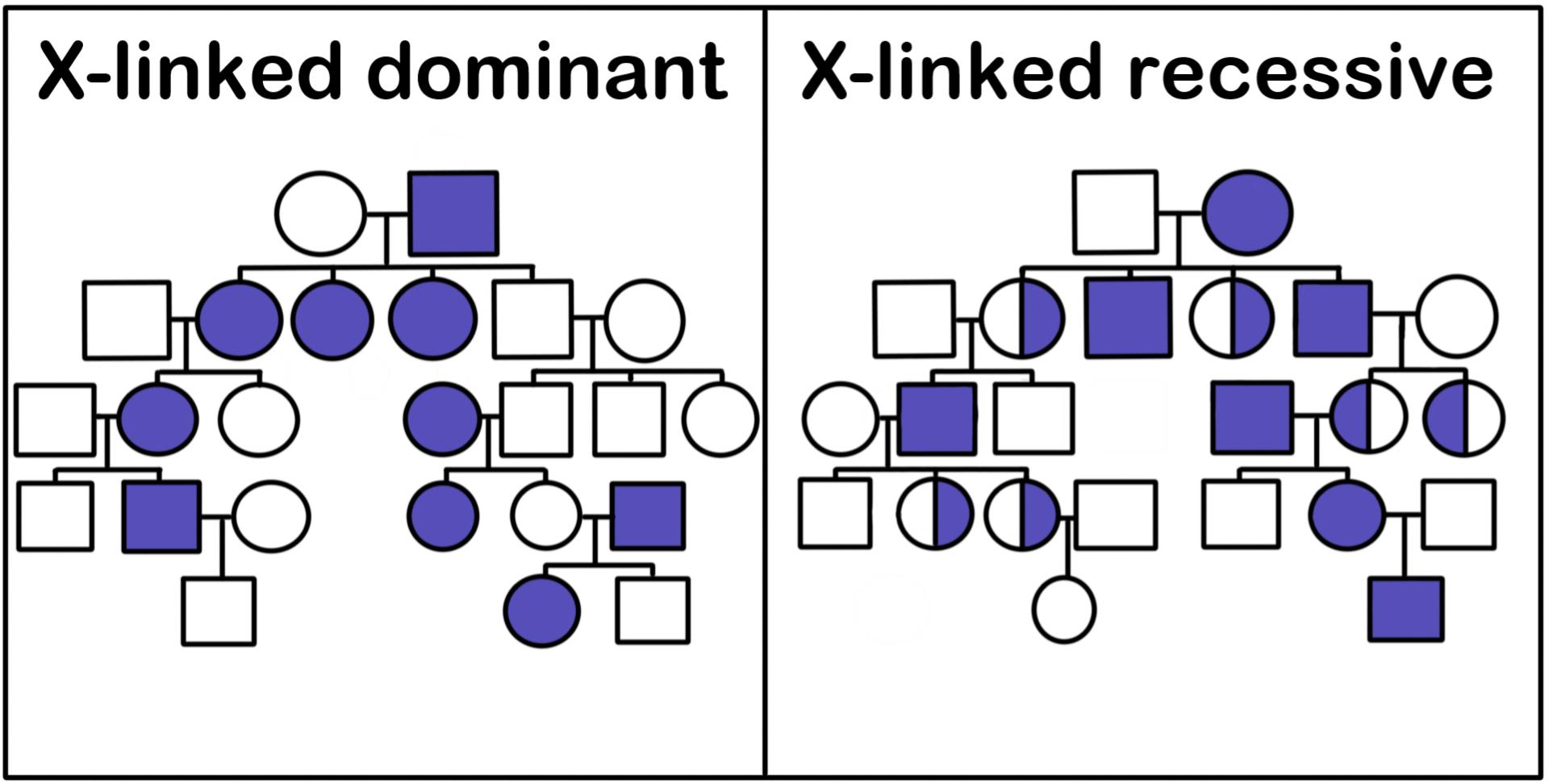
Image source: By Gabi Slizewska
X-Linked Dominant:
- Both sexes are affected, but typically seen more in females
- An affected son must have an affected mother
- Affected males will pass on the trait to all of their daughters
X-Linked Recessive:
- Both sexes are affected, but seen in males more frequently
- Affected mothers will pass on the trait to all of their sons
- The trait sometimes skips a generation