Illustrated · 1 min
By Sylvia Freeman

+1 contributors
Contributors


Image source: By Sylvia Freeman

Before this, knowNiche (Ecology) — Definition & Examples
Illustrated · 1 min
Image source: By Sylvia Freeman
Illustrated · 1 min
Predation is when one species feeds on another. The organism that kills and feeds is the predator, while the one that is eaten is the prey. The predator and prey are on different trophic levels.
The relationship between predator and prey is an extensively studied species-to-species interaction in community ecology. It plays a big role in population dynamics. The number of organisms in the prey and predator species has a profound effect on the landscape and other factors of the ecosystem. Too few predators means more prey and less vegetation.
There may even be competition between predators for prey and land. This happens because predators share a similar niche.

Image source: By China's Tiger at English Wikipedia CC BY-SA 2.5, via Wikimedia Commons
Illustrated · 2 min
Predators are carnivores. They hunt and eat other species called prey. In community ecology, this relationship is called a predator-prey interaction.
Predators keep the population size of prey in check. The number of prey also impacts the number of predators an ecological system can support. These population cycles can be measured using mathematical models, like the Lotka-Volterra model.
Predators have adapted some pretty cool features that help them find, capture, and eat their prey. Most predators have sharp canine teeth and eyes on the front of their heads.
One example of a cool predator adaptation is seen in stoats. These weasels use a tactic called the "weasel war dance" to basically hypnotize their prey by acting bonkers. It's so silly, but it's effective.
Some predators like bears and wolves have a ridge on their skull that their massive jaw muscles attach to, letting them have a terrifying bite strength. It also makes their skulls look like they have tiny mohawks. Now that's a cool adaptation.
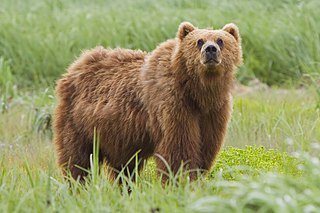
Image source: By Yathin S Krishnappa CC BY-SA 3.0, via Wikimedia Commons
Prey also have their own special adaptations to help them avoid being caught. Many types of prey have eyes on the sides of their head so they can see more of their surroundings to detect predators. Prey species are often herbivores, so they will often have flat teeth for eating plants.
Other prey adaptations include being really fast and being able to use camouflage, like the snowshoe hare seen below. Gazelles are incredibly fast, which helps them escape from predators. Stick bugs use camouflage to avoid detection.

Image source: By D. Gordon E. Robertson CC BY-SA 3.0, via Wikimedia Commons
As predators evolve to better catch prey, the prey evolves to better escape the predators. It's an endless cycle of both groups trying to outsmart and outmaneuver the other.
Predators may also compete with each other for prey. This happens when predators share a niche.
Limits on predator populations are also shown in energy pyramids. From producer to predator, a lot of energy is lost. That means there can only be a certain amount of predators.
: A close, long-term relationship between two species
: How organisms compete for resources like food and water
: The relationship between a predator and its prey
: A relationship between two organisms that helps both of them
: A relationship where one organism benefits and nothing really happens to the other organism
: A relationship where one organism benefits and the other organism is harmed
Video
by CrashCourse

As you can probably tell from the name, predator-prey relationships involve both a predator and its prey. These relationships are seen very often and are necessary for keeping ecosystems well balanced. For example, predators keep prey populations in check.
Video
by Sonya Sokolov

This video shows one example of a cool predator adaptation used by weasels. The weasels perform this dance to hypnotize their prey.


