
Illustrated · 1 min
By Sylvia Freeman

+2 contributors
Contributors


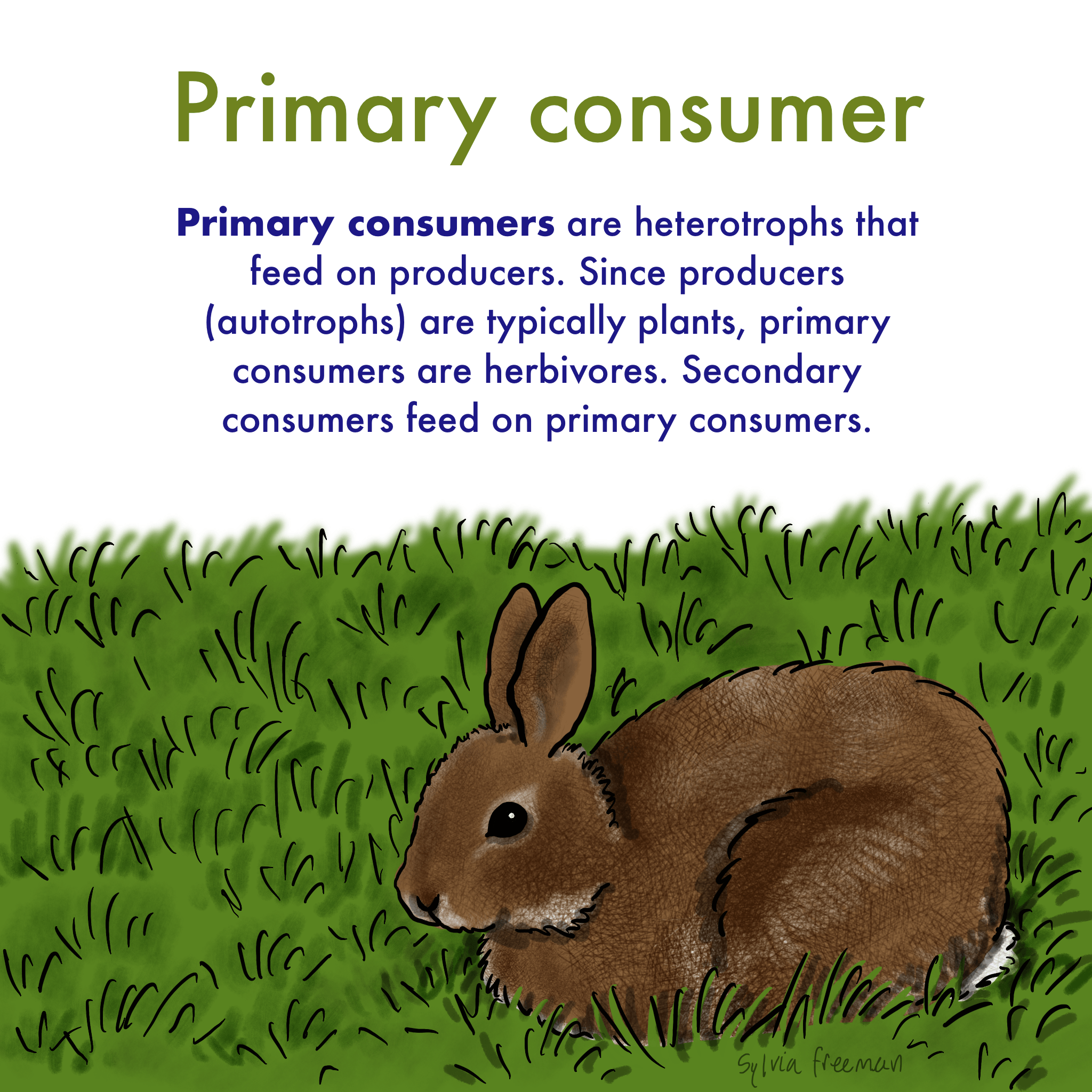
Image source: By Sylvia Freeman
Illustrated · 1 min
Image source: By Sylvia Freeman
Illustrated · 1 min
Primary consumers are typically herbivores—animals that eat plants. They are called heterotrophs because they must eat other things to survive. This is different from producers, which are autotrophs and make their own food. Common examples of this type of consumer are insects, rodents, and deer.

Image source: By Yathin S Krishnappa CC BY-SA 3.0, via Wikimedia Commons
These organisms are the first consumer, and the second link, in a food chain. They are the second trophic level from the bottom in an energy pyramid. A typical food chain can also have secondary, tertiary, and quaternary consumers. In real life, the primary consumer can have more than just one type of food source, and that can be represented in a food web.

Image source: By Thompsma CC BY-SA 3.0, via Wikimedia Commons
Let's look at an example. This trophic pyramid includes decomposers, primary consumers, secondary consumers, and tertiary consumers. The top predator in a chain or pyramid is also called the apex predator. In this example, the crickets, squirrels, and birds eat primary producers like plants, seeds, and flowers. Then, the snakes and frogs (secondary consumers) eat the primary consumers. Finally, the wolf eats the snakes and frogs.
Although the insects, squirrels, and birds are far down on the pyramid, they play an important role in the survival of other organisms.
: How energy passes through an ecosystem through organisms eating and being eaten
: Organisms that produce their own food through photosynthesis or chemosynthesis
: Organisms that consume other organisms for energy
: Organisms that break down waste and dead matter
Video
by CrashCourse
In this video, Hank explains how energy and nutrients are passed around an ecosystem. As one organism eats another, most of the energy is lost. Just a little bit becomes available to the consumer.
Primary consumers are the second level in a food chain. They obtain energy from eating producers. Producers are usually plants that can synthesize energy from the sun. Therefore, we typically consider those first consumers to be herbivores, meaning they are not meat eaters.

