
Illustrated · 1 min
By Sylvia Freeman

+1 contributors
Contributors

Food Chain: Producers
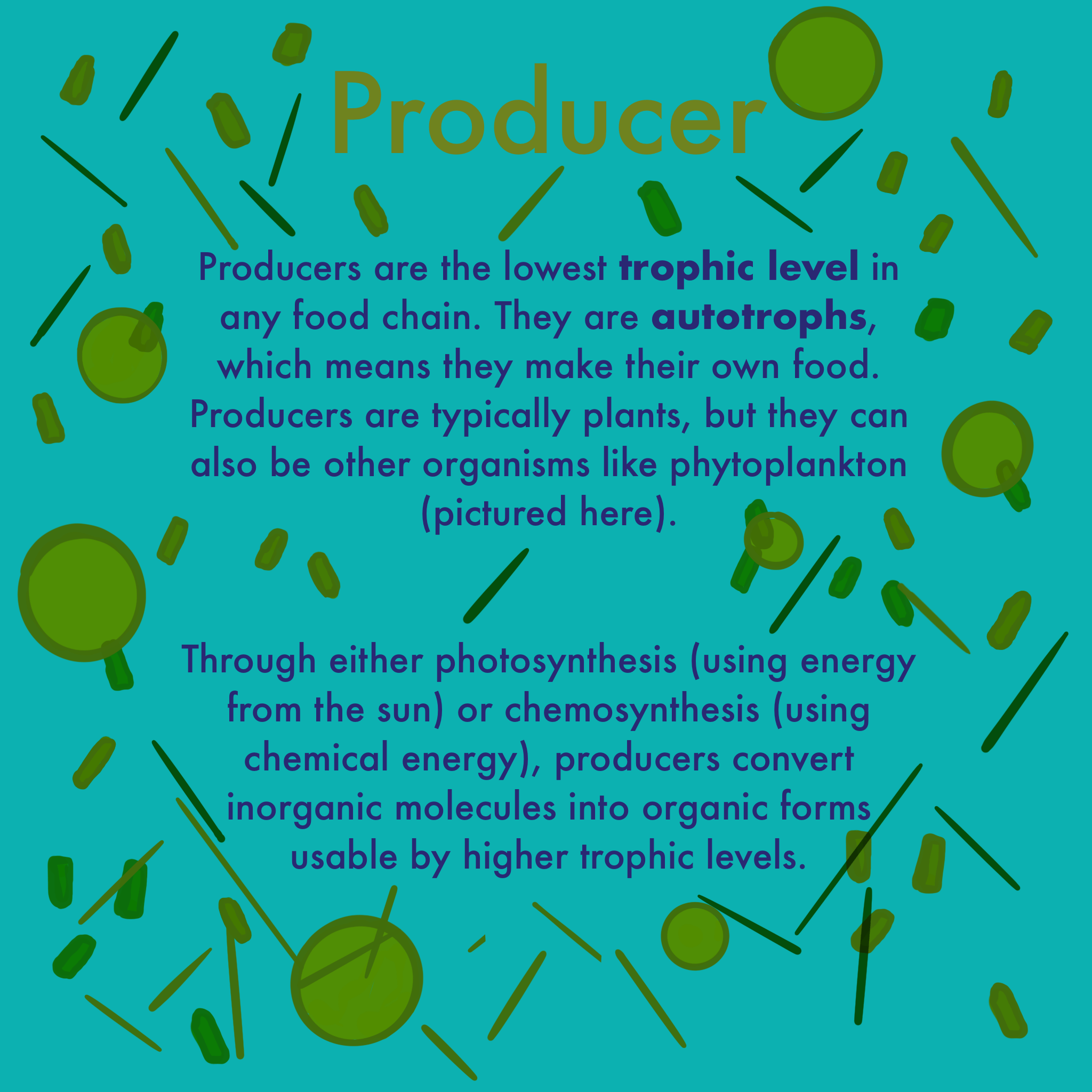
Image source: By Sylvia Freeman
Illustrated · 1 min
Image source: By Sylvia Freeman
Illustrated · 2 min
Producers are autotrophs, or organisms that produce their own food. Plants and algae are examples of producers. They are at the bottom of the food chain because they are eaten by other organisms, and they don't need to eat for energy.
Producers make their own food through the process of photosynthesis instead of eating organic matter. Sunlight is what plants use to make ATP. In addition to energy from the sun, autotrophs use carbon dioxide and water to produce oxygen and organic compounds like sugars.

Image source: By Billy Hathorn CC BY-SA 3.0, via Wikimedia Commons

Image source: By Creative Vix CC0, via pexels.com

Image source: By Pixabay CC0, via pexels.com
All energy pyramids, food chains, and food webs are based on producers. These organisms provide energy for all other trophic levels that come above them. These trophic levels consist of organisms called consumers that consume (eat) other organisms for energy.
The level above producers is the primary consumers. Think of deer, insects, and rabbits. These animals eat plants, earning them the name "herbivore". The next level up is the secondary consumers. Secondary consumers eat and get energy from the primary consumers. Since these animals eat other animals and not plants, they are called "carnivores". Next up, we have tertiary consumers. They receive energy by eating the secondary consumers.
As you can see, producers are the starting point of energy for other organisms. While there is energy transfer between these groups, a lot of energy is lost as you move up the levels. Most ecosystems can't support a large number of tertiary consumers because they need so much energy to live. However, producers don't require as much energy. That is why you can see green plants everywhere when you're walking through the woods.
: How energy passes through an ecosystem through organisms eating and being eaten
: Organisms that produce their own food through photosynthesis or chemosynthesis
: Organisms that consume other organisms for energy
: Organisms that break down waste and dead matter
Video
by CrashCourse
Organisms that can create their own energy from the sun, like plants, are called producers. Producers are the first level of the food chain. They are autotrophs, which means they can synthesize their own food.
Illustrated · 1 min

Image source: By Valeri Natole



