Illustrated · 1 min
+1 contributors

Proust's Law of Definite Proportions
-
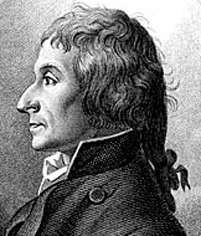
Proust's Law of Definite Proportions was created by Joseph Proust (a French chemist) in 1794 after realizing during his experiments that copper (II) carbonate is always in a fixed mass ratio of 5.3:1:4 (copper:carbon:oxygen)
-
Originally scientists believed that compounds could be composed of different mass ratios of elements and still be the same compound. This was disproved through Proust's research which is why this law exists today!
What is Proust’s Law of Definite Proportions?

Image source: Caroline Monahan
Note: Proust's Law of Definite Proportions is based off mass. A compound always contains the same proportion (by mass) of elements
Visualizing Proust's Law of Definite Proportions
- Remember, a compound contain a fixed ratio of elements, if that ratio changes, then that is a new unique compound
Example: A compound with 43% Sodium and 57% Chlorine is different than a compound containing 50% Sodium and 50% Chlorine

Image source: Caroline Monahan