Illustrated · 1 min
By Gabi Slizewska

+1 contributors
Contributors


Image source: By Gabi Slizewska

Before this, knowPhenotype — Definition & OverviewGenotype — Definition & Overview
Illustrated · 1 min
Image source: By Gabi Slizewska
Illustrated · 1 min
With some genes, the two alleles inherited (one from the mother and one from the father) show different levels of dominance. This means that one allele is more likely to be expressed than the other.
You can usually tell if an allele is being expressed by looking at a person's phenotype, or physical characteristics. A recessive allele is the allele that is usually overshadowed by the dominant allele. This means that this allele is less likely to be expressed. Recessive alleles are usually represented by lowercase letters and require two copies to be expressed.

Image source: By Purpy Pupple CC BY-SA 3.0, via Wikimedia Commons
In the Punnett square above, the recessive allele is the allele for blue eyes, which is represented with a lowercase b. We can tell that this allele is recessive because blue eyes are only expressed with a bb genotype (two copies of the same allele). When an offspring has a heterozygous genotype, it represents the dominant allele, which is brown eyes.
Recessive traits are not necessarily less common. One surprising example is being born with five fingers on your hand. There are also many autosomal recessive disorders, like sickle cell anemia.
These traits can also be quite common in the population if the gene is found on a sex chromosome. Here's why: Females have two X chromosomes and males have only one. If a male has a recessive allele on his chromosome, he will have the recessive trait because there is no other dominant allele present.
Illustrated · 1 min
When an organism is developing, it has to activate and use a bunch of different genes. An offspring of sexual reproduction has access to genes from both of its parents. When one gene has two different forms, it is said to have two alleles.
Alleles can interact in a bunch of different ways. The most simple interaction of two alleles is a dominant/recessive relationship. When one allele is chosen to be expressed and the other allele is not expressed at all, the allele that is being expressed is said to be dominant. The allele that is not expressed is called recessive.
Recessive alleles are always represented by lowercase letters. In order for an organism to express a recessive allele, it must have received a recessive allele from both of its parents.

Image source: By KatieAnn127 CC BY-SA 4.0, via Wikimedia Commons
In the above Punnett square diagram, two heterozygous dominant parents are mating.
Let's say they are two pea plants mating and the trait is pea size. The dominant allele (A) results in big peas and the recessive allele (a) results in small peas. Both of the parents would have large peas because they both contain a dominant allele.
When they mate, however, a quarter of the offspring will have small peas. This is because both of the parents have a recessive allele. When the two recessive alleles come together it results in a pea plant that expresses the recessive trait.
Illustrated · 3 min
To begin, let's refresh our memories about the differences between traits, genes, and alleles.
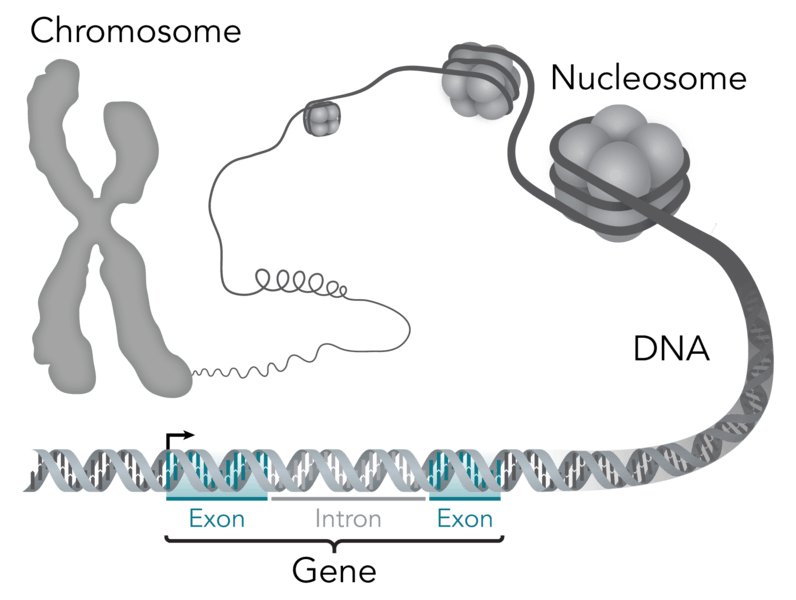
Image source: By Thomas Splettstoesser (www.scistyle.com) CC BY-SA 4.0, via Wikimedia Commons
As an example, let's look at freckles as a trait. To have this trait, you have to have the gene for freckles. But there are two forms of the gene for freckles; one allele that lets you have freckles and one allele that doesn't let you have freckles. So basically, to have freckles as a trait, you need to have the allele for freckles.
Now that we have a solid foundation to work from, we can begin discussing recessive alleles.
Because alleles are different forms of a gene, you can inherit different alleles from each of your parents. Each allele will give you a different form of a trait, like the freckles or no freckles alleles from the example above. So which do you get, freckles or no freckles?
One of these alleles is dominant. That is, if you have the dominant allele, you will have that trait. However, if you inherit two copies of the recessive allele from your parents, you will get the recessive trait. Basically, this means that if you inherit one copy of the dominant allele and one copy of the recessive allele, you will display the dominant allele's trait, almost as if you don't even have the recessive allele. So, if having freckles is a dominant trait and you inherited both versions of the allele from your parents, you will have freckles. If you inherit two copies of the recessive allele, you will not have freckles.
The picture below is called a Punnet square and is used to figure out the probability of inheriting a trait. In the flower example, having white petals is the recessive trait.
In order to get that coloring, the plant had to inherit the lowercase b (recessive allele) from both parents, which you can see on the bottom right of the Punnett square.

Image source: By Madprime CC0, via Wikimedia Commons
: A chromosome is a long, single, coiled piece of DNA
: A specific characteristic that is different from one individual to another
: A segment of DNA that codes for a specific trait or protein
: Genes of the same type that contain different kinds of information. Alleles can be dominant or recessive
: The stronger of two expressed genes, needs only one copy of the gene to show up as a phenotype
: The weaker of two expressed genes. Only shown if a gene is homozygous recessive
: Two different kinds of allele, one dominant and one recessive
: Two of the same type of allele, both dominant or both recessive
: A method of determining the probabilities of which traits the offspring of two organisms will inherit
Video
by ScinceGonnaGetYou

In this video, ScienceGonnaGetYou explains why we don't look exactly like our parents by talking about recessive and dominant genes.


