What happens during S phase?
During G1, the cell checks that there is enough nutrients to support the cell through replication. The transition into S phase is regulated by a positive feedback loop. Once the transition into S phase begins, the cell cannot return to G1.
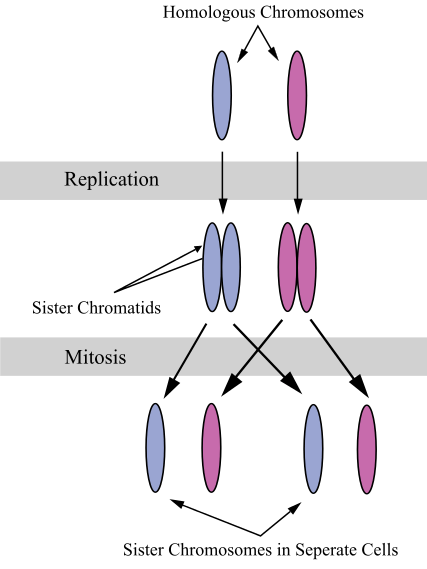
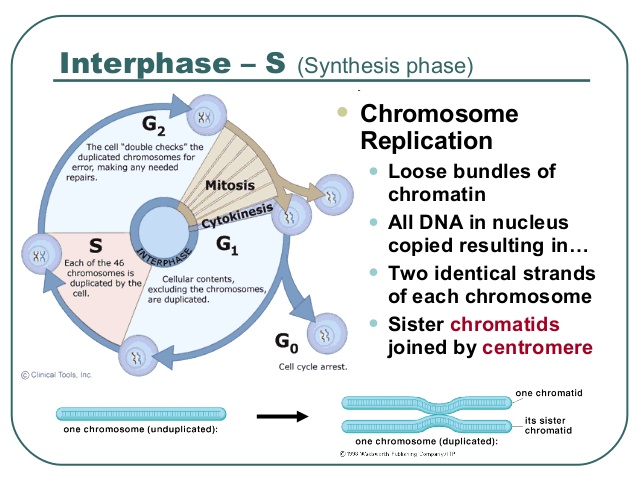
The purpose of S phase is to double the amount of DNA in the cell by replicating it. For example, if a cell has n chromosomes, after S phase it will have 2n chromosomes.
Throughout G1, pre-replication complexes are distributed through DNA. These packages of proteins are used to open up replication forks when signaled to do so by cyclin-dependent kinases. These replication forks are opened at specific origin of replication sites. The enzyme helicase is used to 'unzip' the double stranded DNA and let DNA polymerases in.
During S phase, new histones are also synthesized. Since the volume of DNA is doubling in size, the amount of histones must also increase so that the new DNA can be packaged into nucleosomes and chromosomes. Histones are created extremely quickly because the RNA sequence for histones does not receive a poly-A tail. Instead, it has a stem loop binding protein. This allows the amount of histones to be rapidly increased while also instantly stopping histone synthesis when S phase ends.
Throughout the replication, the cell scans the DNA for mutations or other problems using replication checkpoints. After replication is complete, the intra-S phase checkpoint searches the DNA for double strand breaks.
After the new DNA is condensed into nucleosomes, they are modified epigenetically to be the same as the original DNA. This includes condensing the DNA into tightly wound chromatin domains.
During this process, the S-M checkpoint is used to block mitosis until all of the genome replication is finished.