Illustrated · 1 min

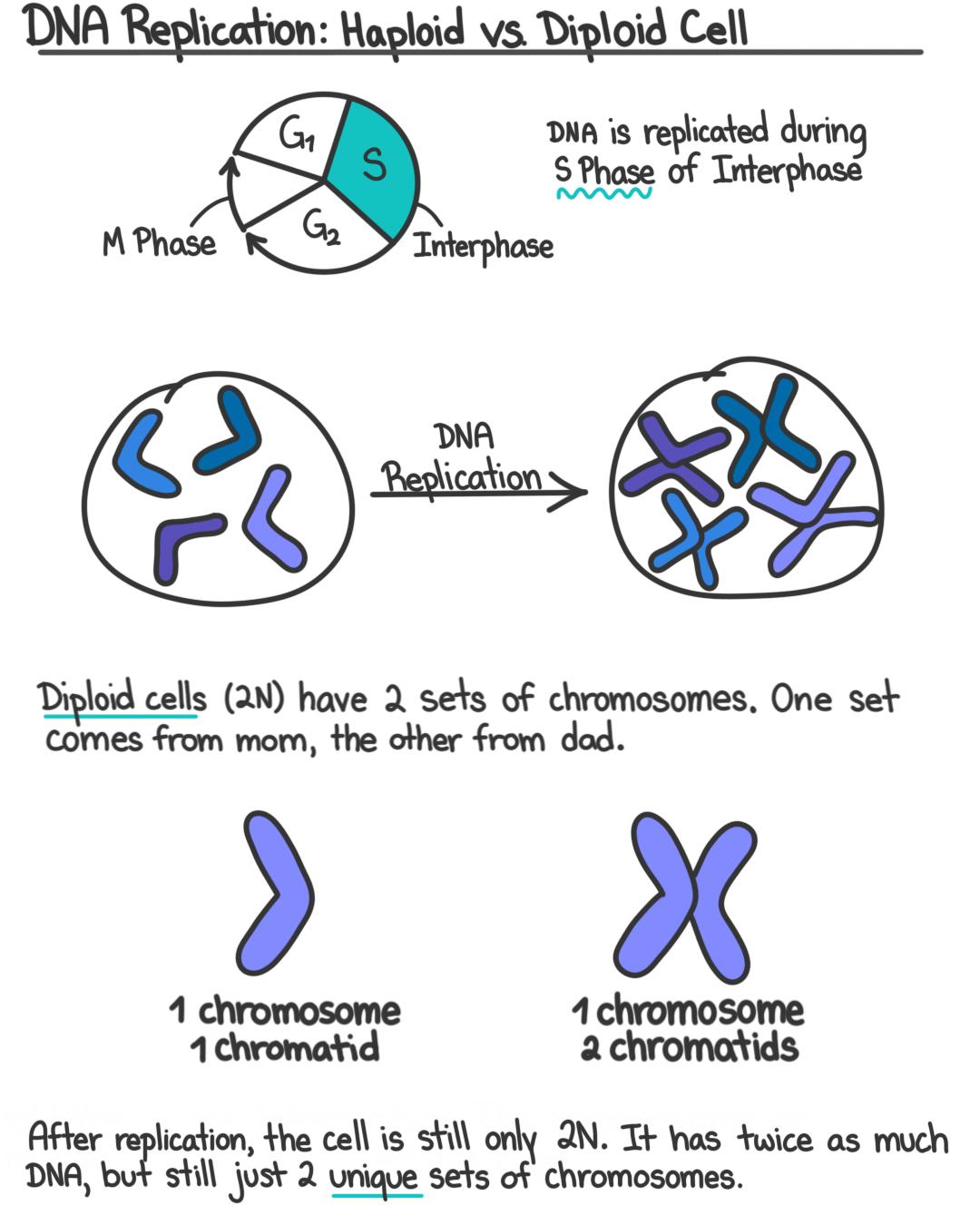

Image source: By Gabi Slizewska

Before this, knowG1 Phase (Interphase) — Overview & Diagrams
Illustrated · 1 min
Image source: By Gabi Slizewska
Illustrated · 1 min

When a cell is in S phase, it replicates its DNA. Image source: By Sarah Morgan
S Phase is a part of interphase of the cell cycle. It is a crucial step of cell division.
During this step, the cell replicates its DNA so that it has two complete copies of its genome. Loose DNA known as chromatin gathers and condenses into chromatids with the help of histone proteins. Histone proteins are like beads that the strings of DNA wrap around. Then, after replication, they create the familiar X-shaped chromosome that consists of two chromatids. There's plenty to learn about the process of DNA replication. We'll get to it later.
When the cell splits into two during mitosis, each new daughter cell needs to have its own full set of chromosomes. By replicating the DNA before splitting, the cell ensures there is enough DNA for mitosis. This is also a good time for the cell to make sure there is no DNA damage and to fix any mistakes in replication so that only the correct information is passed on to the daughter cells.
Video · + 1 min read
by Patrick Haney

In this video, Patrick Haney talks about interphase, which includes the synthesis phase.
The S phase of the cell cycle is when DNA is copied and chromosomes are replicated. All of the DNA of the cell is copied once to create two sets of the genetic code.
RNA transcription and protein production are very low during this step. Since there are a bunch of proteins and enzymes working to replicate the DNA, it is hard to also make proteins from it. However, histones, the proteins that hold DNA together, are created at this time. They are necessary for chromosome formation.
Normally, a cell contains all of its DNA in a loose mass called chromatin inside of the nucleus. This open, loose structure of DNA makes it easily accessible by all of the enzymes and it stays in this form during the synthesis phase.
At the start of this stage, the cell is said to be diploid, meaning it contains 2n sets of unique chromosomes. The n is the number of chromosomes in a set, and you get a set from each of your parents. If a set has n=23 chromosomes, then a diploid cell has 46 chromosomes in total.
During S Phase, the cell makes an extra, identical copy of each of those 46 chromosomes. However, the cell is still diploid. That's because the cell only gains extra copies of the chromosomes it already has. It doesn't gain any new genetic information.
The cell duplicates the DNA so that after it divides, each new cell can still have two sets of chromosomes.
Illustrated · 1 min
The second part of interphase is the synthesis (S) phase. It happens after G phase. The name is fitting because this is when DNA synthesis takes place.
During this phase, DNA is replicated (copied) and the number of chromosomes is doubled.

Image source: By LadyofHats [Public domain], via Wikimedia Commons
After DNA replication is complete, the chromosomes are made of identical sister chromatids. Each chromatid contains a double helix of DNA bundled up tightly. The two chromatids are held together by a centromere in the middle.
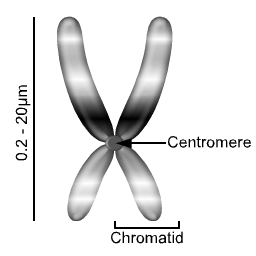
Image source: By Zephyris at the English language Wikipedia CC BY-SA 3.0, via Wikimedia Commons

Image source: By KES47 CC BY 3.0, via Wikimedia Commons
: The steps cells go through in order to grow and divide
: The longest part of the cell cycle where the cell grows and DNA is replicated to prepare for nuclear division
: The process of dividing the nucleus


