
Illustrated · 1 min
By Sylvia Freeman

+2 contributors
Contributors


Scientific Predictions
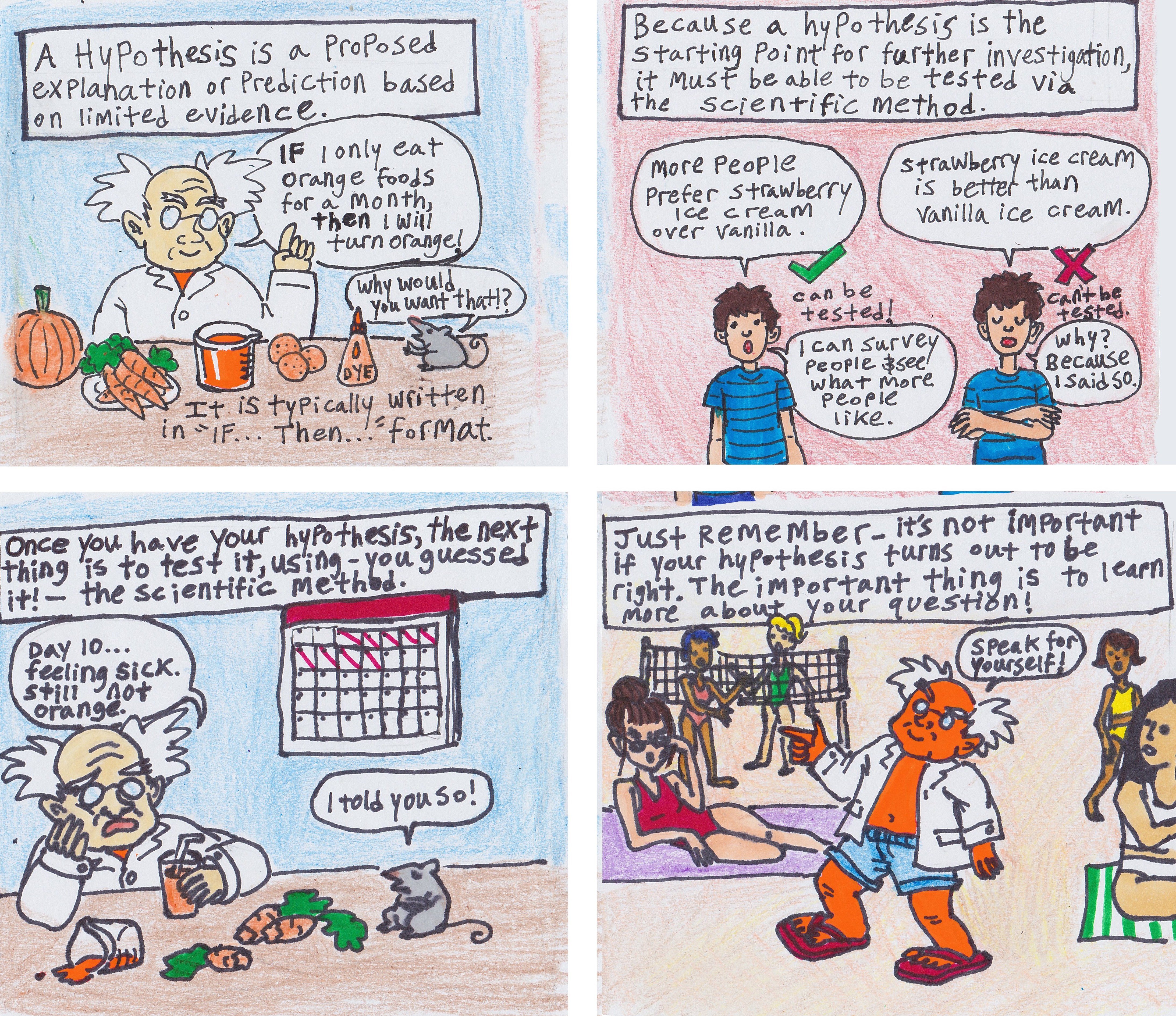
Image source: By Sylvia Freeman
Illustrated · 1 min
Image source: By Sylvia Freeman
Illustrated · 3 min
If you are doing a scientific experiment and you want to discover something cool, you need to begin with a strong working hypothesis. This will form the basis and conceptual framework for the rest of your experiment.
It should start with a good research question. You might base this on an observation of something in the natural world. Maybe you think that if a frog is given caffeine, then it could jump further. Your research question might be "Does caffeine influence the jumping activity of frogs?"
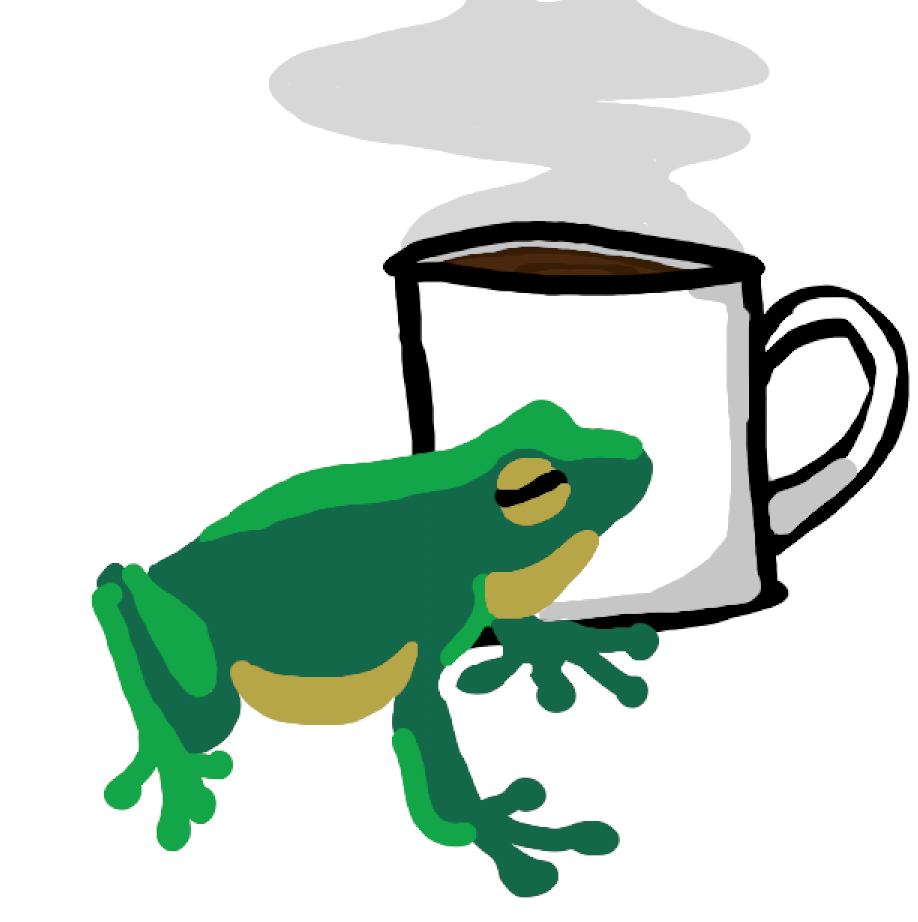
Image source: By Sarah Morgan
Once you have your research question, you can start to form a hypothesis (plural: hypotheses). Most hypotheses follow this structure:
"If , then will happen."
An example using this structure is "if a frog drinks an ounce of coffee, then the frog will be able to jump at least twice as far".
In the hypothesis, you want to include your dependent and independent variables. An independent variable is something that you control. In this case, it would be if you allow the frog to drink coffee or not. A dependent variable is a variable that is changed because of the independent variable. In this case, the distance that the frog jumps is the dependent variable.
Basically, if the independent variable changes, then the dependent variable will change because of it.
Sometimes, you can even follow the structure of "If , then will happen because ".
In this structure, you can give more details as to why you believe your idea is true. For example, "If a frog drinks an ounce of coffee, then the frog will be able to jump at least twice as far because the frog has more energy".
You also want to remember that your hypothesis should be testable. For example, it would be really difficult to test "if red is the best color, then the most popular flavor of drink is peach".
Now that everything is set up, you're ready to begin hypothesis testing through experiments.
Not every scientific experiment is a success. If you can't prove your original idea, then you've still discovered that the null hypothesis is true. This is basically the opposite of your original prediction (which is also called the alternative hypothesis).
You wanted to prove that "if a frog drinks an ounce of coffee, then the frog will be able to jump at least twice as far". The opposite of that is "if a frog drinks an ounce of coffee, then the frog will not be able to jump at least twice as far", or "the frog will only jump a normal distance".
Scientists Matthew Meselson and Franklin Stahl hypothesized that DNA is the "transforming principle" in organisms. After finishing their experiments, they were able to confirm their hypothesis based on the data they collected.
Scientists retest and build on the hypotheses of other scientists using new research methods. For example, because of Meselson and Stahl's hypothesizing and experimentation, scientists now know lots about DNA and can do things like make genetically modified organisms.
Video
by Teacher's Pet

The word hypothesis basically means a prediction about what will happen. It is an educated guess and the framework of an experiment. Once you think of one, you can design an experiment to test it. Remember: you cannot prove a hypothesis is true. You can only see if the data supports your claim or not.
