Illustrated · 1 min

+2 contributors


What Are Secondary Consumers, Anyway?
A secondary consumer is an organism that eats primary consumers. Primary consumers eat primary producers. Primary producers are autotrophs, organisms that make their own food. On an energy pyramid, primary producers are at the very bottom, then primary consumers, then secondary above them.
Here's an example:
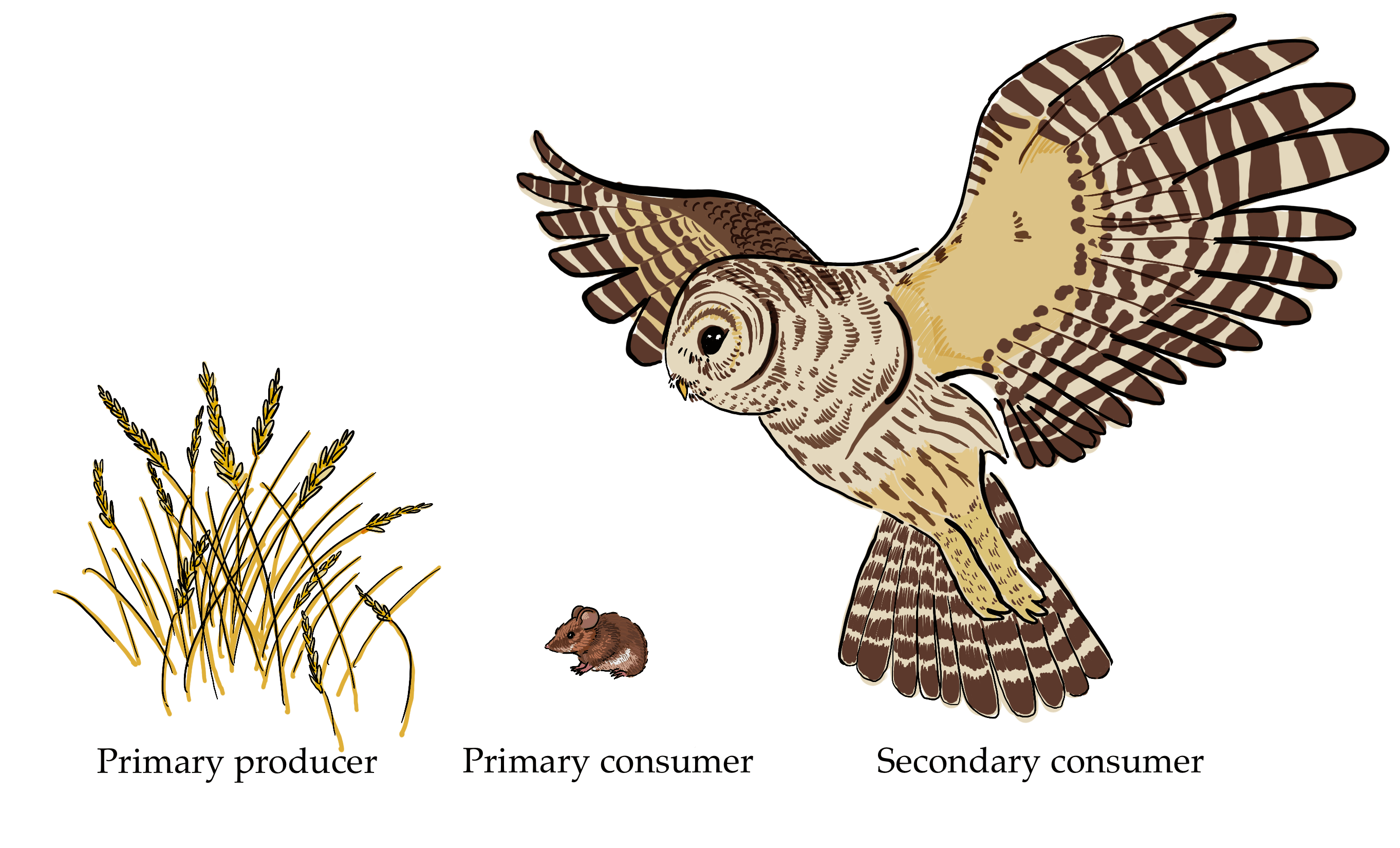
The wheat is an autotroph that gets its energy from the sun, making it a primary producer. The mouse is a primary consumer who eats the primary producer. The owl eats the mouse, which makes it a secondary consumer. Image source: By Sylvia Freeman
The majority of autotrophs (primary producers) are plants. This means the primary consumer animals who eat them are mostly herbivores (plant eaters). Secondary consumers are usually carnviores (meat eaters) but can also be omnivores. Omnivorous consumers eat everything—like people do. In the example above, the owl is a secondary consumer because it eats the mouse, who is a primary consumer.
Secondary consumers aren't always the last step in a food chain. Usually, they are eaten by a larger organism, the tertiary consumer. Some food chains even have a quaternary consumer.
If all these terms sound confusing, take a quick second to review trophic levels, which are the different levels in energy pyramids.