Illustrated · 1 min

+3 contributors



Solutes

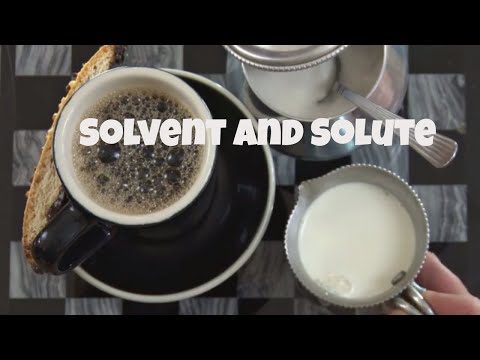
Solute is added to a solvent, forming a solution.
Image source: By Deena Hauze
When you mix sugar and water, the sugar is the solute being dissolved. Similarly, if you make lemonade, it's the lemon juice and sugar.
There are many types of solutes in the scientific world. Common ones in biology include sugar, carbon dioxide, and salt.
Concentration

Image source: By FirstPrinciples [Public domain], via Wikimedia Commons
The amount of solute in the solution changes the concentration of that solution. A solvent which contains very little of the substance being dissolved is called a dilute solution. A solvent with a lot of dissolved solute is called a concentrated solution because of its high concentration.
Types of Solutions
An unsaturated solution has some substance dissolved in the solvent, but it has the potential to dissolve much more.
In a saturated solution, the solvent contains a large amount of solute.
If any more is added, it won't dissolve in the solvent. Instead, the extra solute will precipitate (condense and fall) from the solution. This is known as a supersaturated solution.

Image source: By OpenStax CC BY 4.0, via Wikimedia Commons
Heating a solution up can increase the solubility of a substance, meaning that more stuff can dissolve faster. This is true for most solutes, but not all. Think of making iced tea and hot tea. The hot tea gets darker (more concentrated) much faster than the iced tea.
: A homogeneous mixture made of two or more substances
: The substance dissolved in another substance
: The substance doing the dissolving–the majority of the solution