Illustrated · 1 min
By Gabi Slizewska

+1 contributors
Contributors


Image source: By Gabi Slizewska

Before this, knowPopulation (Ecology) — Definition & Examples
Illustrated · 1 min
Image source: By Gabi Slizewska
Video
by SciShow

Biologists use taxonomy to organize nature and identify organisms. The biological species concept states that members of a species can reproduce and create fertile offspring. It is basically a gene pool where members share common characteristics. If two organisms that reproduce sexually cannot create fertile offspring, they do not belong to the same species. This idea is closely related to reproductive isolation, which can cause speciation.
This level of biological classification is where the included individuals are the most similar to one another. This video explains how biologists define a species and how this kind of identification is useful for seeing how all living things are related.
Collecting and identifying Pokémon can be just like what biologists do with taxonomy. Actually, Pokémon taxonomy is an ongoing debate—worth looking into for Pokémon trainers and biology students alike.

Image source: By Valeri Natole
Illustrated · 1 min

Image source: By Gabi Slizewska
Illustrated · 2 min
A species is a group of organisms that are capable of interbreeding and can produce fertile offspring. That last bit is pretty important.
You've probably seen a mule, which is the offspring of a female horse and a male donkey. Mules are sterile, meaning they can't produce offspring. So despite the fact that the horse and donkey successfully reproduced, their offspring can't reproduce. Therefore, the parents are separate species.
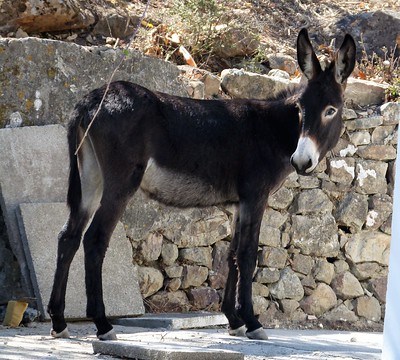
Image source: By gailhampshire CC BY 2.0, via flickr.com
Biologists use a classification ranking system to group similar animals together. In order from largest to smallest, it is domain, kingdom, phylum, class, order, family, genus (or subgenus), species. Species is the most specific one on the list. Classifying living things this way is called taxonomy.
Fun fact: The scientific name of an organism comes from its genus and species names. One example is humans: Homo sapiens. This system of using two names to classify organisms is called binomial nomenclature.

Image source: By Valeri Natole
Members of a species have many of the same characteristics. For example, one group of birds may have a unique beak shape, color pattern, or mating call.
Species can change over time and even divide into subspecies. Subspecies can reproduce in nature but typically don't.

Image source: By Karen Arnol CC0, via publicdomainpictures.net
A great dane and yorkie are examples of subspecies; they could breed, but they'd just rather not.
: The study of organisms and their environment
: The biosphere is the global ecological system. It includes all life and ecosystems
: A large group of ecosystems that are characterized by soil and climate types
: The interactions between a biological community and its environment
: A group of interacting populations
: A group of individuals of the same species living in a particular geographical area
: A group of organisms that can breed and create fertile offspring
: A living individual
: A species' ecological role in its community



