Illustrated · 1 min
By Gabi Slizewska

+1 contributors
Contributors


Image source: By Gabi Slizewska

Before this, knowChemical Structure of Lipids — Overview & Types
Illustrated · 1 min
Image source: By Gabi Slizewska
Illustrated · 1 min
Steroids have a carbon backbone made of four ring-like structures. Steroids are a category of lipid used for chemical signals, such as some hormones and vitamins. Some examples of these steroids are estrogen, testosterone, cholesterol, and cortisone.

Image source: By Palladius [Public domain], via WIkimedia Commons
Waxes are made of a fatty acid chain and an ester group (seen below). They are used by plants and animals for various reasons. Some animals even have a wax coating on their fur for insulation.

Image source: By Smokefoot [Public domain], via Wikimedia Commons
: Lipid used for chemical signals, like hormones
: A polymer that has a large (macro) molecular mass. There are four main types in organisms: carbohydrates, proteins, lipids, and nucleic acids
: Saturated fatty acids occur when each carbon atom in the chain is linked by a single bond
: Unsaturated fatty acids have one carbon-to-carbon double bond
: Molecules like oils, phospholipids, and fats
Illustrated · 1 min
Steroids and waxes make up one group of lipids.
Steroids are major components of the cell membrane, supporting its structure. The most common membrane steroid is cholesterol. Recall that the cell membrane is made of a phospholipid bilayer with hydrophilic heads and hydrophobic tails. Due to the hydrophobic nature of the tails, things that go through them also have to be hydrophobic.
This is why extra cholesterol can be so dangerous; it is insoluble in water, so if there is a buildup in the bloodstream it won't dissolve away. But, don't forget that normal amounts of cholesterol are absolutely necessary to keep you alive and keep your cell membranes nice and fluid. It's all about having the right amount and type of cholesterol.

Image source: By OpenStax CC BY 4.0, via Wikimedia Commons
Steroids can also be used as signaling molecules. Hormones like estrogen and testosterone are released by some cells and received by others as signals to change and develop.
Waxes are manufactured by organisms as a protective barrier against water and other contaminants. They are made of long fatty acid tails. Recall that fatty acids are made of hydrocarbon chains connected to a carboxyl group. They can be either saturated or unsaturated depending on if there are double bonds in the chain or not.
Saturated waxes have higher melting points and tend to be solid at room temperature. Unsaturated waxes have lower melting points and tend to be liquid at room temperature.
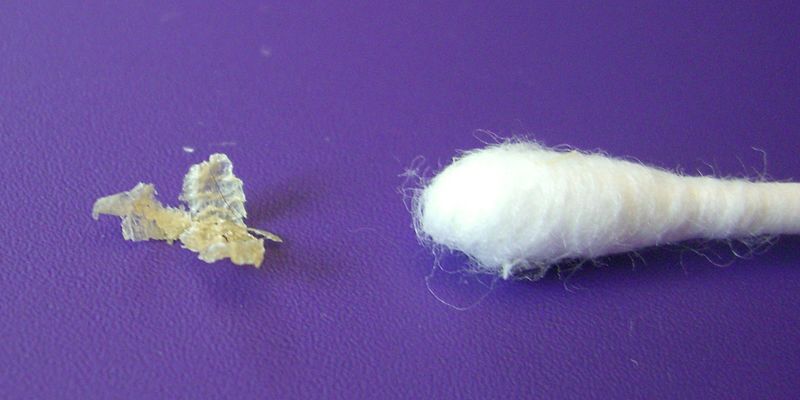
Image source: By Kelvinc CC BY-SA 4.0, via Wikimedia Commons
Illustrated · 1 min
Steroids are a lipid with seventeen carbon atoms arranged in four interconnected rings. Steroids have many important functions including cell signaling and providing structural support for cells.
Steroids emitted by certain cells in order to produce changes in other cells are called hormones. Popular examples include estrogen and testosterone. These steroids are released by the pituitary gland in order to produce the developmental changes in humans called puberty. Falsely injecting these and other steroids can produce exaggerated effects in the body like larger muscles and female characteristics in a man.
Cholesterol is another steroid. It is incorporated into cell membranes to make the cell more rigid and form a protective barrier to keep out harmful substances that try to enter the cell. Because cell membranes are nonpolar in the interior (due to the hydrophobic tails), other nonpolar molecules can pass through them. Cholesterol is nonpolar, so it passes through easily, providing the membrane with a solid structure. This is also one reason cholesterol can be so dangerous. If there is too much cholesterol in the blood, it won't dissolve and can build up, blocking arteries and veins. Lowering levels of cholesterol can help reduce the risk of heart-related conditions and diseases.

Image source: By Benjah-bmm27 [Public domain], via Wikimedia Commons
Waxes are also a form of lipid consisting of long-chain alcohols. The properties of the wax depend on the groups that are attached to the long carbon tails. Waxes are produced by many plants and animals. They are mainly used as a strong barrier that repels water and bacteria.
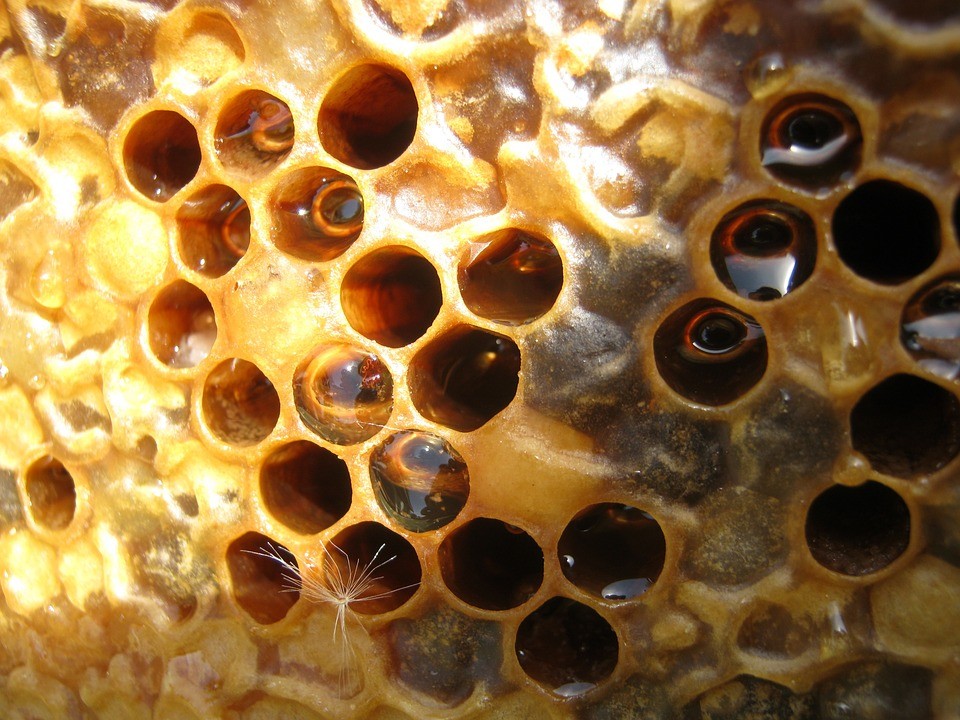
Image source: By ClaraMD CC0, via pixabay.com
Video
by RicochetScience
Lipids are also known as fat molecules. Fat serves many purposes, including energy storage, protection, and insulation.
This video talks about waxes, steroids, phospholipids, and fats. In this particular clip, you will learn about the structures of steroids and how they compare to waxes. You will also see some examples of each.


