
Interactive · 1 question
Let's review.
What is the polymer structure of a nucleotide?
There are three major components of a nucleotide.
The first one that we will discuss is the sugar component. But not just any sugar--in particular, a 5-carbon sugar!
There's two sugars this can be (and these sugar names will sound familiar!), (2-)deoxyribose and ribose. Below are their chemical structures:
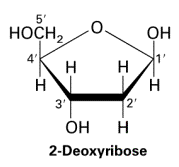
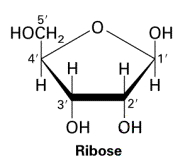
Notice the minute differnce in the two molecules--deoxyribose lacks an oxygen atom on the 2-carbon, hence its prefix, 2-"deoxy", which means "lacking oxygen".
Next, we have the phosphate group. If you're not sure what that looks like here it is:
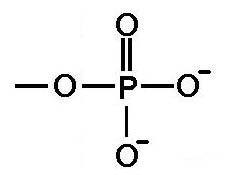
The phosphate group will actually bond to the 5-carbon on the sugar. Sometimes there is actually more than one phosphate group; in the example of ATP (adenosine triphosphate), the main energy carrier of the cell, the nucleic acid has 3 phosphate groups!
Finally, the most important group: the nitrogenous base. Binding to the 1-carbon, there are five possibilities for this:
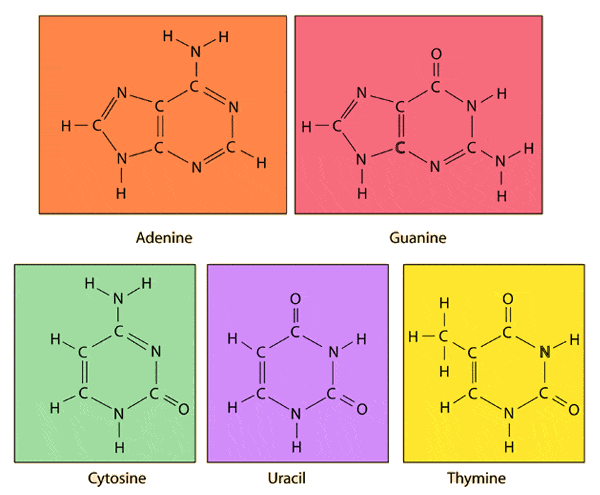
Each base gives the nucleotide uniqueness, and they play an integral role in DNA/RNA structure/formation.
Now, to put everything together, this is what a nucleotide would look like:
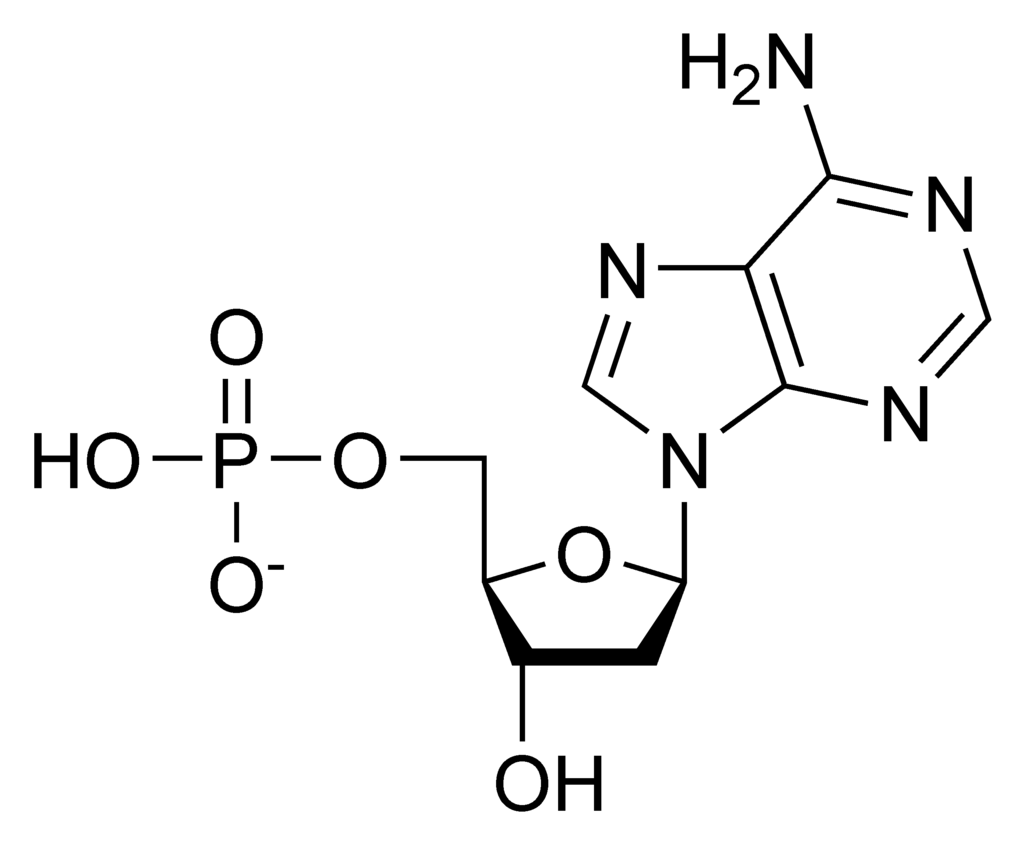
As you will see later, this nucleotide structure helps in giving DNA its shape, by forming its so called "sugar backbone".
