Interactive · 2 questions

+4 contributors




Active Sites
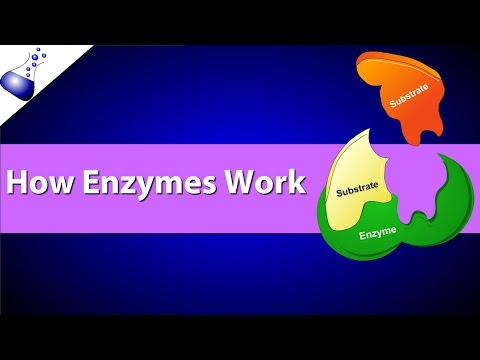
Enzymes have a specific location where reactants are brought together to react. These reactants are called substrates and the specific binding location is called the active site.

Image source: By LadyofHats [Public domain], via Wikimedia Commons
The substrate molecule binds to the active site. Think of it like putting a hand in a glove or like putting a key in a lock. It fits perfectly.
Another word for substrate is:
Binding Models
There are two different ways the enzyme and its substrate can fit together: the lock-and-key model and the induced fit model. Both of these are shown below.
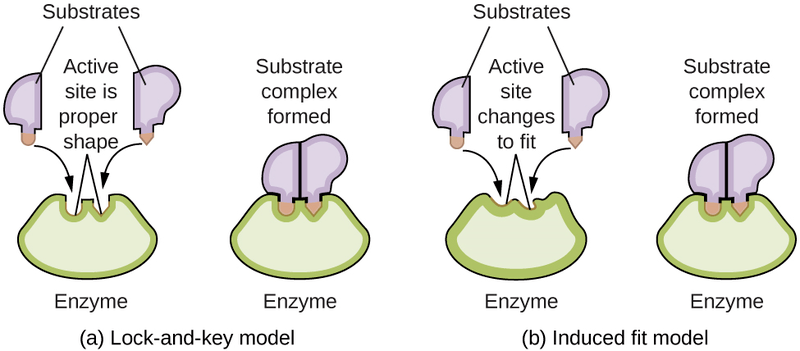
Image source: By OpenStax CC BY 4.0, via Wikimedia Commons
- Lock-and-Key Model: The shape of the active site matches the specific substrate that it reacts with. The substrate fits into the active site perfectly, similar to how a key fits into a lock.
- Induced Fit Model: The active site will undergo induced fit to mold itself more closely to the substrate. Think of this like putting your hand into a plastic glove. Your hand is the substrate and the glove is the active site. The glove changes shape as you place your hand into it, much like how the active site changes shape to fit the substrate.
After binding to the active site, the substrates form new compounds called products.
What is the location that substrates bind to on an enyzme?
: A protein that acts like a catalyst. It speeds up biological reactions but is not used up during the reaction
: Minimum amount of energy needed to begin a chemical reaction
: A substance that speeds up reactions but is not used up during the reaction
: Molecules that a specific enzyme binds to and recognizes. They are transformed during the reaction