
Illustrated · 1 min
By Sylvia Freeman

+1 contributors
Contributors

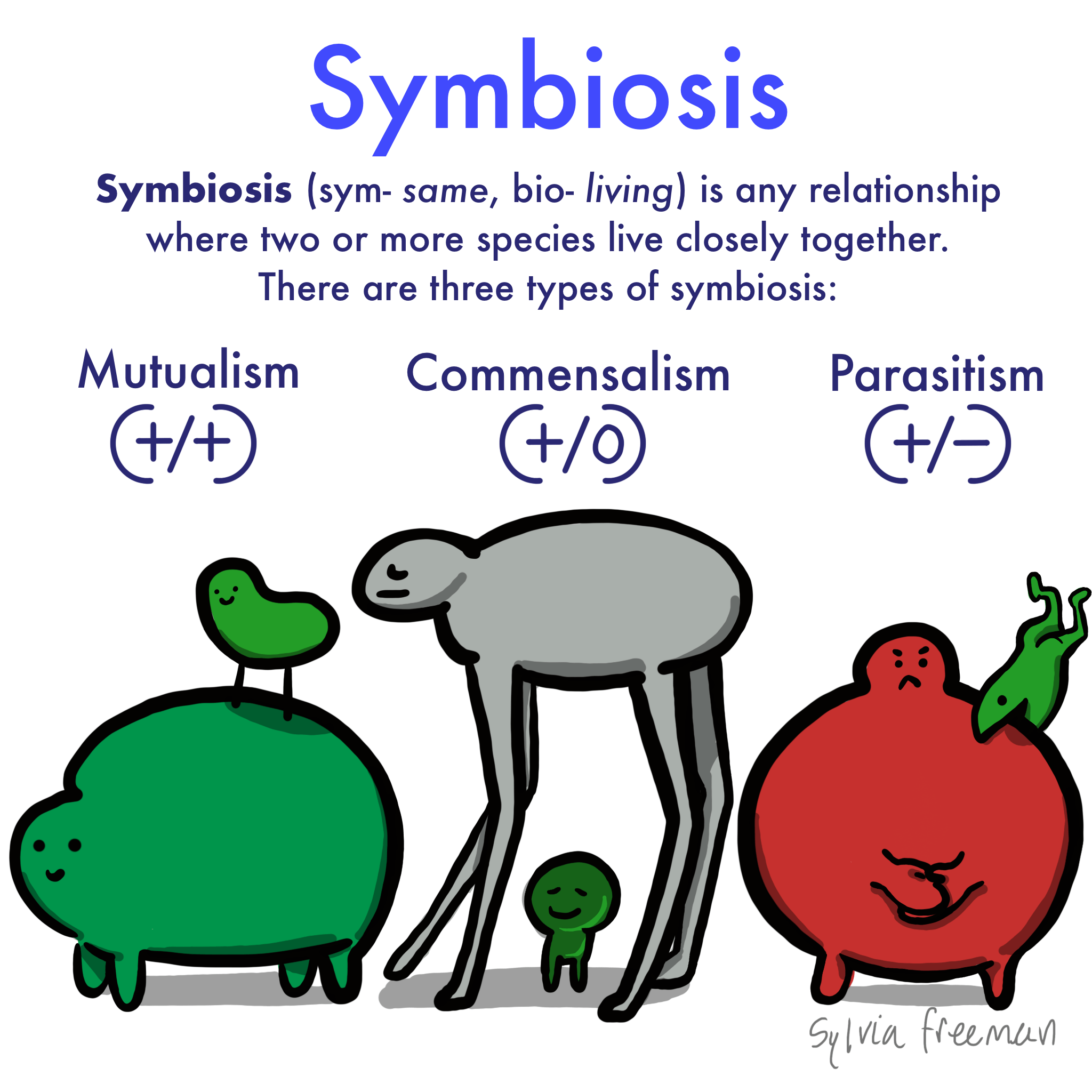
Image source: By Sylvia Freeman
Illustrated · 1 min
Image source: By Sylvia Freeman
Illustrated · 2 min
Symbiosis occurs when two organisms or species have a long-term interaction. Sometimes, after a long time of coevolution, one species might even rely on another species to survive.

Image source: By Sarah Morgan
A mutualistic relationship is one where both species benefit from the relationship. This might look like providing a home, giving food, or offering protection. In the picture below, a hummingbird is drinking flower nectar. In return, the flower gets to have its pollen spread around by the hummingbird. These two organisms benefit from each other.

Image source: By USFWS Mountain-Prairie, CC BY 2.0, via flickr.com
Another relationship is parasitism. This is when one species suffers while the other species benefits. Parasitic species live on or inside the body of their host. They usually steal nutrients from the host, but they don't kill it outright. An example is when mosquitoes drink human blood. The mosquitoes get nourishment, but humans just get unpleasantly itchy.

Image source: By JJ Harrison CC BY-SA 3.0, via Wikimedia Commons
The third relationship is commensalism. This is when one organism might not even know or care that another organism is benefiting from them. A surprising example is the bacteria Staph aureus. You might be familiar with Staph infections, which can be life-threatening. However, Staph bacteria often live peacefully on the skin of humans and never cause an infection. The bacteria consume waste on our skin, and we barely ever notice or care that it is there.

Image source: By Content Providers(s): CDC/ Matthew J. Arduino, DRPH Photo Credit: Janice Haney Carr [Public domain], via Wikimedia Commons
: A close, long-term relationship between two species
: How organisms compete for resources like food and water
: The relationship between a predator and its prey
: A relationship between two organisms that helps both of them
: A relationship where one organism benefits and nothing really happens to the other organism
: A relationship where one organism benefits and the other organism is harmed
: The organism that benefits from a parasitic relationship
: The organism that is harmed in a parasitic relationship
: A species' ecological role in its community
Video
by StoneAgeMan

A symbiotic relationship is a long-term biological relationship between two species who live closely together. Some examples include mutualism, commensalism, and parasitism.
In this video, you'll dive underwater to see how creatures live together in the deep sea. You'll see clownfish and sea anemones, cleaner shrimp, remorae, and even sharks.
Symbiotic relationships are not always beneficial for both parties involved. Sometimes they even cause harm to one of the species.

