What is Chemical Synthesis like for Professional Chemists?
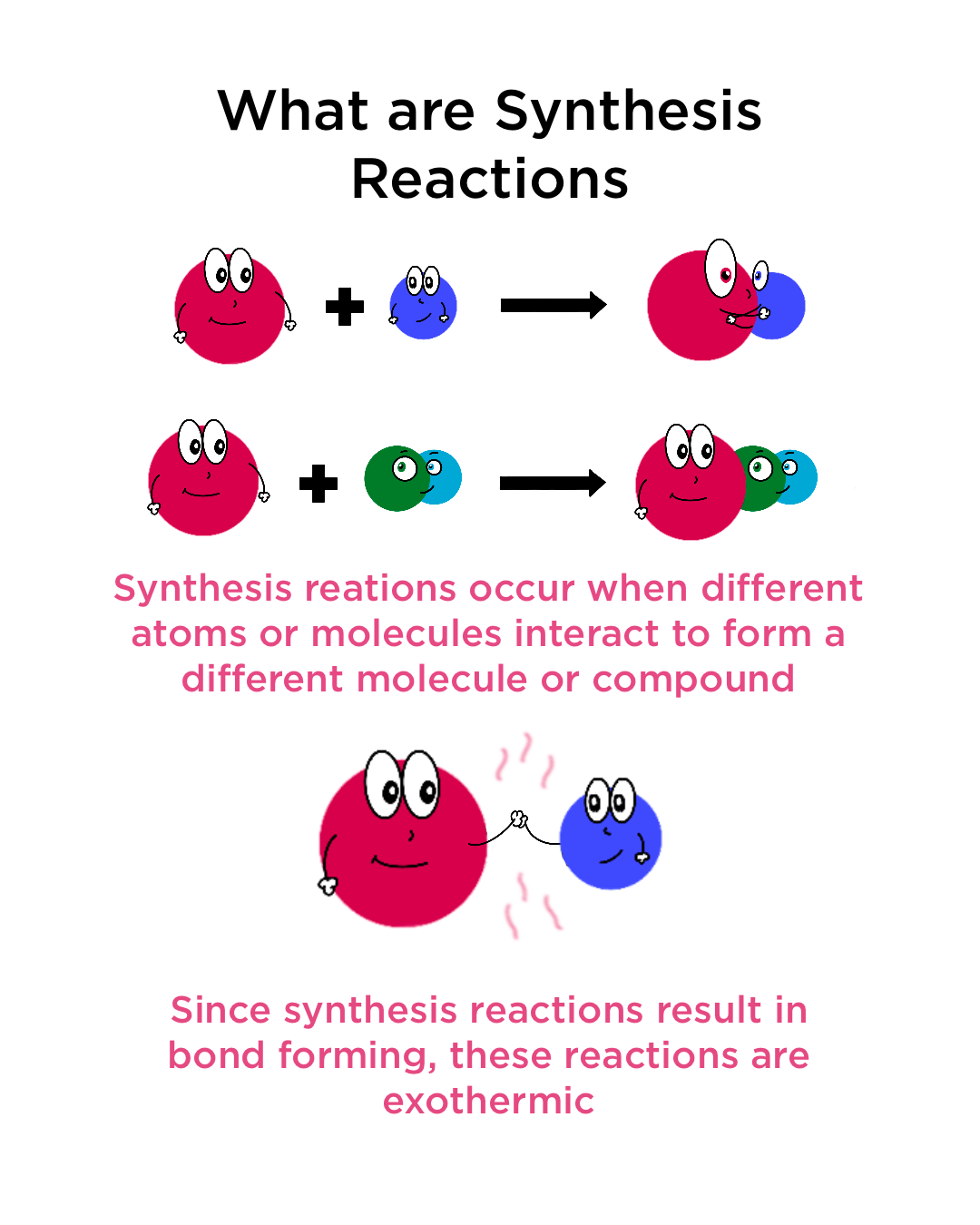
In general chemistry, synthesis reactions are the least complicated chemical reaction. You take two reactants and make one product. A generic balanced chemical equation would be A+B→AB. Unfortunately, in the real world, chemical synthesis is rarely so straightforward.
I remember a nightmare scenario from my organic chemistry class. I had one question left on our online homework. I was so close to finishing! I clicked the next button and saw the final problem. It was a fifteen-step synthesis! When you're learning organic chemistry, that's not a short puzzle. Often in chemical synthesis, there are many steps. Why? There are a couple of possible reasons. Sometimes, the reactants that produce an easy synthesis reaction are expensive. So, you might have to start with cheap reactants and build up your molecules. Other times, the reaction intermediates may be unstable. They only form during a series of chemical reactions. So, again we have to build up our reactants.
Planning a Chemical Synthesis
Chemical synthesis is the heart of applied chemistry. The chemist works to develop a procedure to produce their desired compound. What's the result? They construct the reaction mechanism, piece by piece. Along the way, they often have to manipulate specific steps to achieve their goals. They use their knowledge of chemistry principles to influence the reaction.
How would a chemist go about planning a synthesis? Most often, they start at the final product and work backward. Each step focuses on changing one specific bond or group of atoms. In organic chemistry, a compound's reactivity comes from functional groups. They are groupings of atoms with set chemical properties. For example, a carbon-oxygen-hydrogen set is the alcohol group. Because oxygen is bound to hydrogen, it is always a polar group. The oxygen-hydrogen bond is also a weak acid. So, we might manipulate it with a strong base. Other chemists, like inorganic chemists, often focus on individual atoms. But they also have to consider the reactivity of the element.
Performing the Lab Work
In college, I had a friend that was doing a research project. One of the steps in his synthesis formed a hydrate. But, before he could proceed to the next step, he needed to remove the water. So, his compound had to sit in a chemical oven for twelve hours. He didn't get it in until after his afternoon classes. So, he had to return to the lab at 3:00 am to take it out! In chemical synthesis, the lab work is often the most challenging part. Why? A chemical reaction gets influenced by so many factors! We must consider temperature, pressure, pH, time, and other factors. Often we have to manipulate many factors along the way.
Sometimes, we use chemical manipulation. For example, maybe step seven of a fifteen-step reaction is the rate-limiting step. What could we do? We might try to develop a catalyst. Remember, they lower a reaction's activation energy and improve its rate. Sometimes, we can research the published work of other chemists for possible catalysts. Other times, we may need to use theoretical modeling to develop a catalyst. Sometimes, we even have to synthesize the catalyst!
Other times, we need to use physical manipulations. For example, one of our steps could be an equilibrium reaction. But we want it to go to completion. How do we manipulate the equilibrium? We take advantage of Le' Chatlier's principle. If the reaction is endothermic, we could apply heat. What if it's exothermic? We could cool it. Sometimes we can physically separate our products. By removing the products, we alter the equilibrium.
What are Your Results?
Chemistry is complex. For example, sometimes, a reaction can produce multiple products. So, even if we successfully implement our plan, we may not get our desired result. Why? We also have to worry about the percent yield. Part of planning the mechanism is calculating the theoretical yield. But often, one of the steps will act as a limiting reagent. So, very rarely are the theoretical and actual yields equivalent. Sometimes, experimental errors mean we don't produce our desired amount.