
Illustrated · 1 min
By Gabi Slizewska

+1 contributors
Contributors

Types of Temperate Biomes:


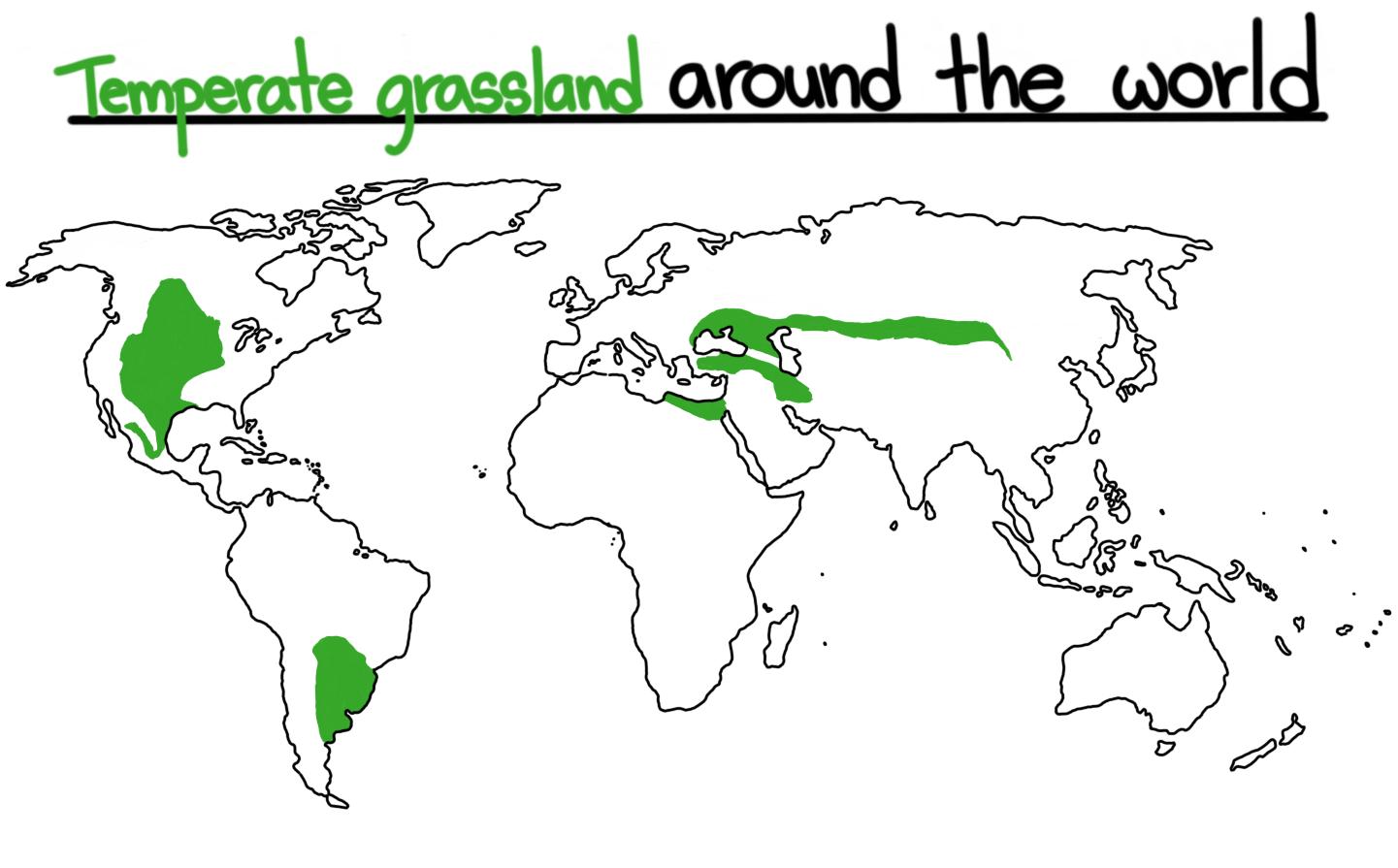


Image source: By Gabi Slizewska
Illustrated · 1 min
Image source: By Gabi Slizewska
Illustrated · 2 min
Temperate basically means mild. A temperate climate is one that doesn't experience extreme temperatures, either too hot or too cold. You tend to find temperate zones between the tropics and the polar circles. A large portion of Europe and the United States have these types of climates. They have warm summers and mild to moderately cold winters, plus year-round precipitation and fertile soil.

Image source: By HorsePunchKid [Public domain], via Wikimedia Commons
There are three main temperate biomes: grasslands, forests, and woodlands and shrublands.
Temperate grasslands, commonly known as plains and prairies, are fairly flat environments with grass as far as the eye can see. The central United States was once mostly grassland, but after introducing agriculture and fires, there is much less of it remaining.
Grasslands get a good bit of rainfall and have fertile soil, and they occasionally experience wildfires. Despite the fertile soil, the most common plants in the grassland are, well, grasses. Many plants use the wind to disperse their seeds since the environment is so open.

Image source: By JQN CC BY-SA 2.0, via Wikimedia Commons
Due to the abundance of grasses, herbivores are very common and diverse. Heavy grazing largely contributes to the grassland landscape. Animals in the grasslands have made adaptations for their open environment, such as camouflage and burrowing. These adaptations help protect small animals from predators that would easily spot them.
Abiotic factors here include warm summers, cold winters, moderate rainfall, and fertile soils.
Temperate forests are environments made up of mostly deciduous trees, some coniferous trees, and a sprinkling of mosses, ferns, shrubs, and herbs. Like plains and prairies, these forests have a mild climate. Deciduous trees are very common because they lose their leaves to conserve heat during the winter months. Coniferous trees are "evergreens". They have needles that stick around all year and use cones to spread their seeds.
The dominant wildlife in this biome includes herbivores like deer and squirrels, omnivores like raccoons and skunks, carnivores like black bears and bobcats, and a variety of birds.

Image source: By Nicholas A. Tonelli CC BY 2.0, via Wikimedia Commons
Temperate woodlands and shrublands are made up of, you guessed it, shrublands and woodlands. Woodlands are made up of oak trees, woody shrubs, grasses, and wildflowers. Shrublands are made up of the same stuff, just a lot fewer oak trees.
This biome is known for hot, dry summers and mild, moist winters. The soils are mediocre. They are not very fertile and don't have many nutrients. Wildfires are common and play a vital role in the health of the biome.
Wildlife in woodlands and shrublands includes herbivores like blacktail deer and rabbits, carnivores like foxes and coyotes, reptiles like snakes and lizards, and all kinds of birds.

Image source: By bgwashburn CC BY 2.0, via flickr.com
Video
By MooMoo Math and Science

Watch this video to learn about characteristics of deciduous forests and see some of the animals that live there.
By MooMoo Math and Science

Watch this video to learn about characteristics of temperate grasslands and see some of the animals that live there.

