Temperature (Enzyme Reaction Rates) — Effects & Examples

Interactive · 2 questions

Temperature and Rate of Reaction

Temperature influences the rate of reaction similarly to pH. At the ideal (optimum) temperature, the chemical reactions will be very quick. These optimum temperatures are maintained through homeostasis.

Increasing the amount of substrate in a reaction will increase the rate of the reaction because the enzyme runs into more and more substrate. The rate of reaction will increase until it reaches its **saturation point**.

Temperature influence on rate of reaction.

Image source: By Thomas Shafee CC BY 4.0, via Wikimedia Commons

However, if the temperature is either too high or too low the rate decreases dramatically. Once the temperature is higher than ideal, the enzyme will become denatured and permanently change shape, causing the enzymes and substrates to no longer fit together.

What happens when an enzyme is heated up too much?

Choose one answer

Illustrated · 1 min

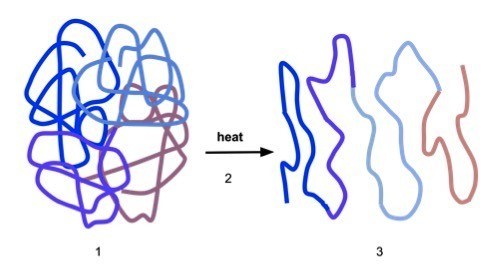
How does temperature affect enzyme activity? Each enzyme has a narrow range of conditions it can function in. It works best at its optimal temperature. As the temperature drops, molecules move slower and the enzyme will be unable to function properly. As the temperature goes up, bonds in the enzyme's structure break, and the enzyme loses its function. This is called denaturing.

Image source: By Gabi Slizewska

Illustrated · 1 min

What Effect Does Temperature Have on Enzyme Function?

Enzymes are picky molecules. They work within a very specific range of conditions and fall apart (literally) when those conditions are violated.

Temperature is one factor that increases the rate of an enzyme-catalyzed reaction.

Every enzyme has an optimum temperature—the temperature at which they work best. The rate of reaction is greatest at the optimum temperature.

The rate of reaction peaks at an enzyme's optimal temperature.

Image source: By domdomegg CC BY 4.0, via Wikimedia Commons

The graph above shows the optimal temperature for a hypothetical enzyme. We can see that a rise in temperature will increase the activity of the enzyme (to a certain degree). Some enzymes work best under cooler conditions or moderate temperatures, while others require high temperatures. Homeostasis helps make sure each temperature is just right.

As with pH, the temperature range for an enzyme's function tends to be narrow.

So, what happens to enzymes outside their optimal temperature range? Why do they stop working?

Denatured enzymes lose their shape.

Image source: By Scurran15 CC BY-SA 4.0, via Wikimedia Commons

The shape of an enzyme is fundamental to its ability to work.

So, damaged enzymes are ones whose shapes have been altered in some way. Damaged enzymes no longer have a lock-and-key fit with their active site and substrates, which means they can't catalyze the reaction.

When an enzyme is denatured, it essentially melts and loses its shape. Denaturation can be caused by heat or any deviation from an enzyme's narrow ideal temperature range.

Key Vocabulary:

  1. Enzyme
  2. Optimum
  3. Denature
  4. Substrate

Video

(Video) Effect of Temperature and pH on Enzyme Activity

by Ms Cooper's A level Biology

This video gives a great explanation as to how temperature affects enzyme molecules and their rate of reaction.

Video

(Video) How Enzymes Denature

by FuseSchool - Global Education

Ever wonder what happens when enzymes are placed outside of their ideal conditions? Watch this video to see how enzymes break down and reactions slow when ideal conditions are not met.

Type a concept, like “slope” or “photosynthesis”.

↑ ↓ to choose · Enter to openSearch explanations and problems