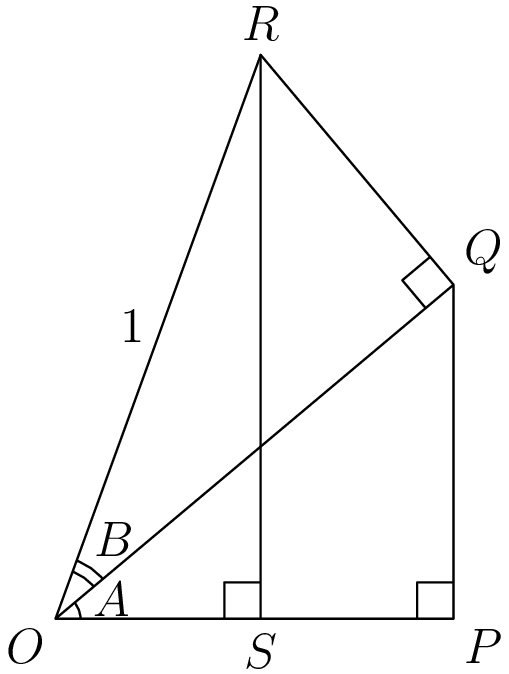
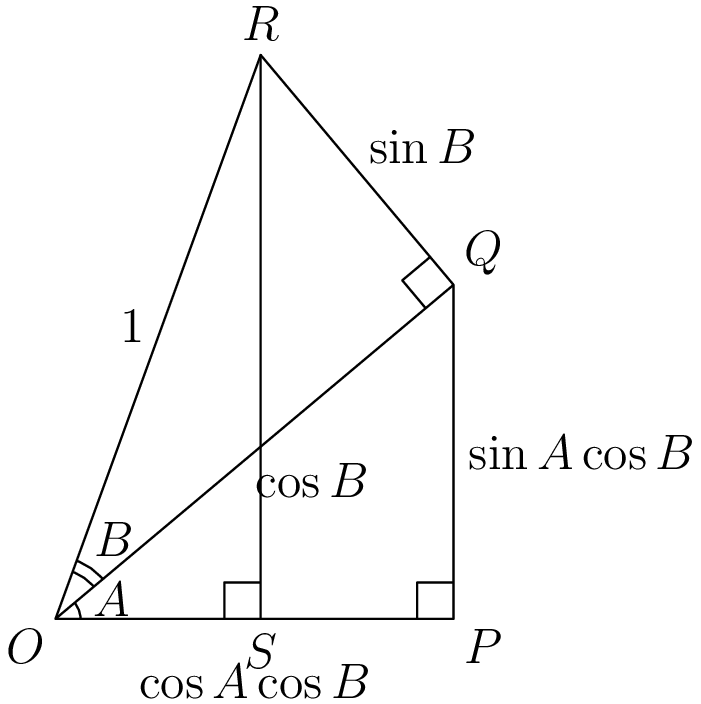
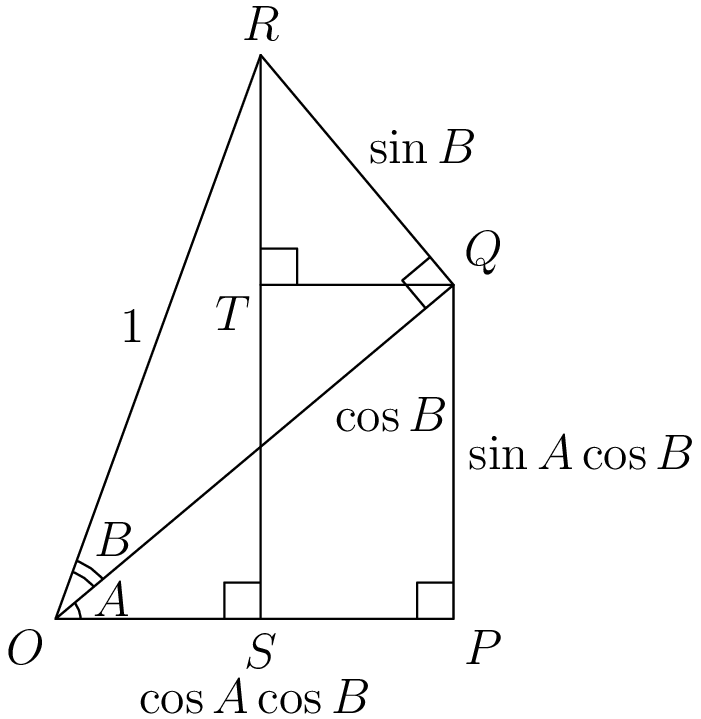
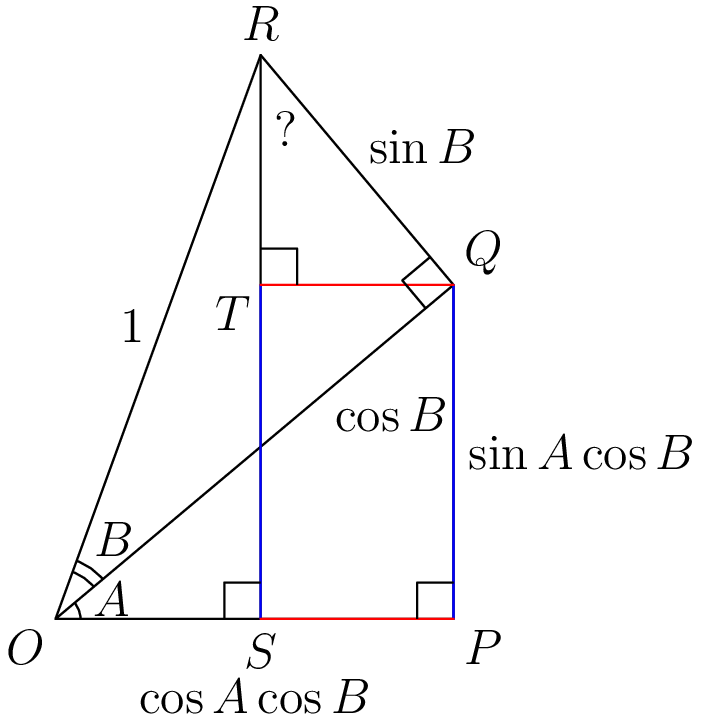
Here are some useful identities pertaining to sums of angles:
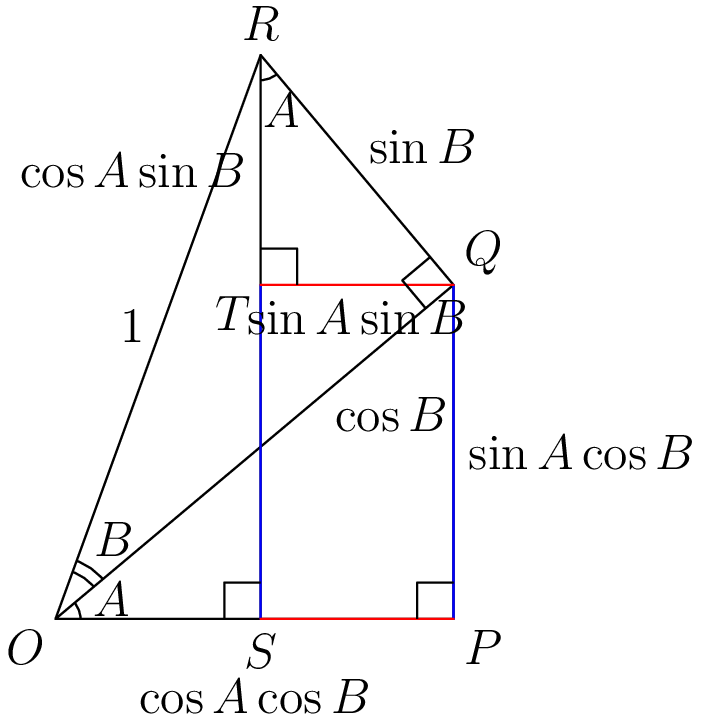
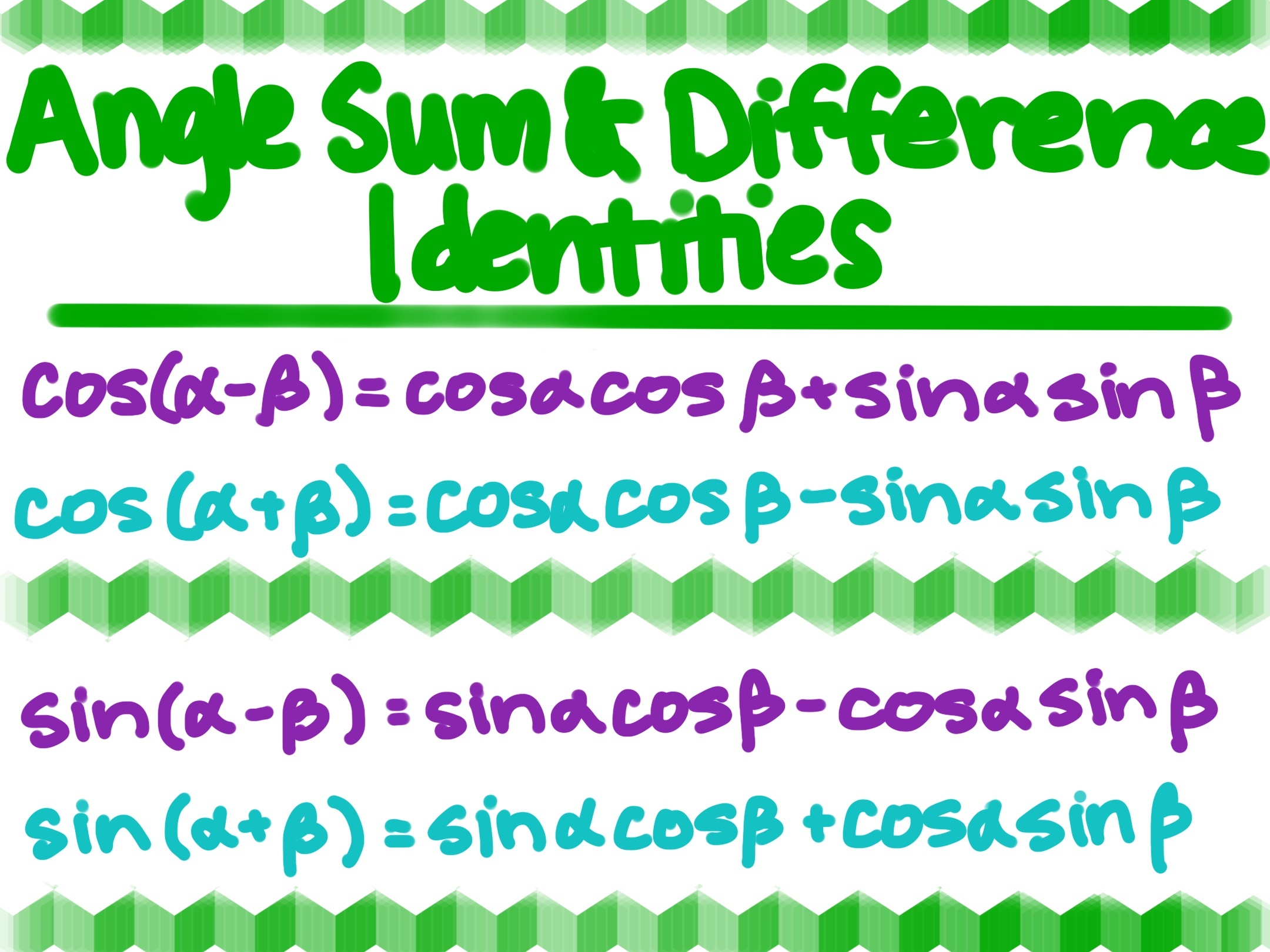
sin(x+y)=sin(x)cos(y)+cos(x)sin(y)
cos(x+y)=cos(x)cos(y)−sin(x)sin(y)
Using these two, we can prove other identities.
Proof 1:
tan(x+y)=cos(x+y)sin(x+y)=cos(x)cos(y)−sin(x)sin(y)sin(x)cos(y)+cos(x)sin(y)
Divide the numerator and denominator of the fraction by cos(x)cos(y):
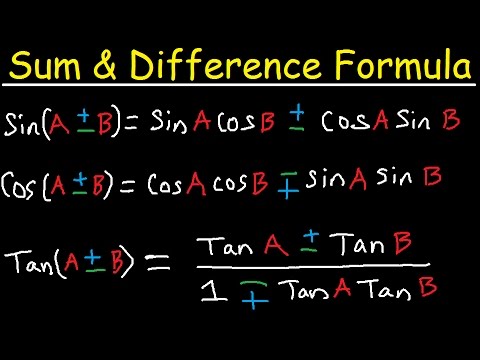
tan(x+y)=1−tan(x)tan(y)tan(x)+tan(y)
Proof 2:
sin(x−y)=sin(x)cos(−y)+cos(x)sin(−y)=sin(x)cos(y)−cos(x)sin(y)
Here it is important to remember that sine is an odd function and cosine is an even function.
Proof 3:
cos(x−y)=cos(x)cos(−y)−sin(x)sin(−y)=cos(x)cos(y)+sin(x)sin(y)
Proof 4:
tan(x−y)=1−tan(x)tan(−y)tan(x)+tan(−y)
Remembering that tangent is an odd function is important here--tan(−y)=−tan(y):
tan(x−y)=1+tan(x)tan(y)tan(x)−tan(y)
These six identities are very useful for the wide variety of problems involving sums and differences of angles.