
Illustrated · 1 min
+2 contributors
Contributors


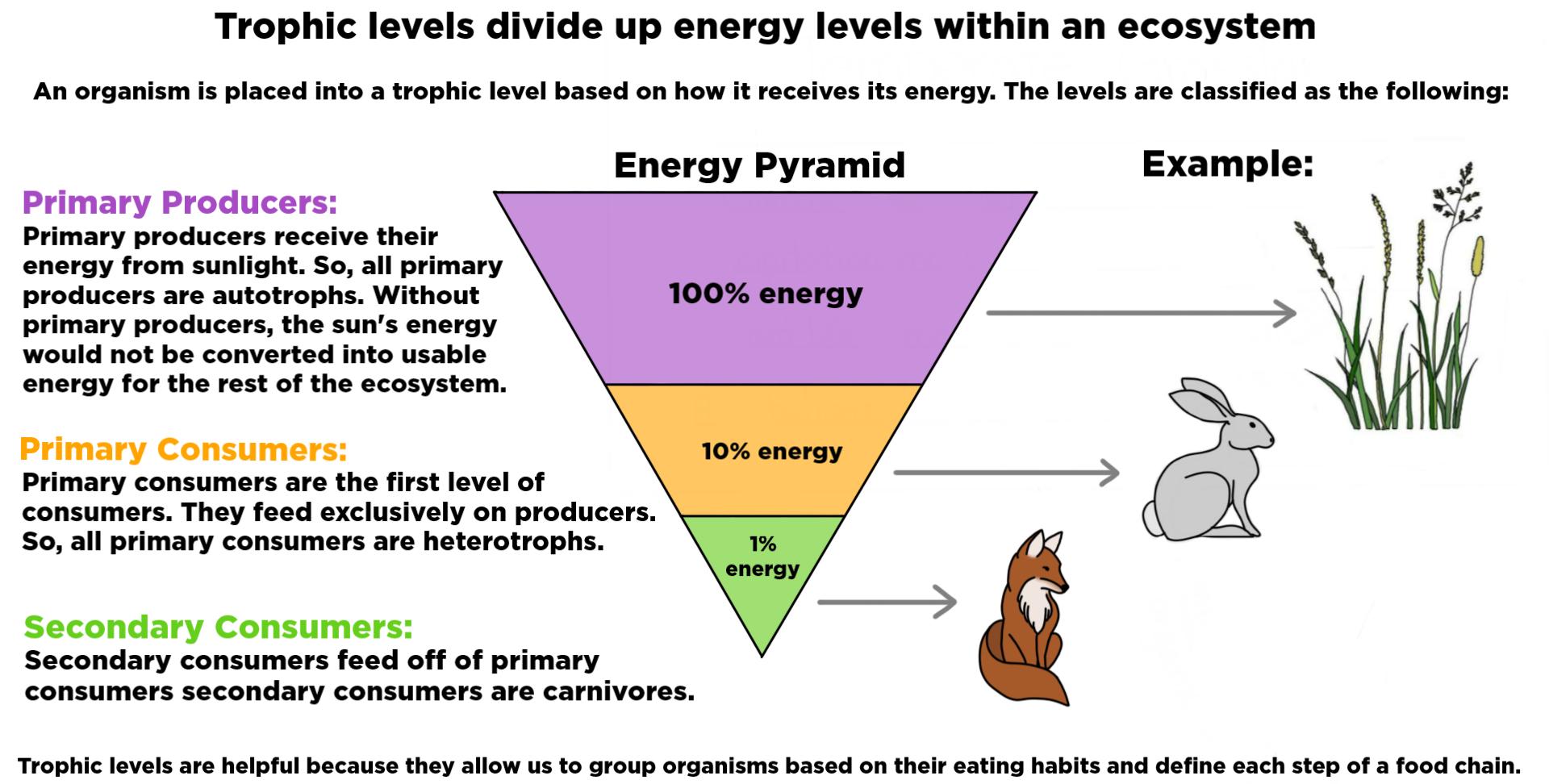
Image source: By Alana Karras
Illustrated · 1 min
Image source: By Alana Karras
Illustrated · 2 min
Trophic levels separate the links in the food chain into groups like primary consumers and producers. Each level depends on the level below it for energy.
They show where groups of organisms lie in the chain of energy flow through an ecosystem. In simpler terms, organisms are divided into levels depending on what and how they eat.
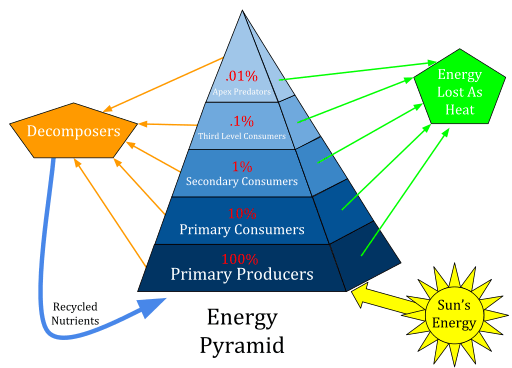
Image source: Swiggity.Swag.YOLO.Bro CC BY-SA 4.0, via Wikimedia Commons
Producers
The first level is the primary producers. These are organisms like plants and algae, which can manufacture their own food. They convert energy from the sun into energetic molecules like glucose, cellulose, and starch.
Consumers
Organisms that are capable of breaking down plant materials like starch and cellulose molecules are called primary consumers. Typical organisms in this level are deer, cows, and most bugs.
Secondary, tertiary, and quarternary (apex) consumers are predators that feed on other organisms. They are often carnivores and omnivores. In an energy pyramid, consumers are put above producers. At the very top are apex predators like killers whales and tigers.
Decomposers
Decomposers feed off of all levels of organisms, so they are shown along the side or beneath producers in an energy pyramid. They feed on dead organisms.
Energy pyramids often have only three or four levels, so up to secondary consumers or tertiary consumers. Five total levels are the max possible in an ecosystem. The energy transfer between levels becomes too inefficient after that.
: How energy passes through an ecosystem through organisms eating and being eaten
: An easy way to show the energy flow in a community (also called a trophic pyramid)
: Shows where an organism lies in the chain of energy flow through an ecosystem
: Organisms that produce their own food through photosynthesis or chemosynthesis
: Organisms that consume other organisms for energy
: Organisms that break down waste and dead matter
Video
by Sustainable Human
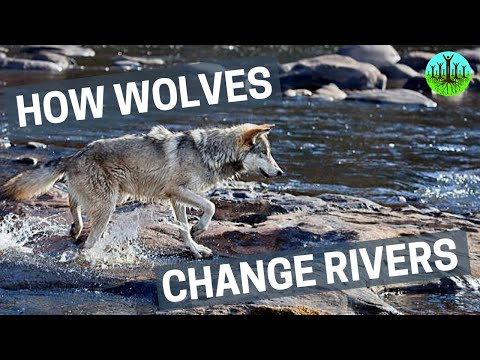
What do wolves have to do with rivers? Organisms at every level affect the rest of the ecosystem. The reintroduction of wolves into the Yellowstone ecosystem is a top-notch example of how that works.
Illustrated · 1 min
Why do you eat? Your stomach rumbles after a long day at school. You see that cupcake your friend baked sitting on the kitchen table, and you start salivating. You're hungry, so you eat, but there's more to it than that.
Organisms eat because they need energy. Energy and matter flow through ecosystems in a rather organized way. You may have seen this represented in food chains, food webs, or energy pyramids.

Image source: By Valeri Natole
That organized flow of energy and matter keeps ecosystems in a delicate balance.
Image source: By Valeri Natole
Different organisms occupy different trophic levels in these food chains, food webs, and energy pyramids. Each level is defined by where it gets energy from. For example, consumers like us get our energy from eating other organisms. Think about where the ingredients for that cupcake came from.


