Interactive · 2 questions

+5 contributors




How Do Cells Store Nutrients?
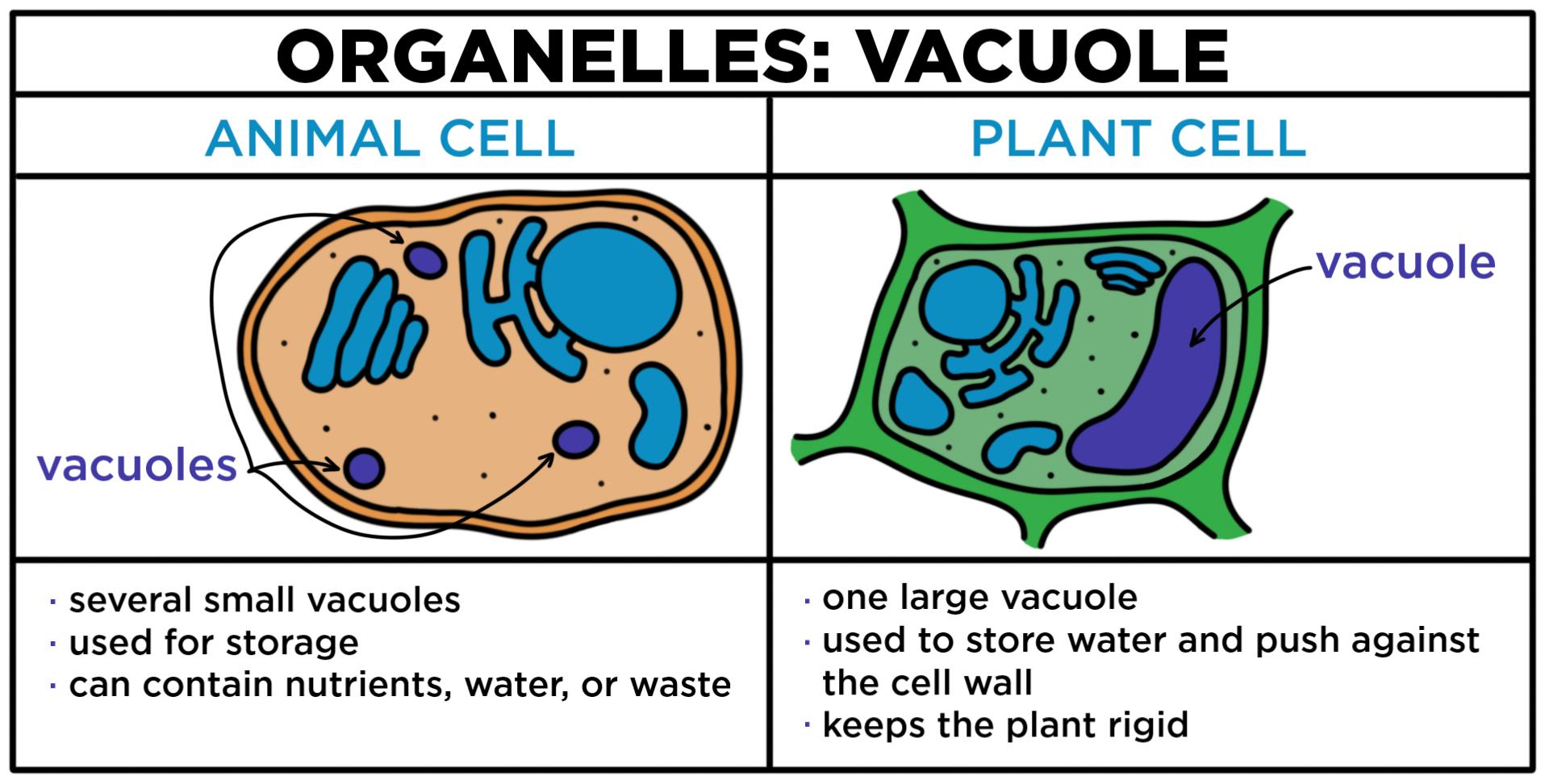
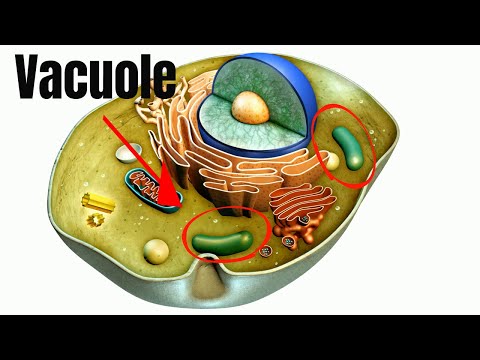
A vacuole is a membrane-bound sac that contains water and other substances. You can think of it as the refrigerator of the cell because it stores salts, carbohydrates, sugars, and water.
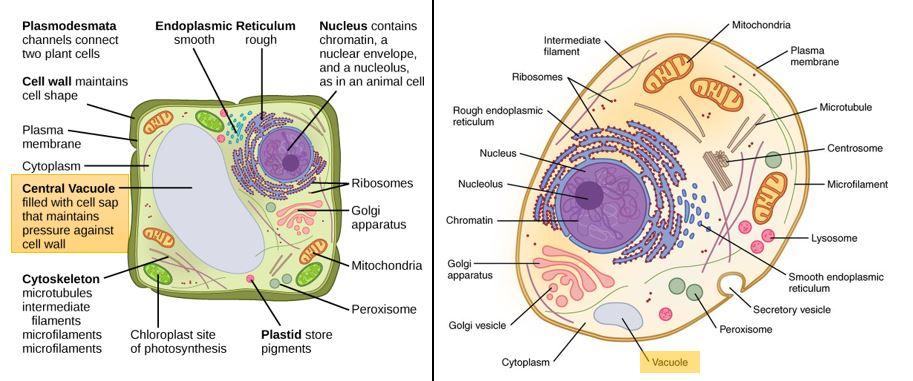
Image source: By CNX OpenStax (modified by expii) CC BY 4.0, via Wikimedia Commons Image source: By OpenStax (modified by expii) CC BY 4.0, via Wikimedia Commons
Look at the image above and find the vacuoles in the plant and animal cells (I highlighted them). We can see that plants have a single, large central vacuole which takes up a lot of the cell's volume. It is normally filled with cell sap—a collection of water and nutrients. Animal cells have multiple smaller versions of this organelle.
Which of the following things might you find in a vacuole?
The central vacuole in plants is than the vacuoles in animal cells.
: Organelle that contains water and nutrients. Refrigerator of the cell
: Stores, sorts, and modifies proteins and lipids. Post office of the cell
: Helps the cell maintain its shape and assists with movement. Skeleton of the cell
: Make ATP (energy). Powerhouse of the cell
: Creates polypeptide chains and proteins. Factory of the cell
: The smooth ER makes lipids for the cellular membrane. The rough ER assembles proteins and transports them into and out of the cell
: Contains the genetic material, DNA, of the cell. Brain of the cell