Illustrated · 1 min

+2 contributors


What's the Water Cycle?
Water is constantly moving through Earth and its atmosphere. It is constantly changing phases. Sometimes we drink it. Sometimes we see it as snow, and other times we see it as steam.
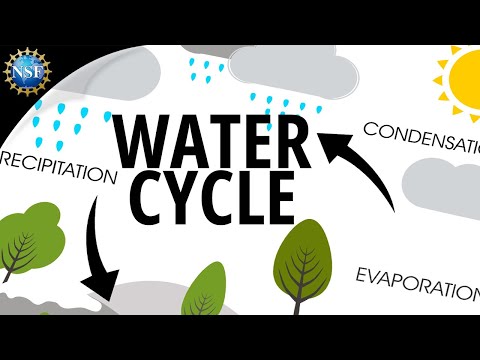
The water cycle describes the different processes that move water between the land, oceans, and the atmosphere. It is also called the hydrologic cycle.

Image source: By AIRS (Atmospheric Infrared Sounder) CC BY-SA 2.0, via flickr.com
Precipitation
Water makes its way from the atmosphere to Earth through precipitation. This falling water comes in many forms such as rain, snow, sleet, and hail.
Precipitation gets absorbed into the ground and becomes groundwater. It can become a part of an underground reservoir if it reaches deep enough. Water that doesn't get absorbed will travel down the land surface until it reaches a river or another body of water. This is called surface runoff.
Groundwater can be released at the surface, forming streams and other bodies of water. It can also be absorbed through the roots of plants.
Evaporation
Water at Earth's surface can re-enter the atmosphere when it evaporates. Evaporation is the process through which water turns into a gas. Another form of this is called transpiration. This is when water evaporates from the leaves of plants as a byproduct of photosynthesis. When water evaporates, it is called water vapor.
Condensation
Once in the atmosphere, the water molecules cool off and condense into droplets. This is called condensation, which is the process of changing a gas into a liquid. Once the droplets become big enough, they can travel back down to the land through precipitation.
And the cycle goes on.