Interactive · 1 question

+3 contributors


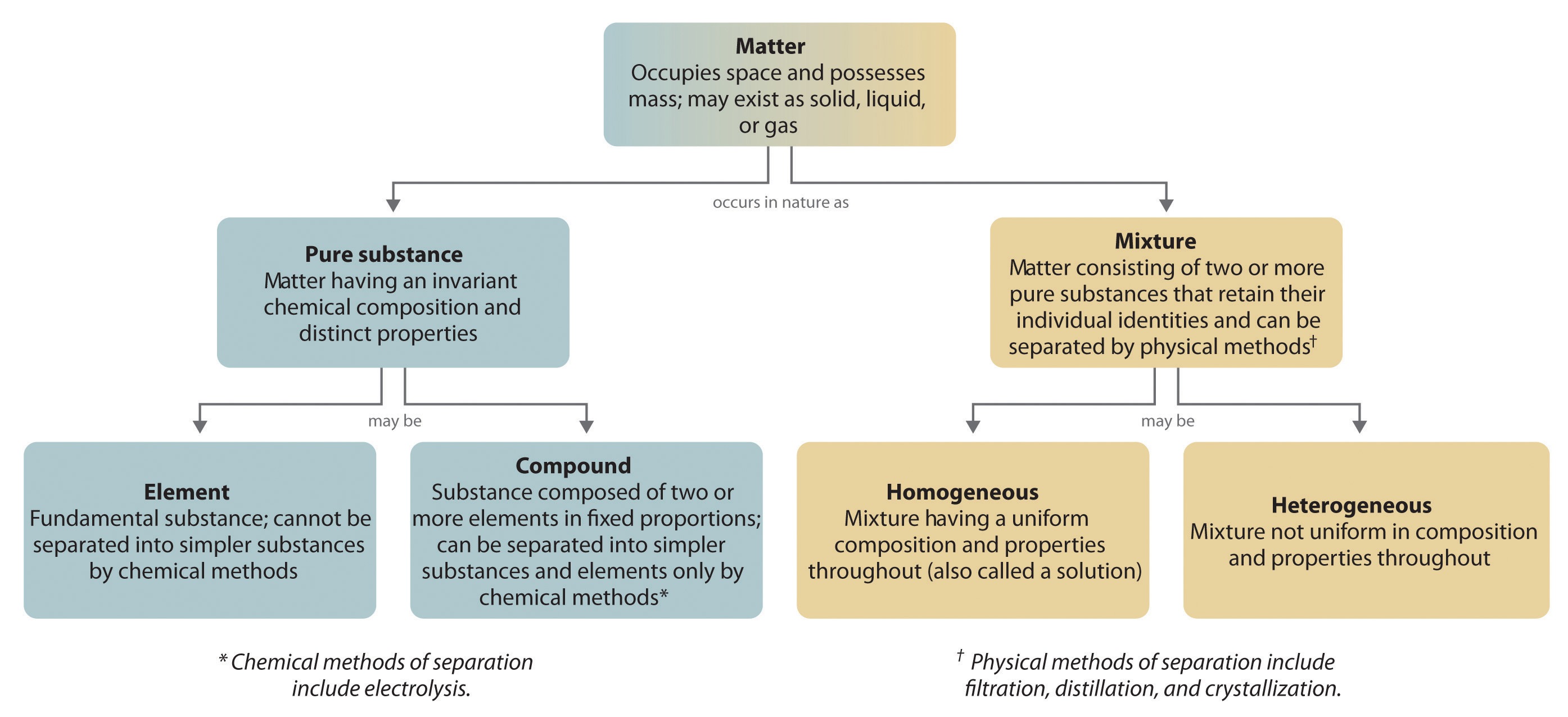
Mixtures are very much what they sound like. They are 2 or more compounds that are mixed up together. The individual components can undergo changes in their physical properties, but they will not undergo chemical changes.
There are broadly 2 types of mixtures; heterogeneous and homogeneous. Solutions are a type of homogeneous mixture.

Image by: Gabi Slizewska
Heterogeneous Mixtures
The word heterogeneous comes from the Greek words heteros, meaning other, and genos, meaning kind or type. So, in a heterogeneous mixture, we have separate, distinct types of compounds that are not uniformly mixed together.
In a chocolate chip cookie, we have chocolate spread out and mixed with dough. But, we can very easily point out where the chocolate is and where the dough is. Moreover, sometimes you'll get an area that has a lot of chocolate, and sometimes an area with almost no chocolate. The chocolate is not uniformly mixed with the dough. These all indicate that a chocolate chip cookie is a heterogeneous mixture.
Homogeneous Mixtures
The word homogeneous comes from the Greek words homos, meaning same, and genos, meaning kind or type. So, in a homogeneous mixture, it appears as though there is only a single type of thing. In a homogeneous mixture, we cannot tell the components apart, and everything is uniformly distributed. Alloys are a common example of homogeneous mixtures of metals.
Solutions
Solutions are liquid homogeneous mixtures. This is the most common form of mixtures encountered in chemistry. In a solution, rather than saying the components are mixed together, we say components dissolved. A solution has 2 distinct parts to it: solvent and solute. The solute is the part that dissolves. The solvent is the part that does the dissolving.
If we place sodium chloride into water it will form a solution. In this example, the salt is the solute. It is the part that dissolves. The water is the solvent, it is the part that dissolves the salt. We can also say that salt is soluble in water. That is to say, it is capable of being dissolved in water.
Which is a homogeneous mixture, but not a solution?
: A mixture whose components can be easily identified, and whose components may not be uniformly distributed. : A mixture whose components cannot be distinguished, and whose components are uniformly distributed. : A liquid homogeneous mixture. : The component of a solution that is dissolved. : The component of a solution that dissolves the solute. : If a material can be dissolved by a solvent, it is soluble.