What Is a Chemical Reaction? — Overview & Examples

Before this, knowWhat Is Energy? — Definition & TypesPhysical vs. Chemical Change — Definition & Examples

Illustrated · 1 min

Photograph of yellow maple leaves on a tree in autumn.

In order for leaves to change color in the fall, the substances that give them their green color the rest of the year must participate in a chemical reaction to become new substances with a different color.

By Marshall Reyher - Own work, CC BY 4.0, Wikimedia Commons

Chemical reactions are often associated with experiments that happen in test tubes, but almost everything around you is the result of a chemical reaction.

Simply put, a chemical reaction is any process that changes one substance (chemical "thing") into another. This occurs when bonds form or are broken between different atoms. Bonds allow atoms of specific elements to join together to become many different substances. Therefore, everything around and inside you that isn't a singular element is the product, or end result, of a chemical reaction. The substances that react to form these products are called reactants.

Chemical reactions are typically depicted in the format A+B→C+DA + B \rightarrow C + D, where the items before the arrow are the reactants, and the items the arrow is pointing to are the products. A reaction that can go back and forth is written as A+B⇌C+DA + B \rightleftharpoons C + D. In this case, A and B are the reactants of the "forward reaction" and the products of the "backwards reaction." We'll learn more when we study equilibrium

As you'll learn soon, bonds are formed to lower the energy of the participating atoms. Therefore, making bonds releases energy, and breaking bonds takes energy. Because of this, reactions usually either release or use energy. Reactions that release energy in the form of heat are called exothermic, while reactions that need energy, or lower the temperature of their surroundings, are called endothermic.

Illustrated · 1 min

###Chemical Reactions

When a chemical reaction happen, something new is created from the starting materials.

Everyday examples can occur in our kitchens! When a cake is baked, a chemical reaction occurs. The combination of different ingredients, along with the heat from the oven, cause chemical reactions. Through these chemical reactions a cake is formed!

Oil, eggs, sugar, milk, and flour are combined to create a cake.

When cake ingredients are added together and baked in an oven, a brand new item is formed!

Image source: By Cassie Gates

How do you tell if the reaction is a chemical change? Try removing the eggs or the oil from the cake. Can it be done? No! This is because the ingredients were changed on a chemical level to create something new. We cannot remove the individual ingredients from the newly formed cake. The properties of of the new substance are completely different from the starting ingredients.

Title: What is a chemical Reaction?
Text box: One or more substances (reactants) are changed chemically to form one or more new substances (products).
Reactants: oil, eggs, milk, sugar, flour [arrow right] Product: cake [arrow down] Cannot remove reactants from product.
Text box: One way to tell if a chemical reaction has occurred is to see if the original reactants can be recovered, unchanged. 

Text box:

A chemical reaction occurs when a substance is changed chemically.

Image source: By Cassie Gates

As you learn more about chemistry and chemical compounds, you'll see chemical reactions are written as equations. These equations are a simplified way to write and describe chemical reactions.

Title: General chemical reaction equations
Text box: chemical reactions are often represented by equations. These equations give information about the reaction in a simplified way.
Generic equation: A + B (right arrow) C
A + B = reactants (One or more chemical compounds that are present before a reaction occurs.). Right arrow = Arrow (Shows the direction the reaction is going). C = Product (New chemical compound formed).
Example: CH3OOH + NaHCO3  (right arrow)  CH3COONa + CO2 + H2O
Text box: An example reaction is vinegar/acetic acid reacting with baking soda/sodium bicarbonate to form a salt/sodium acetate, gas/carbon dioxide, and water. This reaction can safely be done at home using ingredients found in your kitchen!

As you learn more about chemistry and chemical reactions, these reactions can be expressed with equations!

Image source: By Cassie Gates

Interactive · 1 question

A+B→C+DA+B\rightarrow C+D The generic chemical reaction\textit{The generic chemical reaction}

A chemical reaction changes the configuration of atoms. We express chemical reactions using equations like the one above. There are 3 parts to a chemical equation: reactants, products, and an arrow. Reactants are the chemicals that enter a reaction. Products are the chemicals that leave a reaction. The arrow always points from the reactants to the products. Typically reactants are on the left and products are on the right, but this is not true 100% of the time. Always look at the arrow to determine products and reactants.

Chemical equations must always be balanced. A balanced equation implies 2 things. The amount and type of each atom are the same on both sides, and the total charge of each side must be the same. The idea of a balanced equation directly supports that only the configuration of atoms change in a reaction.

Examine the reaction below, A+B+C←D+EA+B+C\leftarrow D+E Select the reactants for the reaction from the list below.

Choose all correct answers

Video

(Video) Types of Chemical Reactions

by Melissa Maribel

This quick video will teach you all you need to know about types of chemical reactions. Melissa goes over the following six things:

Illustrated · 1 min

A chemical reaction is a process in which chemicals interact to form new substances. You see chemical reactions everyday! Have you ever seen something made of metal develop rust over time? Have you ever baked a cake? Ever lit a match? That's right; all these involve chemical reactions!

fire, or combustion, is a chemical reaction!

When chemicals interact, the atoms interacting with each other are called reactants, and the new substances they form are called the products. You'll need to learn more about this as you work with chemical equations. There are many different types of chemical reactions, and specific branches of chemistry often focus on just one type or sub-type of reaction.

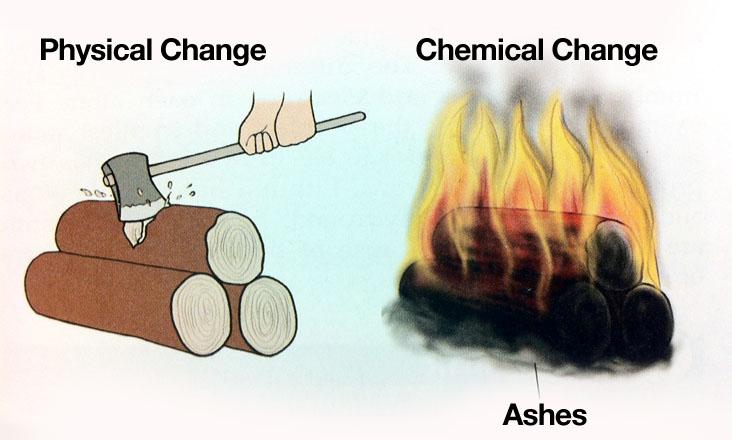
Now, in order for a chemical reaction to occur, there must be a chemical change. When an ice cube melts, it's still water, just in a different form. We changed it from a solid to a liquid. So, this is a physical change, not a chemical change, since you do not end up with a new substance. In this case, it is called a phase change.

Type a concept, like “slope” or “photosynthesis”.

↑ ↓ to choose · Enter to openSearch explanations and problems