Read · 1 min
+2 contributors


Let's look at an example first. Suppose there are people and we have to form a committee of people out of these . (In the committee all have equal power!)
Let's think about how many ways we can do this.
For the time being, let us assume that the committee's members are represented as and . The people are denoted as . Then, as explained under What is a permutation?, the number of ways of forming the committee is . But we have to notice one thing! Here, we have counted every committee that satisfies our needs six times.
We have considered the committee formed by and six times. That's because we have considered the following committees to be distinct:
Whereas for our purposes, these should not be considered distinct, because as we said, in the committee every one has equal power — so they cannot be labelled as and . (Because we may consider as the chairperson and give more power than the others!)
We should divide by . (As then we will be considering one committee exactly time).
So, our answer is .
(Note that , i.e., the number of ways that distinguishable objects can be arranged among themselves.)
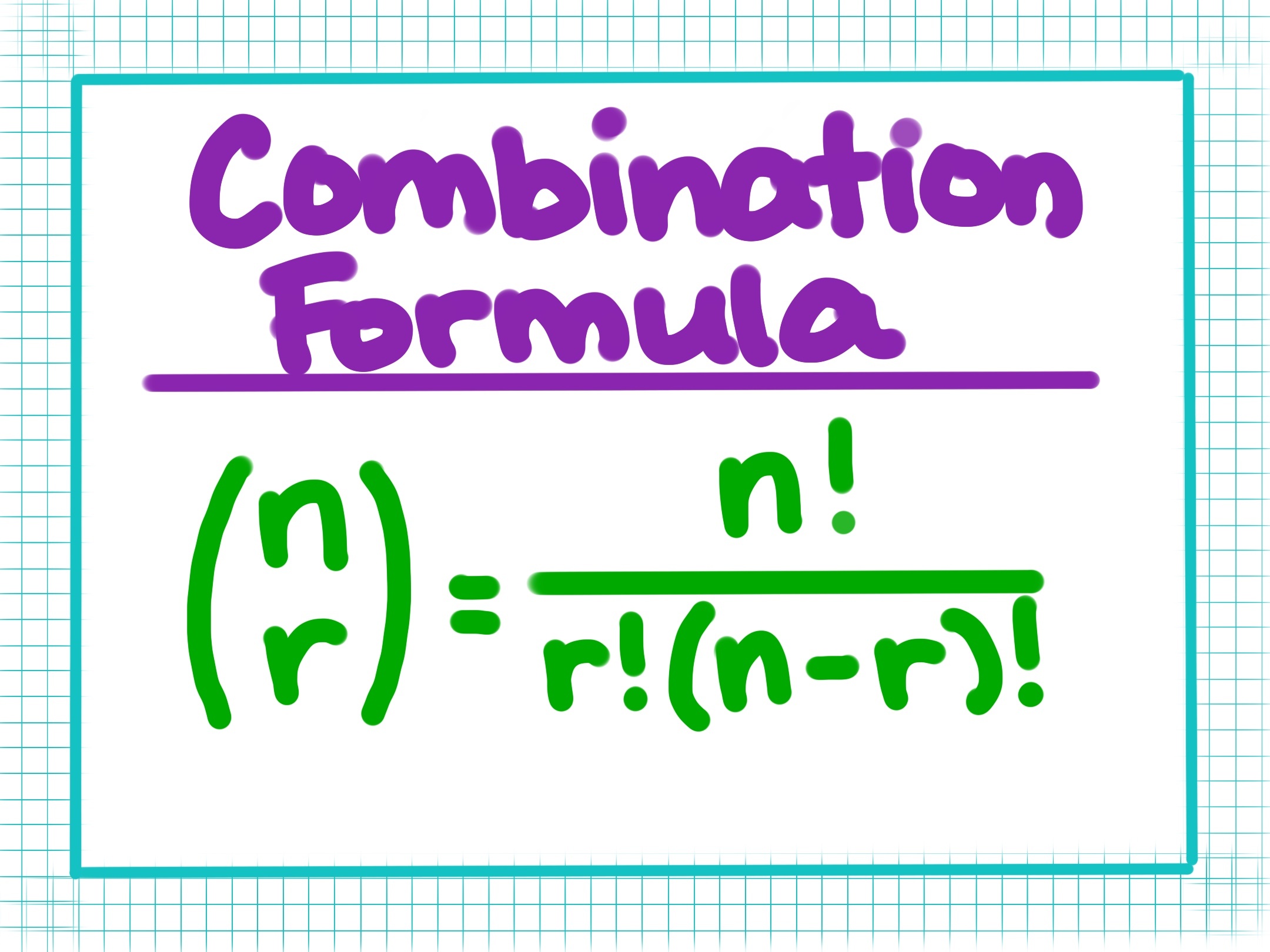
We say that there are combinations of people from people.
So, a combination is a permutation where the order of the objects is not important.
Since distinguishable objects can be arranged among themselves in distinct ways, so if there are permutations of objects from distinguishable objects, then how many combinations of objects from the distinguishable objects are there?
Yes, the required number is .