Read · 1 min
+3 contributors

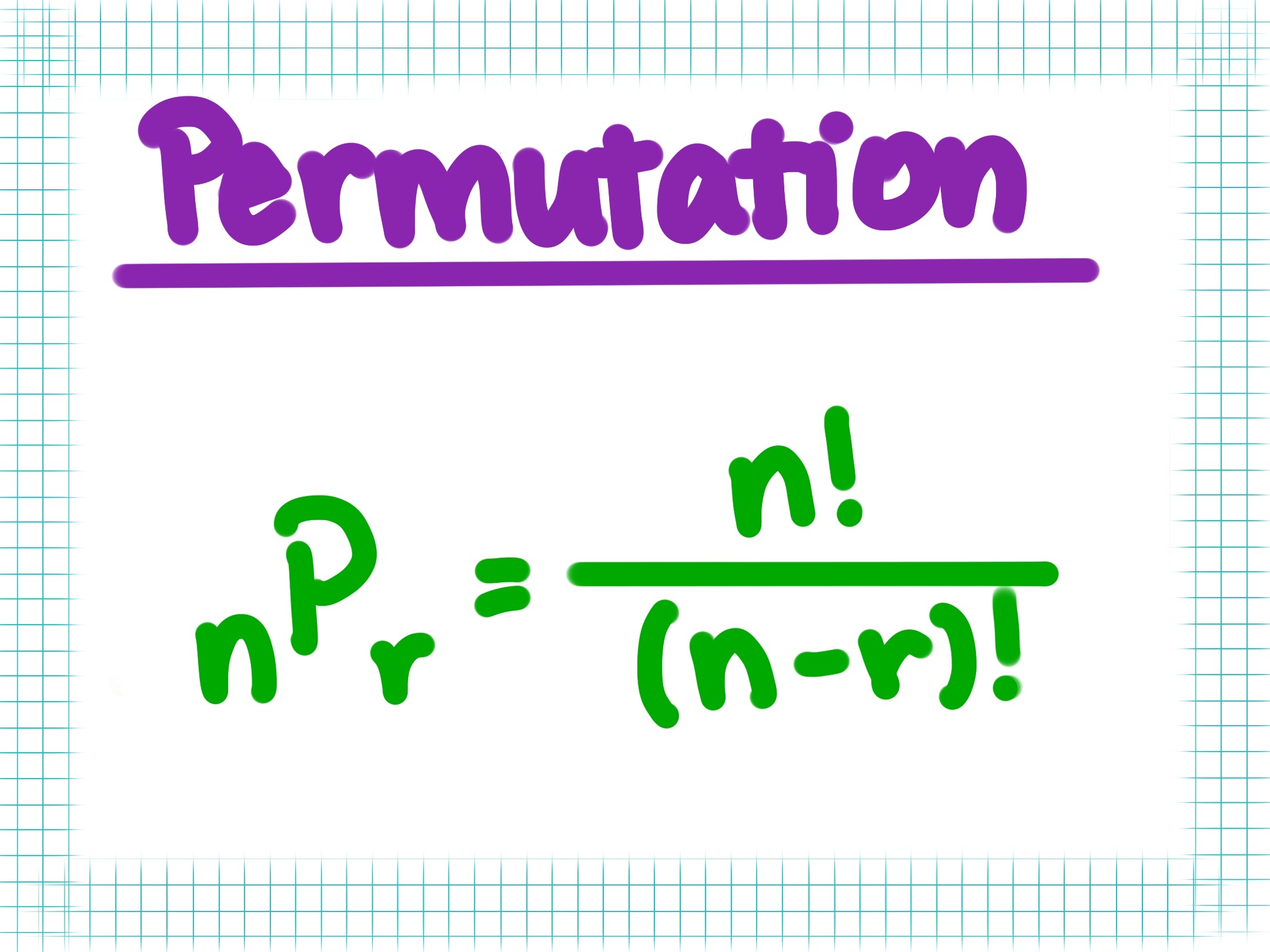
Permutation
Let's start with an example scenario to provide some intuition:
The license plate of my mom's car contains seven characters: 4, 5, 7, 9, E, H, and U. From that information, think about whether you can deduce her license plate!
The answer is: no! I didn't tell you the arrangement of the characters.
From what I told you, there are possible license plate numbers. I don't think you care to see the entire list of possibilities, but here are a few: 4579EHU, 4579EUH, 4579HEU, 4579HUE, 4579UEH, 4579UHE, etc.
These possibilities are called permutations of the seven characters I listed at the top of this explanation.
It turns out that my mom's license plate number is 4UHE795. However, if I just switched around the 9 and the 5, I'd get 4UHE759. That license plate number would correspond to an entirely different car. In other words, rearrangements of the characters on license plates refer to entirely different cars.
That's an important characteristic about permutations. Order matters.
###Order Matters
Order matters in permutations. Each permutation, or rearrangement, refers to a different entity.
Order matters in permutations. Each permutation, or rearrangement, refers to a different entity.
Order matters in permutations. Each permutation, or rearrangement, refers to a different entity.
I can't emphasize that point enough. There's the core of this explanation, condensed into two sentences.
Let's part with the formal definition of a permutation. With all the previous stuff in this explanation down pat, let's go!
A permutation, also called an "arrangement number" or "order," is a rearrangement of the elements of an ordered list into a one-to-one correspondence with itself.
Awesome. You now know about permutations. Now off with you into the world with this new enlightenment!