What Is Cellular Respiration? — Aerobic & Anaerobic

Illustrated · 3 min

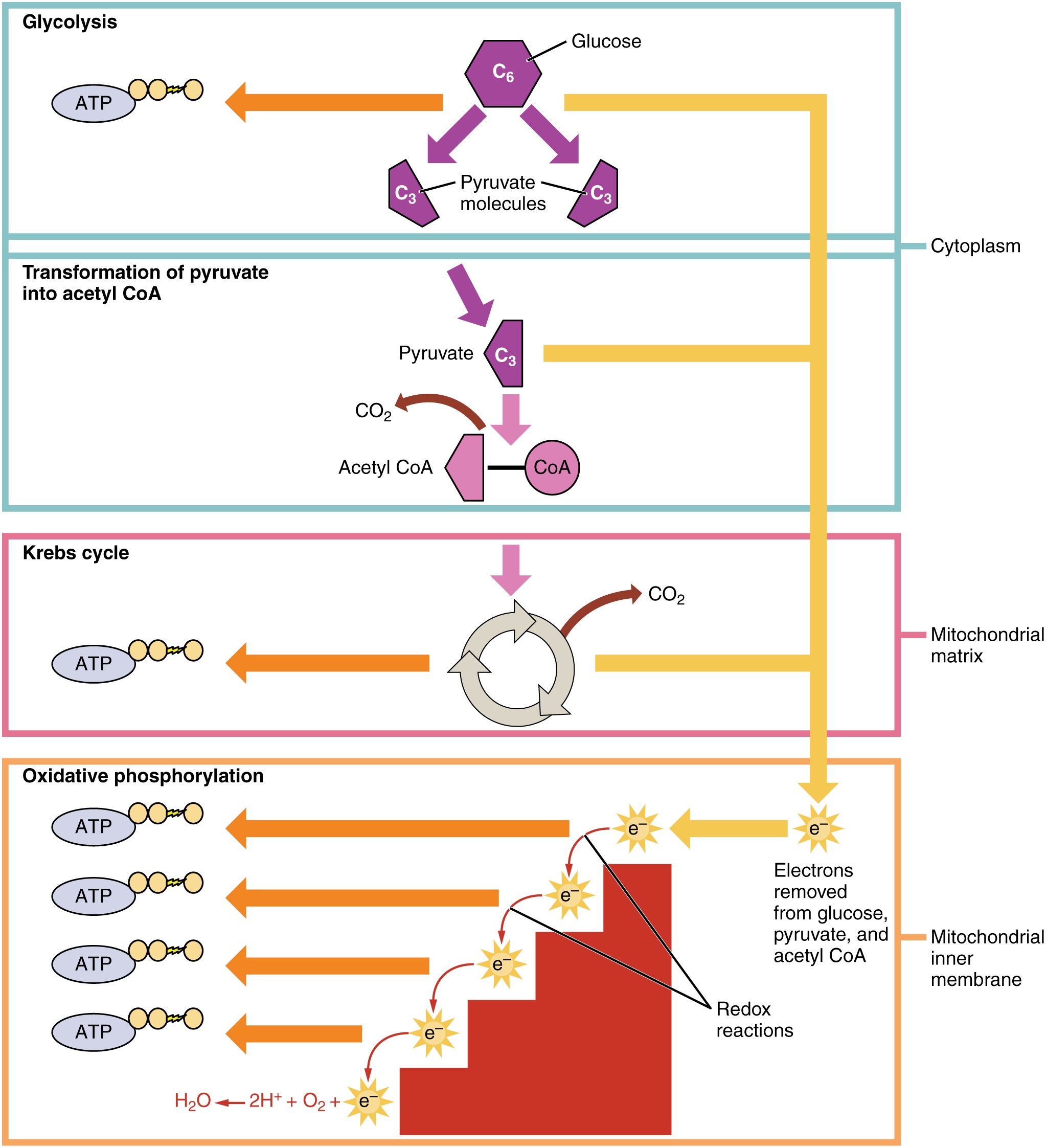
A diagram showing the three parts of cellular respiration. Starting with glycolysis in the cytoplasm, glucose is converted to pyruvate. In the mitochondria, Krebs cycle takes the pyruvate, and releases electrons to carrier molecules, NADH and FADH2. The electron transport chain takes the electrons from NADH and FADH2, and uses them to create a hydrogen ion gradient. The gradient is then used to make ATP.

Image source: By Gabi Slizewska

You get your energy from the food you eat. But how does your body convert the energy stored in food to energy your cells can use?

This is where cellular respiration comes in.

Cellular respiration is a series of stages and reactions that cells use to "make" energy. More accurately, the cells convert energy already existing in food molecules to ATP, the basic energy currency in cells.

This process is used by both plant and animal cells.

It lets cells release energy from food gradually. If the energy was released all at once, most of it would be lost through heat and light.

The overall reaction looks like this:

6O2_2 + C6_6H1_12_2O6_6 ⟶\longrightarrow 6CO2_2 + 6H2_2O + Energy

There are three main stages to the process:

Glycolysis:

A diagram of cellular respiration: glycolysis

Image source: By Gabi Slizewska

Respiration begins with a sugar molecule, called glucose.

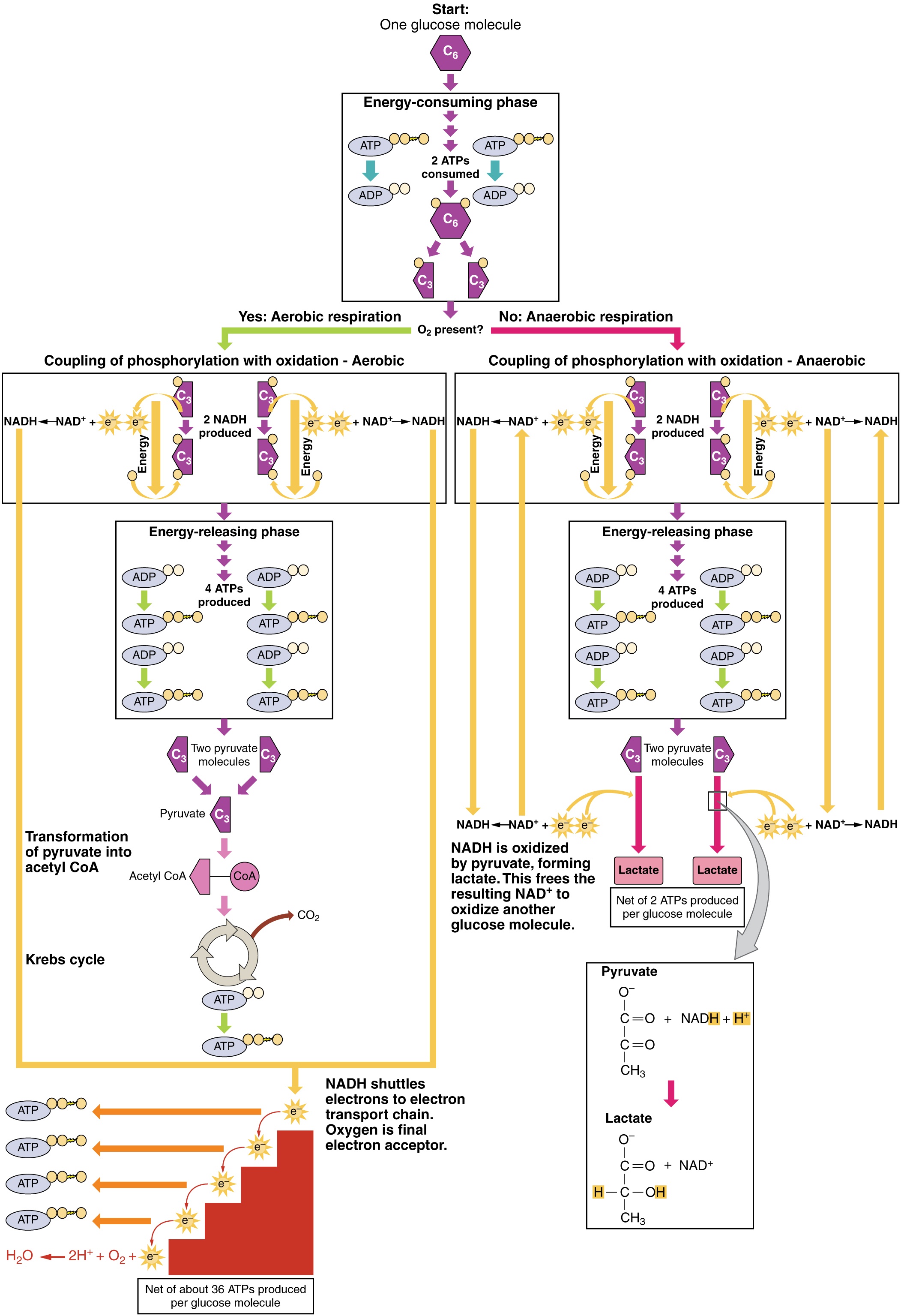
The first stage, called glycolysis, is the only stage which doesn't require oxygen to proceed. This is why it is called anaerobic. It is also the only stage which happens in the cytoplasm of the cell.

Glycolysis breaks down a molecule of glucose into two molecules of pyruvate, a 3-carbon molecule.

To complete the necessary reactions to make pyruvate, we actually need to invest some energy. We need to use two molecules of ATP. At the end of glycolysis, we get four ATP. Since we used two in the beginning, this gives us a net gain of two ATP.

It doesn't seem like much, and it's not. However, the cell can undergo glycolysis very quickly. In just a few milliseconds, thousands of ATP molecules are produced.

A diagram of glycolysis

Image source: By Megrclarke CC BY-SA 4.0, via WIkimedia Commons

Other important products of glycolysis are two NADH molecules. NAD+^+ is a carrier molecule which can pick up a pair of electrons and a hydrogen. This transforms it into NADH. If oxygen is present, we can move on to the next stage.

Let's review.

Glycolysis:‾\underline{\text{Glycolysis:}} Uses: Glucose and 2 ATP\text{Uses: Glucose and 2 ATP} Produces: 4 ATP, 2 pyruvate molecules, and 2 NADH\text{Produces: 4 ATP, 2 pyruvate molecules, and 2 NADH}

Krebs Cycle:

Diagram of cellular respiration: Krebs cycle

Image source: By Gabi Slizewska

The Krebs cycle, or citric acid cycle, doesn't actually use oxygen. However, it's still considered to be an aerobic process because it will only work if the electron transport chain (which uses oxygen) is working.

This time, we are in the matrix of a mitrochondrion.

The Krebs cycle begins with a pyruvate molecule from glycolysis. As it's broken down, the reactions release carbon dioxide as waste and one ATP molecule.

Remember, glycolysis produces two pyruvate molecules, so the Krebs cycle can complete two rounds for each glucose molecule. That gives us two ATP molecules total.

High energy electrons from the pyruvate get transferred to carrier molecules. Just like in glycolysis, NAD+^+ gains electrons and becomes NADH. Additionally, another carrier molecule, FAD, picks up two pairs of electrons and two hydrogens to become FADH2_2.

The electron carriers make their way to the final stage of cellular respiration, the electron transport chain.

So what are the totals?

Krebs cycle:‾\underline{\text{Krebs cycle:}} Uses: 2 pyruvate\text{Uses: 2 pyruvate} Produces: 2 ATP, carbon dioxide, 2 FADH2, and 6 NADH\text{Produces: 2 ATP, carbon dioxide, 2 FADH2, and 6 NADH}

Electron Transport Chain:

Diagram of cellular respiration: electron transport chain

Image source: By Gabi Slizewska

The last stage of respiration is called the electron transport chain. This is the only stage that actually uses oxygen, and it occurs inside the mitochondria.

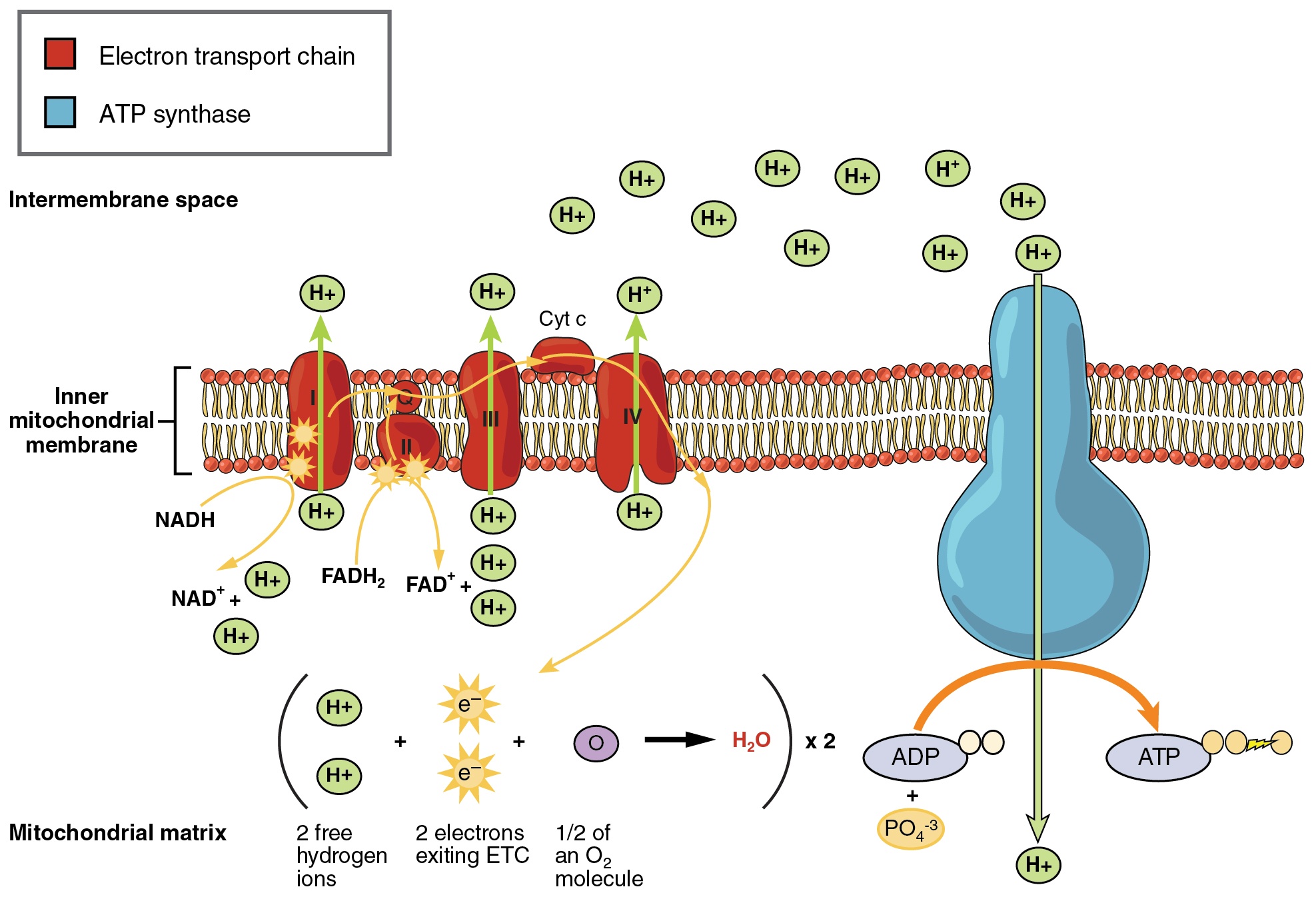
The carrier molecules from glycolysis and Krebs cycle, NADH and FADH2_2, enter the matrix of the mitochondrion and pass their electrons to the transport chain. The transport chain consists of several membrane proteins in the inner mitochondrial membrane.

As electrons move through the chain, their energy helps move hydrogen ions into the intermembrane space of the mitochondrion. The hydrogen ions build up on one side of the membrane, making that side more positively charged than the matrix.

The charge difference pushes hydrogen ions through an enzyme called ATP synthase, back into the matrix. As the ions move through the ATP synthase, it is able to produce ATP.

Oxygen is the final electron acceptor in the chain, forming water in the process.

On average, each pair of electrons that moves through the chain, results in three molecules of ATP. That gives us about 36 ATP total produced by the electron transport chain.

Let's review.
Electron transport chain:‾\underline{\text{Electron transport chain:}} Uses: NADH, FADH2, Oxygen\text{Uses: NADH, FADH2, Oxygen} Produces: About 36 ATP and water\text{Produces: About 36 ATP and water}
Electron transport chain

Image source: By OpenStax College CC BY 3.0, via Wikimedia Commons

Interactive · 3 questions

Types of Respiration

Cellular respiration is the process cells use to release energy (ATP) from food. Usually we mean sugars, but it can also work with fats and proteins (amino acids). There are quite a few chemical reactions that take place in different steps, but overall the idea is pretty simple.

Oxygen + Glucose = Carbon Dioxide + Water + Energy

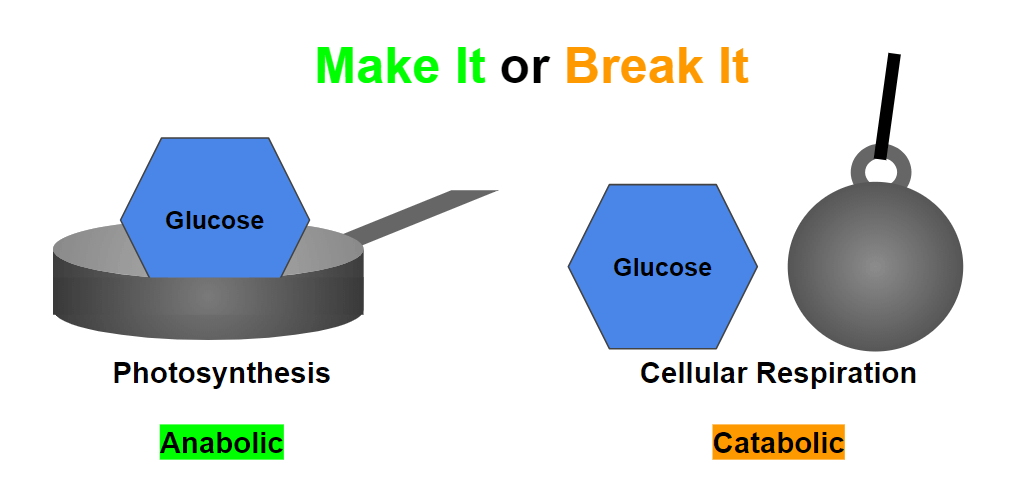
Chloroplasts use photosynthesis to convert light energy, water, and carbon dioxide into glucose and oxygen. Mitochondria use glucose and oxygen to produce ATP, carbon dioxide, and water.

Chloroplasts use photosynthesis to convert light energy, water, and carbon dioxide into glucose and oxygen. Mitochondria use glucose and oxygen to produce ATP, carbon dioxide, and water.

Image sources: By Clker-Free-Vector-Images CC0, via pixabay.com \\ By OpenClipart-Vectors CC0, via pixabay.com

Cellular respiration produces woah‾\underline{\phantom{woah}}.

Choose all correct answers

Illustrated · 3 min

What Is Cellular Respiration?

The main purpose of cellular respiration is to take glucose (a simple sugar molecule) and break it apart to release energy in the form of ATP.

Here's a very simplified explanation:

Glucose is converted into energy (ATP).

Image source: By Hannah Bonville

Some variation of this process occurs in all living things. In eukaryotes, it occurs in the cytoplasm and in the mitochondria.

There are three major steps:

Glycolysis occurs in the cytoplasm. It does not require oxygen. The citric acid cycle (Krebs cycle) occurs in the mitochondrial matrix. It does require oxygen. The electron transport chain occurs in cristae in the mitochondria. It also requires oxygen.

Image source: By Hannah Bonville

Cellular respiration is considered an aerobic process because it, as a whole, requires oxygen in order to occur. Because of this, it is also called aerobic respiration.

Let's take a look at each of its three steps.

Glycolysis

Glycolysis is the first step and it's the only one that doesn't require oxygen. It is anaerobic (no oxygen needed).

In glycolysis, one molecule of glucose is broken down and a net of 2 ATP are produced. (We say "net of 2 ATP" because 4 ATP are actually produced, but it costs the cell 2 ATP to run through glycolysis. So, the leftover gain in ATP is 2).

Glycolysis occurs in the cytoplasm. It doesn't require an organelle like the other two steps do. Because of this, glycolysis also occurs in prokaryotes, like bacterial cells.

Glycolysis produces a net of 2 ATP.

Image source: By Hannah Bonville

It's important to keep track of the number of carbons involved in these reactions. Note that glucose has 6 carbons (6C). When it is split into two pyruvate molecules, each of those has 3C (so there's still a total of 6).

Here's the TL;DR summary of glycolysis:

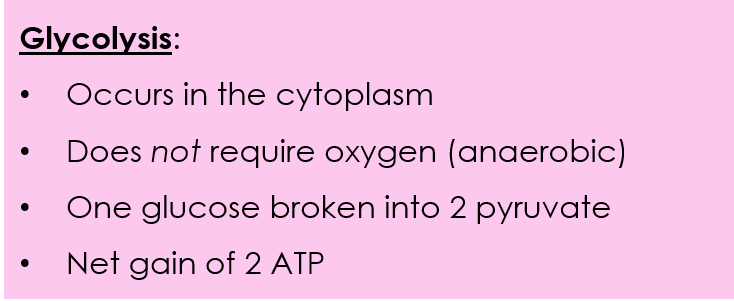
Glycolysis occurs in the cytoplasm. It does not require oxygen, so it is anaerobic. One glucose is broken down into two pyruvate molecules. There is a net gain of two ATP.

Image source: By Hannah Bonville

Citric Acid Cycle (Krebs Cycle)

The second step is called the citric acid cycle. It is also sometimes called the Krebs Cycle.

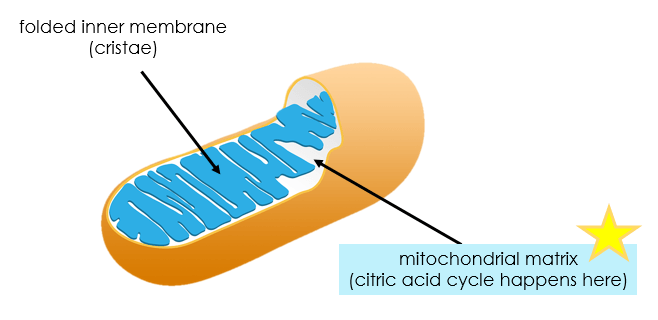
The citric acid cycle requires oxygen, which means that it is an aerobic process. It takes places in the mitochondrial matrix. Recall that this is the liquid inside the mitochondria in the space between the folds of its inner membrane.

A mitochondrion is shown. Inside is a folded inner membrane called cristae. The citric acid cycle happens in the mitochondrial matrix.

The structure of a mitochondrion \\ Image source: By Charlie Jones CC0, via pixabay.com

Each pyruvate made in glycolysis goes through the citric acid cycle. Since there are two pyruvate molecules made from each molecule of glucose, this means that the citric acid cycle runs two times.

In the citric acid cycle, each pyruvate from glycolysis is harvested for its electrons. In the process, for every two pyruvate molecules, 2 ATP are produced.

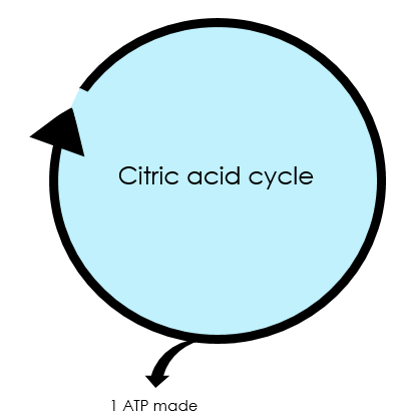
For every turn of the citric acid cycle, one ATP is made.

One ATP is made for each turn of the cycle. The cycle goes around two times for each glucose we started with in glycolysis. So, there are a total of two ATP produced after these two turns. \\ Image source: By Hannah Bonville

Let's talk for a second about this business of harvesting electrons. There are two electron carriers at work. They take electrons off molecules in the citric acid cycle and carry them to the next step of cellular respiration. Think of them as little electron suitcases.

The names of the carriers are NAD+ and FADH. We know if they've got an electron with them because their names change slightly to NADH and FADH2.

These guys will become important in the next step.

NAD+ and FADH are electron carriers.

Notice how the names of the electron carriers (suitcases) change slightly when they are carrying an electron. \\ Image source: Clker-Free-Vector-Images CC0, via pixabay.com (modified)

For each turn of the citric acid cycle, 3 NAD+ are converted into 3 NADH and 1 FADH is converted into 1 FADH2.

This means that, for each glucose molecule we started with, we get a total of 6 NADH and 2 FADH2.

The cycle also produces (per turn) two molecules of carbon dioxide (CO2CO_2). You know the carbon dioxide you breathe out? This is where it comes from.

Let's add all of this onto our picture of the citric acid cycle. Keep in mind, all of the values need to be doubled, since the cycle turns twice per glucose (our starting molecule).

Products of the citric acid cycle include CO2, NADH, ATP, and FADH2.

Image source: By Hannah Bonville

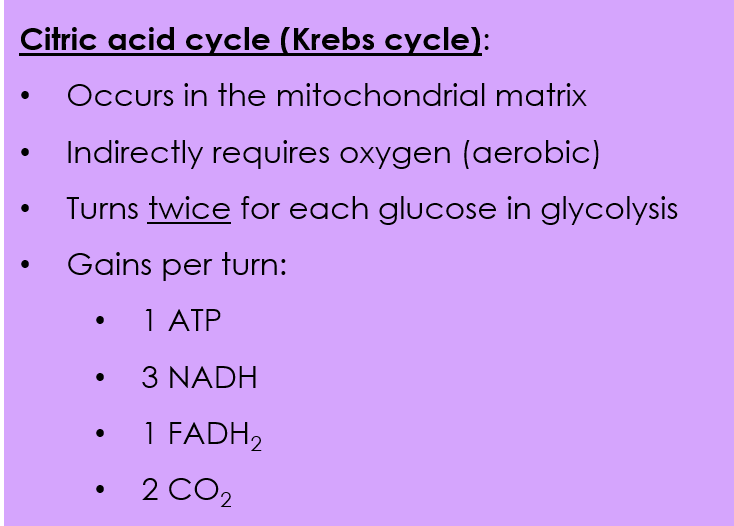
Here's the TL;DR summary for the citric acid cycle:

Citric acid cycle occurs in the mitochondrial matrix. It indirectly requires oxygen, so it is aerobic. It turns twice for each glucose produced in glycolysis. It gains one ATP, three NADH, one FADH2, and two CO2 per turn.

Image source: By Hannah Bonville

Electron Transport Chain

The last step is the electron transport chain.

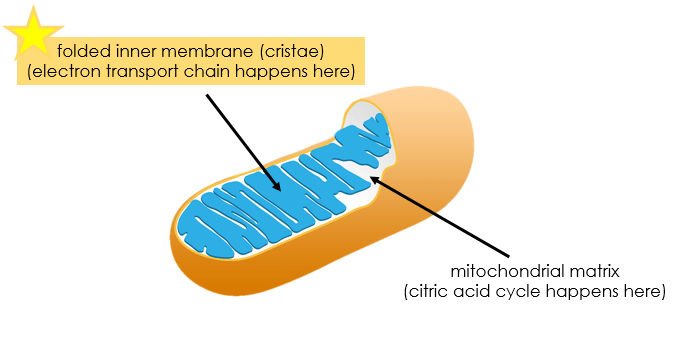
The electron transport chain ETC requires oxygen, which means that it is an aerobic process. It takes place in the folds of the inner membrane of the mitochondria. These folds are called cristae.

The electron transport chain happens in the folded inner membrane of the mitochondria. This area is also called cristae.

Image source: By Charlie Jones CC0, via pixabay.com

In this step, electron carriers NADH and FADH2 drop off the electrons they've carried from the citric acid cycle.

This drop-off allows a large amount of ATP to form. In fact, 34 ATP are produced.

The electron transport chain is directly aerobic because it uses oxygen and converts it into water.

Here's the TL;DR for the electron transport chain:

Electron transport chain occurs in the inner mitochondrial membrane (cristae). It requires oxygen, so it is aerobic. It produces water and 34 ATP. Electron carriers drop off electrons. Then they return to the citric acid cycle as NAD+ and FADH.

Image source: By Hannah Bonville

Let's take an overall look at cellular respiration as an equation based on what is put in and what comes out.

The inputs of cellular respiration are one glucose molecule and six oxygen molecules. The outputs are six carbon dioxide, six water, and 38 ATP molecules.

Image source: By Hannah Bonville

Key Vocabulary

  1. Cellular respiration
  2. Glycolysis
  3. Citric acid cycle
  4. Electron transport chain
  5. ATP
  6. Mitochondria
  7. Mitochondrial matrix
  8. Cristae
  9. Aerobic

Illustrated · 1 min

Aerobic vs. Anaerobic Respiration

Cellular respiration is the conversion of glucose and other energy molecules into ATP. It is how eukaryotic cells harvest energy from the food that they eat to fuel their cells. All organisms use respiration, even plants. Plants just make their own glucose that they turn into ATP through respiration.

Cellular respiration can occur both aerobically (with oxygen) and anaerobically (without oxygen). The process is much more efficient and productive in the presence of oxygen. Making ATP anaerobically is really inefficient.

Two Types of Respiration:

Aerobically: This is the most common form of respiration, and it has three main components: glycolysis, the citric acid cycle (or Krebs cycle), and the electron transport chain. The whole process requires food, usually in the form of glucose, and oxygen. It then produces carbon dioxide, water, ATP, and heat.

Anaerobically: This process has two components: glycolysis and fermentation. It requires glucose and produces ATP, heat, and lactic acid or ethanol.

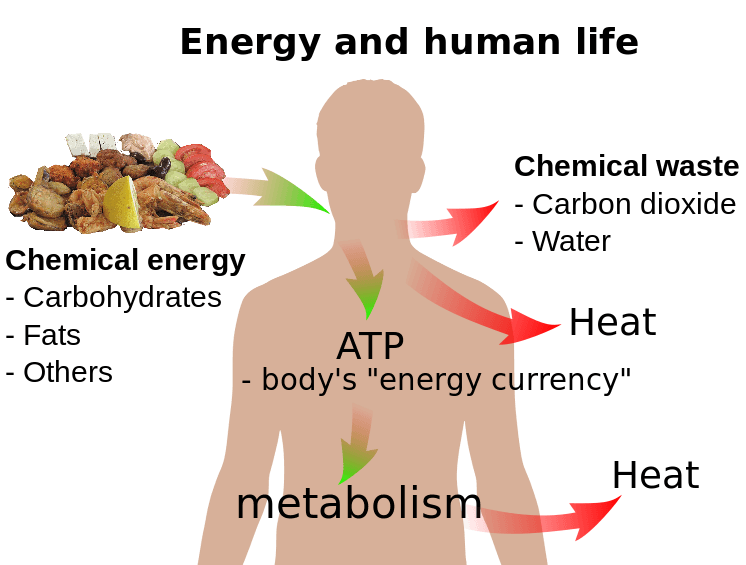
Energy and human life: chemical energy like fats, carbohydrates, and other molecules are converted into ATP through the metabolism. Chemical waste like carbon dioxide, water, and heat is produced.

Image source: By Mikael Häggström [Public domain], via Wikimedia Commons

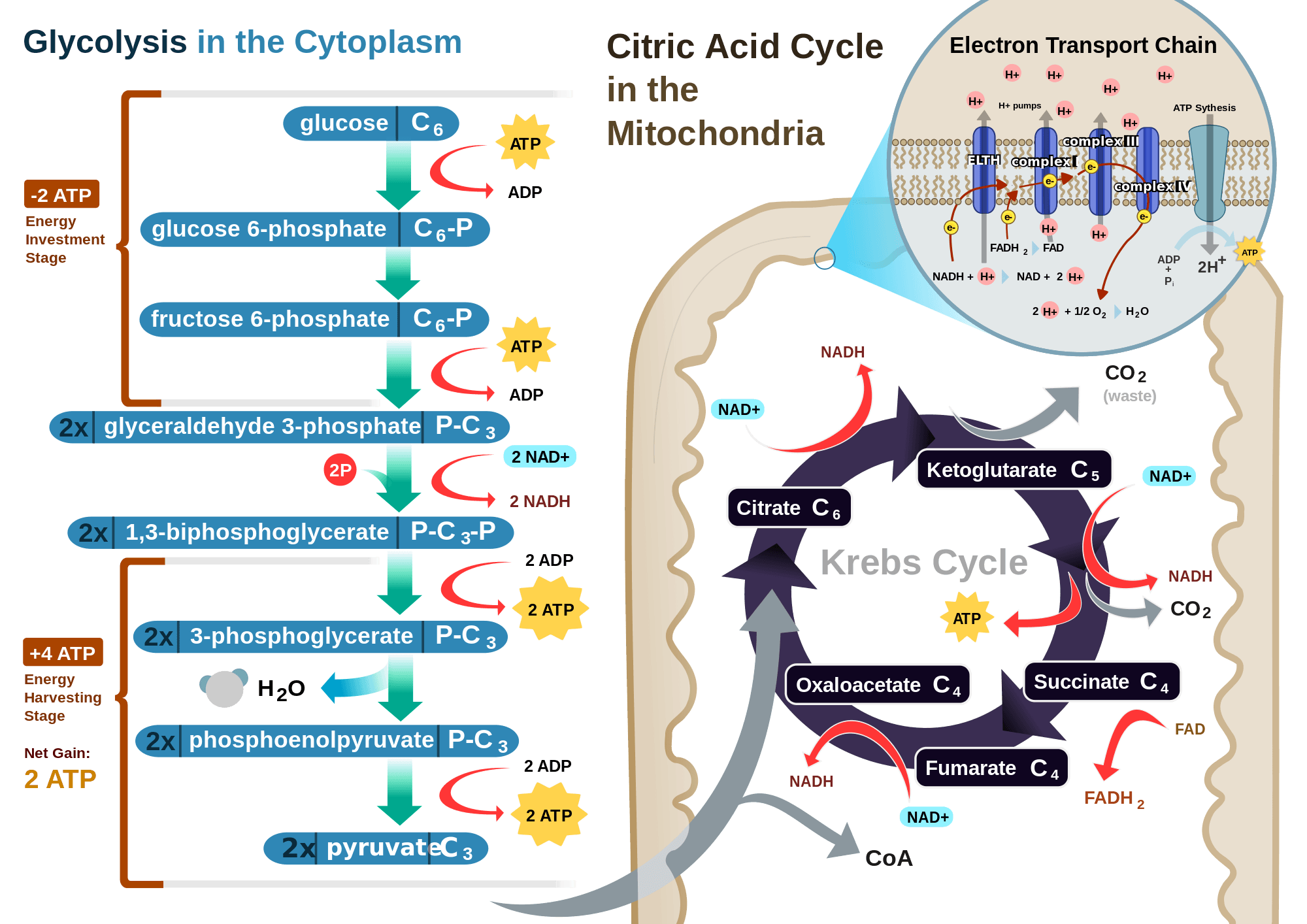
Glycolysis takes place in the cytoplasm, while the citric acid cycle takes place in mitochondria.

The complete steps to cellular respiration.

Image source: By RegisFrey CC BY-SA 3.0, via Wikimedia Commons

Video

(Video) Cellular Respiration

by Handwritten Tutorials

This awesome handwritten tutorial shows an overview of cellular respiration, including what goes into the cycle, what happens to those inputs, and what comes out of it.

Video

(Video) ATP and Respiration

by CrashCourse

Hank Green explains the steps to cellular respiration as well as what is produced during each stage in this video by Crash Course.

Type a concept, like “slope” or “photosynthesis”.

↑ ↓ to choose · Enter to openSearch explanations and problems