Interactive · 1 question

+1 contributors


Image source: By Riccardo Pesce CC BY 2.0, via Wikimedia Commons
Matter is defined as anything that takes up space and has a mass. What about light? Or heat? We interact with those things daily, but they aren't matter. What are they? The answer is energy.
Energy can be split into two categories- potential energy and kinetic energy.
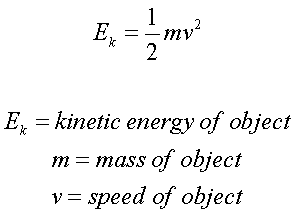
Kinetic energy is the energy of anything that is moving. When you are running, or walking, or chewing potato chips, you have a kinetic energy level. Even when you're sleeping, the inside of your body never stops moving. In fact, nothing ever does- atoms vibrate and move past each other constantly. We even have a sense that detects their movement. Don't believe me? We call the kinetic energy from this microscopic motion of particles heat. Light and sound are also types of kinetic energy, because they are types of waves, or repeated movement.
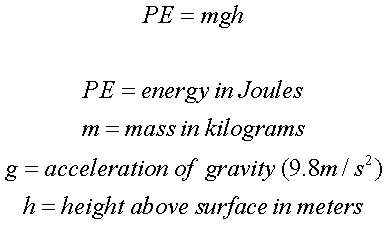
Potential energy is the stored energy that can be turned into motion. In order to run, or walk, or chew potato chips, or even keep your molecules vibrating at the average human body temperature, you need to eat food, which contains potential energy in the form of chemical energy. When you are high up on a hill, you have a type of potential energy called gravitational potential energy that allows you to roll down the hill without using any of your own energy.
Of course, energy is never really used- it's just converted from one form to another, according to Law of Conservation of Energy. A lot of this energy conversion occurs through chemical reactions, which is why chemistry is sometimes known as the Science of Energy in addition to the Science of Matter.
What happens to your gravitational potential energy when you jump off a swingset?