
Illustrated · 1 min

+2 contributors


Causes of Bottlenecking

Image source: By Gabi Slizewska
When disaster strikes, an ecosystem can change very quickly. When an event causes a drastic decrease in a population, it can cause a type of genetic drift called a bottleneck effect.
This can be caused by a natural disaster, like an earthquake or volcano eruption. Today, it is also often caused by humans due to over-hunting, deforestation, and pollution.
When most members of a population die suddenly, genetic variation goes down and the frequencies at which different alleles are found in the population can change in a big way. Remember that alleles are different forms of a specific gene located in the same place on a chromosome.
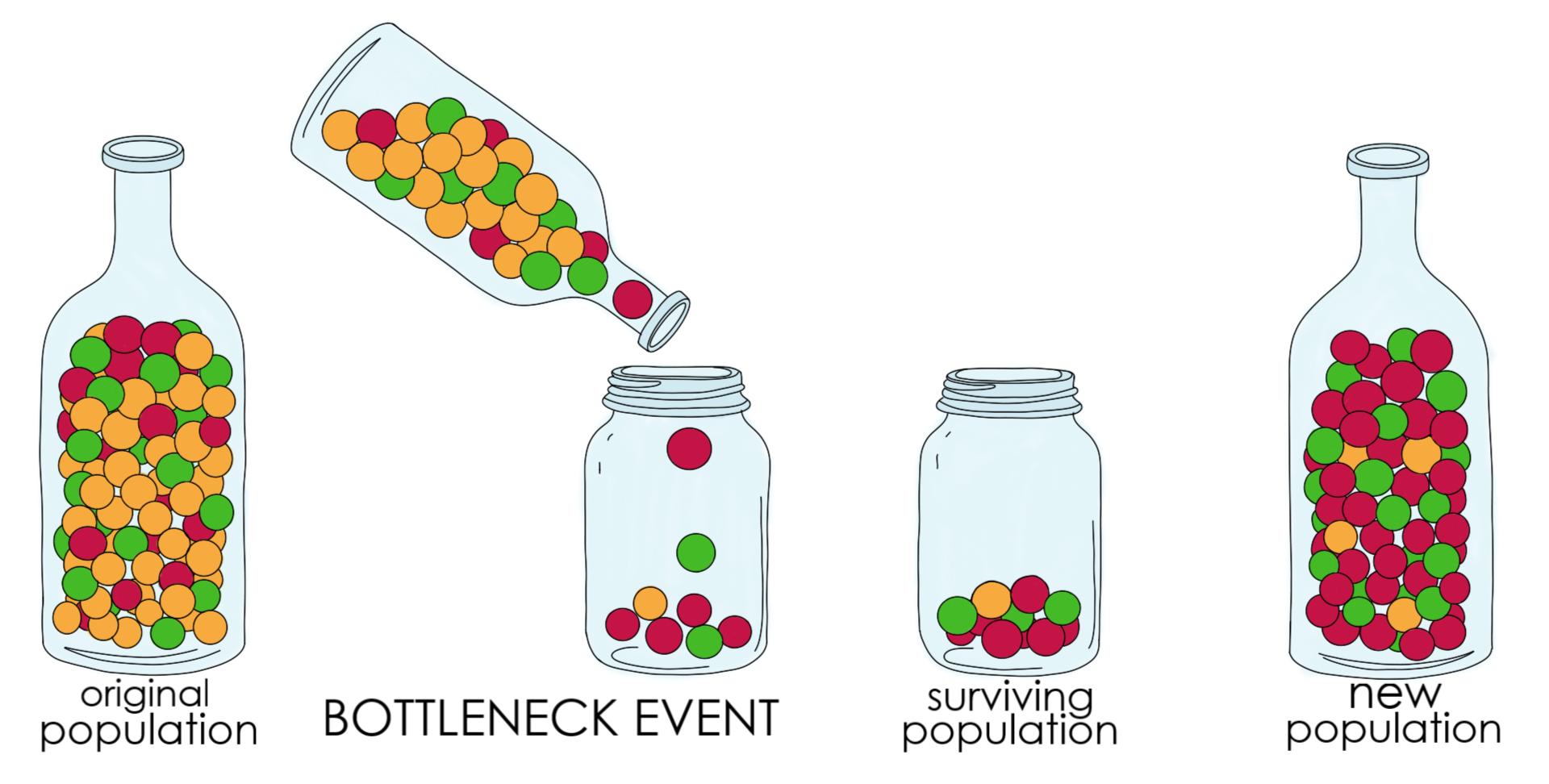
Image source: By Gabi Slizewska
Let's see how the bottleneck illustration can be applied here.
In the original population above, there are green, orange, and red individuals living in a habitat. Orange makes up the majority of the population. The colors represent alleles for a color gene. When disaster strikes, only a few random individuals make it out alive. As you can see, by pure luck, most of the survivors are red, with a few green and just one orange. Over time, the population grows again, but now the majority of members are red, and there are just a few orange. This is very different from the original population before the disaster happened.
This illustrates that when a bottleneck event happens, the variety in a population can decrease and the proportions of different alleles can change completely.





