What Is the pH Scale? — Definition & Overview

Video

(Video) pH and pOH: Crash Course Chemistry #30

by CrashCourse
This video by Crash Course explains the math behind the pH (and pOH) scale. With this information, you'll be able to understand what this scale actually measures, why water has a pH of 77, and also what all of this looks like in terms of numbers.

Illustrated · 1 min

The pH Scale

What is the pH scale?

  • The pH scale is a scale used to measure the pH (acidity or basicity) of a solution

  • The pH of a solution can range from 0 (very acidic) to 14 (very basic/alkaline), with a level of 7 being neutral (neither acidic nor basic)

  • Acidic substances have a larger concentration of hydrogen ions (H+^+)

  • Basic/Alkaline substances have a larger concentration of hydroxide ions (OH−^-)

Image showing the pH scale and examples of solutions with specific pH's. 0-6 is acidic, 7 is neutral, and 8-14 pH's are basic/alkaline

Image source: Caroline Monahan

How is pH measured?

  • pH is typically measured using pH paper, which when dipped in the solution, will change color to indicate a certain pH (take lemon juice for example, when pH paper is dipped in lemon juice, the color changes to red, indicating it is acidic)

  • Other methods of measuring pH include pH colorimeters and indicators

Illustrated · 1 min

The pH scale

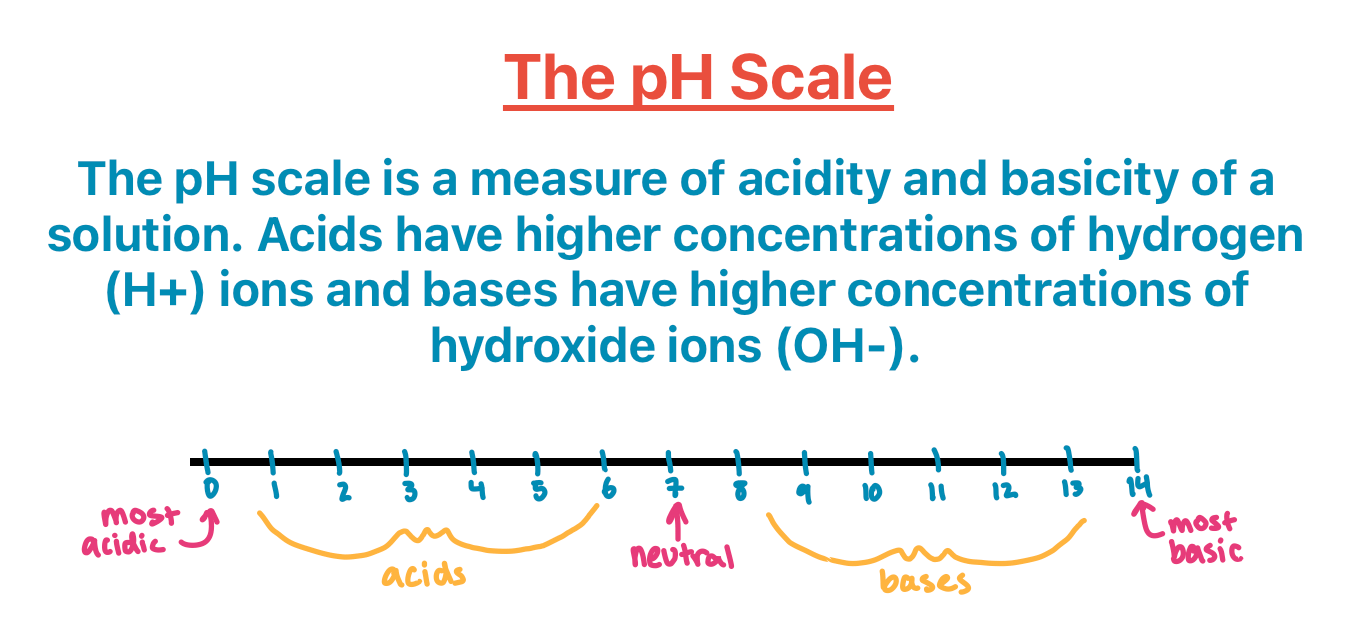
The pH scale is a measure of acidity and basicity of a solution. Acids have higher concentrations of hydrogen (H+) ions and bases have higher concentrations of hydroxide ions (OH-)

Image of a number line from 0 to 14. Closer to 0 being acidic, 7 being neutral, and closer to 14 being basic.

Image Source: By Trisha

Type a concept, like “slope” or “photosynthesis”.

↑ ↓ to choose · Enter to openSearch explanations and problems