Illustrated · 1 min

Equations of Tangent Functions
The tangent function is a type of periodic function that has both an amplitude and a period. Remember that amplitude is the distance from the center to the highest or lowest point of the graph. The period is the distance between two respective points on a wave.
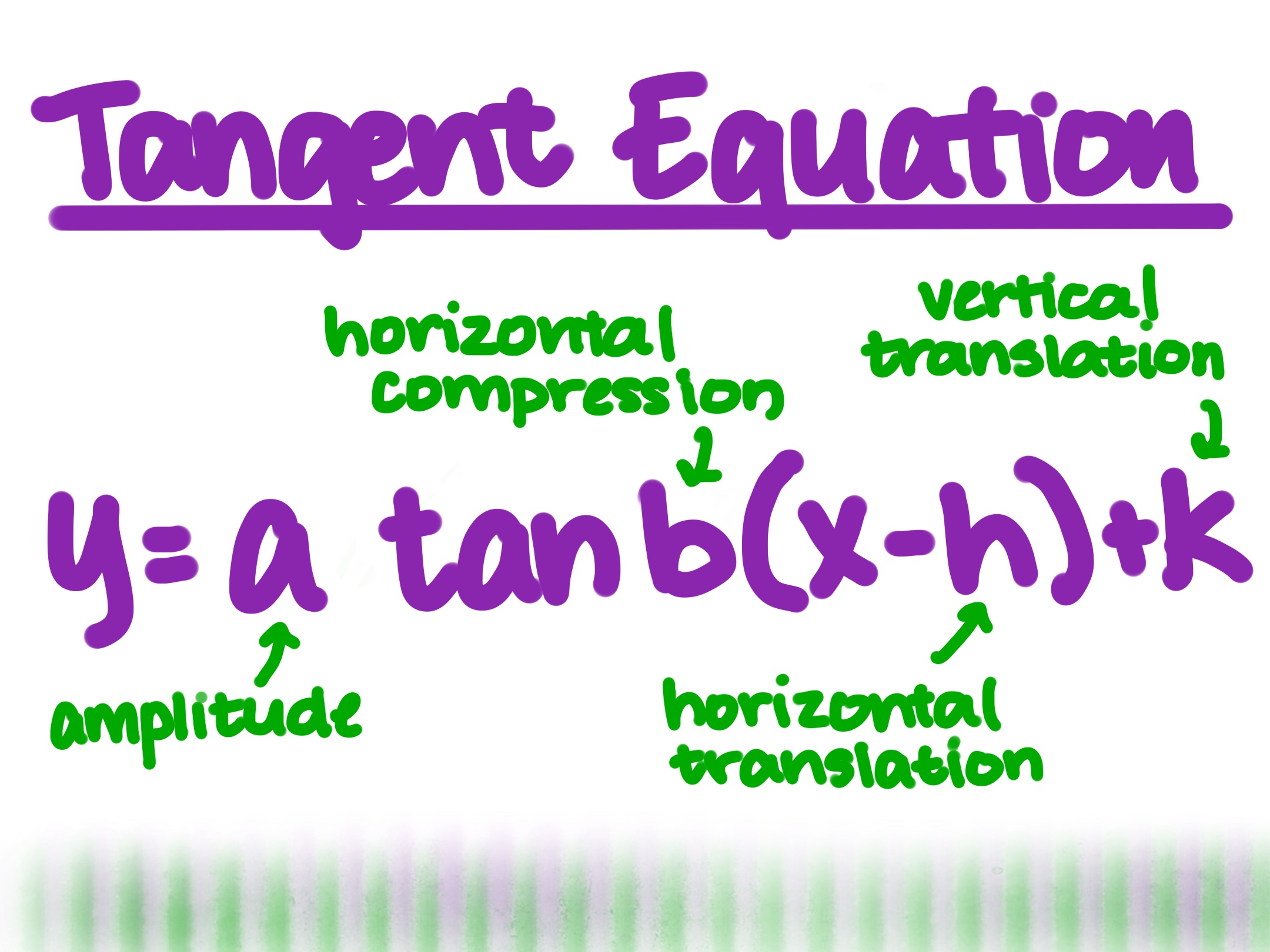
The tangent line equation is:
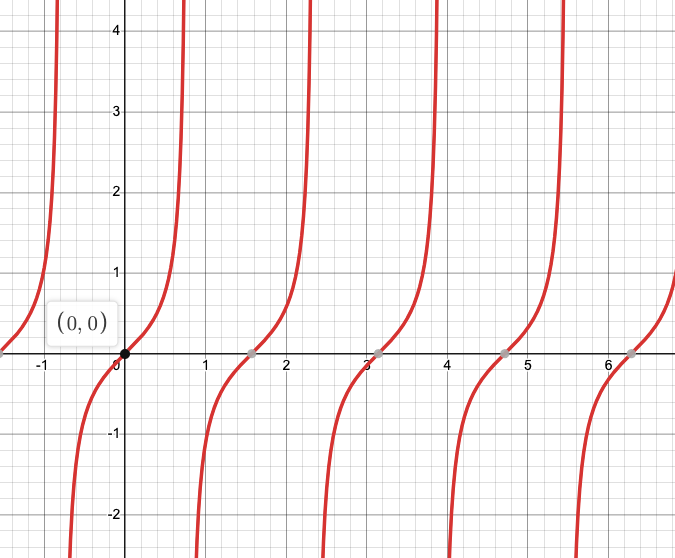
The tangent function is a discontinuous graph, meaning that you have to pick up your pencil to draw the graph on a coordinate plane. The period of a tangent function is .
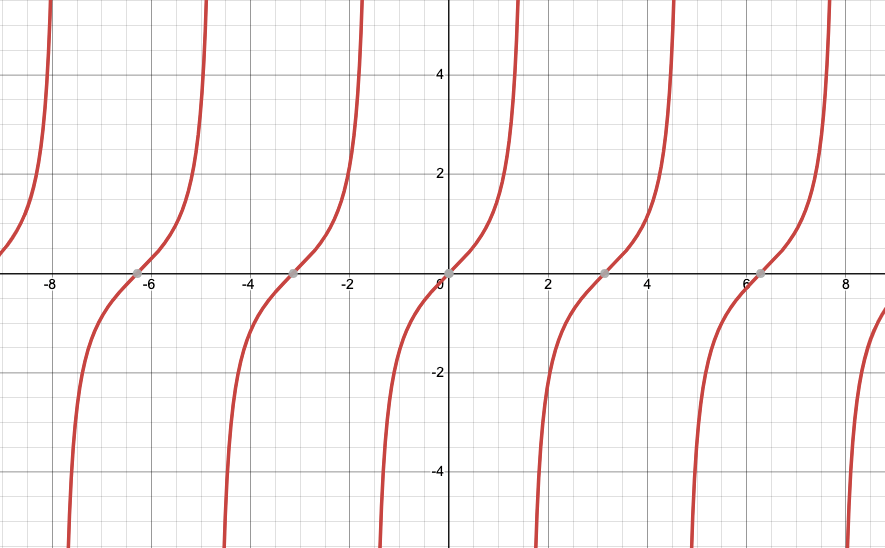
Here is a graph of a tangent function:
Made using Desmos
The domain of this function is complicated because of the discontinuity of the graph. The domain includes all real numbers of , except for the values with vertical asymptotes. On a standard, parent tangent function, the vertical asymptotes are at: , , , , and so on. The function will never touch these asymptotes. The range of this function is all real numbers.
To translate the function horizontally, we can consider the following formula: , where represents the horizontal translation. This may look familiar to you - it kind of looks like point slope form!
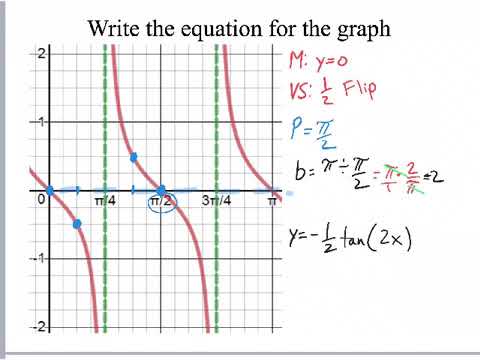
Even if you are given partial information about the tangent function, you can use the above information to help in finding the equation.