
Interactive · 10 questions
+4 contributors


Closed Sets
A set is considered closed for a particular operation (addition, subtraction, multiplication, or division) if doing that operation on any two numbers in the set produces another number that's already in the set.
That is certainly a mouthful. But, once we break it down a little bit, the idea of a closed set isn't too bad.

Image source: By Gerd Altmann CC0 via pixabay.com
First, let's briefly review what a set is.
Set is a word that has basically the same meaning in math as it does in regular life. A set is a collection or a bunch - a list or grouping of distinct objects (what we usually call "elements" in math).

Image source: By kismalac, Stephan Kulla CC0, via Wikimedia Commons
How many elements are in the set of days of the week?
So, let's return now to the idea of a closed set.
Let's use the set below as an example:
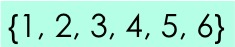
Let's see if the set is closed under addition. In order to be closed, when we add together any two numbers in our set, we must only get values that are already in the set.
If adding two of our numbers together produces a value that falls outside our set, then our set is NOT closed.
Let's add together and , since these are both values in our set.
What is the result?
Is the number part of our set?
This single example might make us think that our set is closed under addition. However, it's critical that you try more than one example.
You know, in court, you're innocent until proven guilty? Well, in our case, assume sets are open until proven closed.
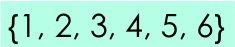
Now, we'll add two different values from our set. Let's use and . What is the result?
Is the number part of our set?
Since we've found a value outside our original set, we can say that the set is NOT closed under addition.
Let's try a different example with a new set. This time, we'll see if our set (below, in yellow) is closed under multiplication.
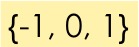
Let's start with the values and .
When we multiply them together, what is the result?
Is the number in our set?
Okay, so this might lead us to believe that our set is closed under multiplication. But, remember: open until proved closed.
We need to try using 2 different values from our set.
Now let's use and .
When we multiply these two values together, what is the product?
Is the value in our set?
Let's try the last combination of two values from our set: multiply and .
What is the product?
No matter what 2 values we multiply together in our set, we'll always get a number that is already in the set. Because of this, we can say that our set is closed under multiplication.

