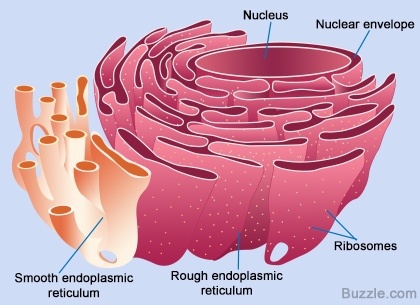
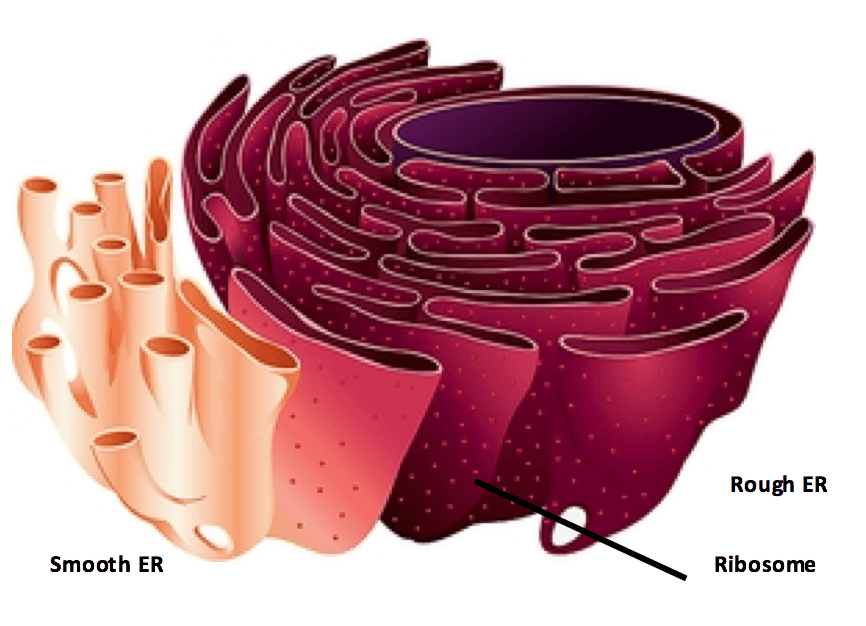
The endoplasmic reticulum (ER) is an organelle found in animal and plant cells and consists of flattened tubes enclosed within a membrane. There are two sections of the ER: smooth and rough.
The smooth ER earns its name from its smooth appearance in comparison to the rough ER. The smooth ER appears smoother because it does not have ribosomes attached to its surface. Since there are no ribosomes on its surface, the smooth ER specializes in lipid production as opposed to the Rough ER’s specialization in protein production.
The smooth ER is also involved in detoxifying some organic compounds and converting them into water soluble products. This is why there are large amounts of smooth ER found in liver cells. The main function of liver cells is to detoxify both natural metabolism products and overloads of ethanol from excessive alcoholic drinking and other drugs. In fact, the smooth ER can double its surface area within a few days and return to its normal size once the detoxification process is complete.