Interactive · 1 question
+2 contributors


Good news, logarithms that are not in base have the exact same rules as logs with base ! The only difference is the base. As we learned before, if the base of a log is not specified it is assumed to be , but if it is specified and it isn't , then we have to deal with it!
Bases of logs are very simple. Imagine taking a log (not base ) and setting it equal to a variable:
The base number in this example is . An easy way to think about it is by moving the base to the other side of the equation and setting the variable on that side as the exponent of the base number.
In our example it would look like this: ------> Which means that y=4.
This way of thinking is the inverse operation of an exponent, the same way division is the inverse to multiplication or square roots are the inverse to squares.
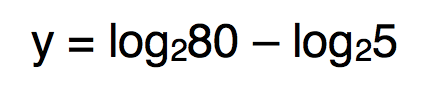
Now let's try out this method in a question:
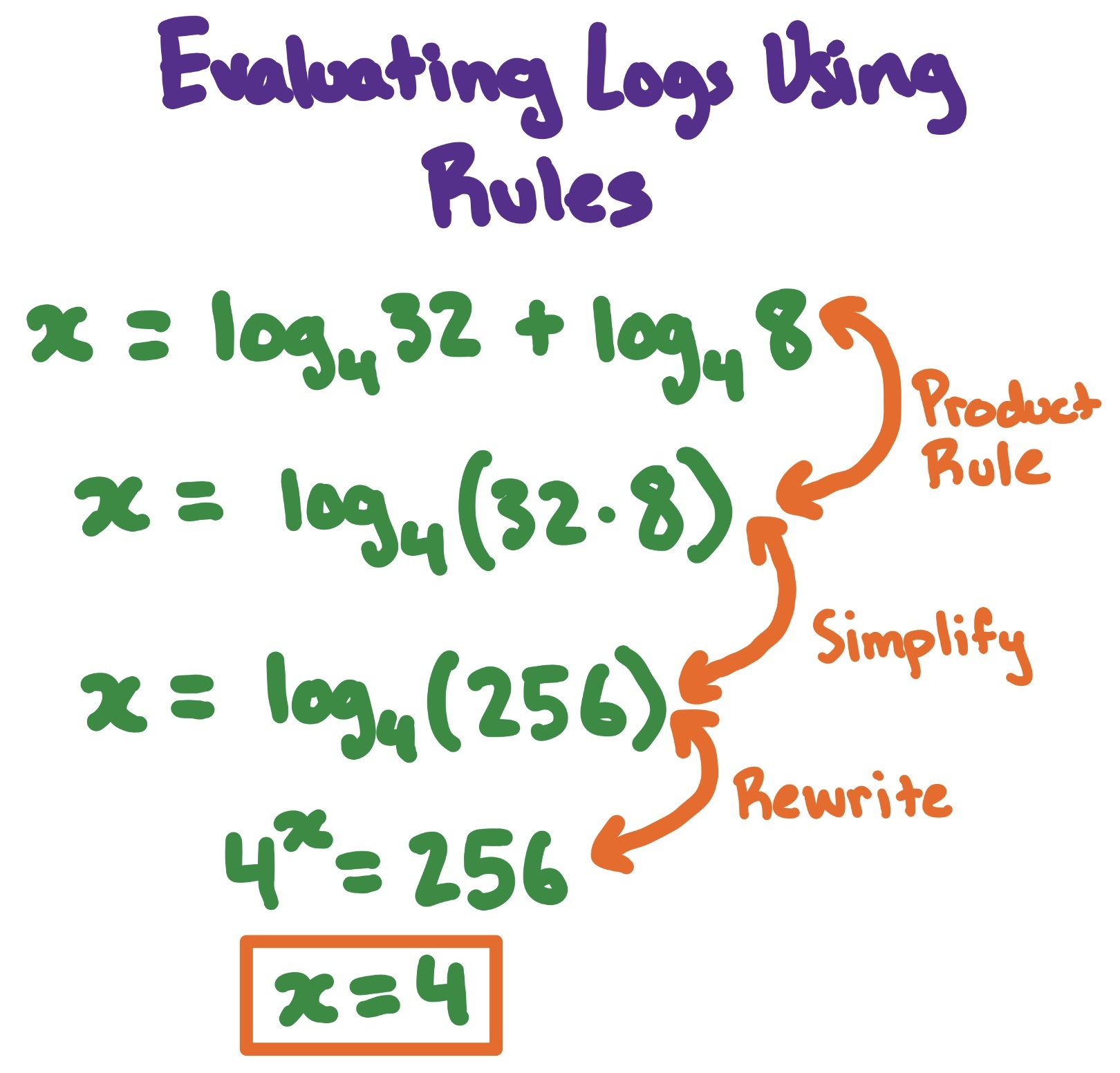
Evaluate x if