Interactive · 2 questions
+2 contributors


The easiest way to think about a quadratic equation with no real solutions is to first visualize the graph.
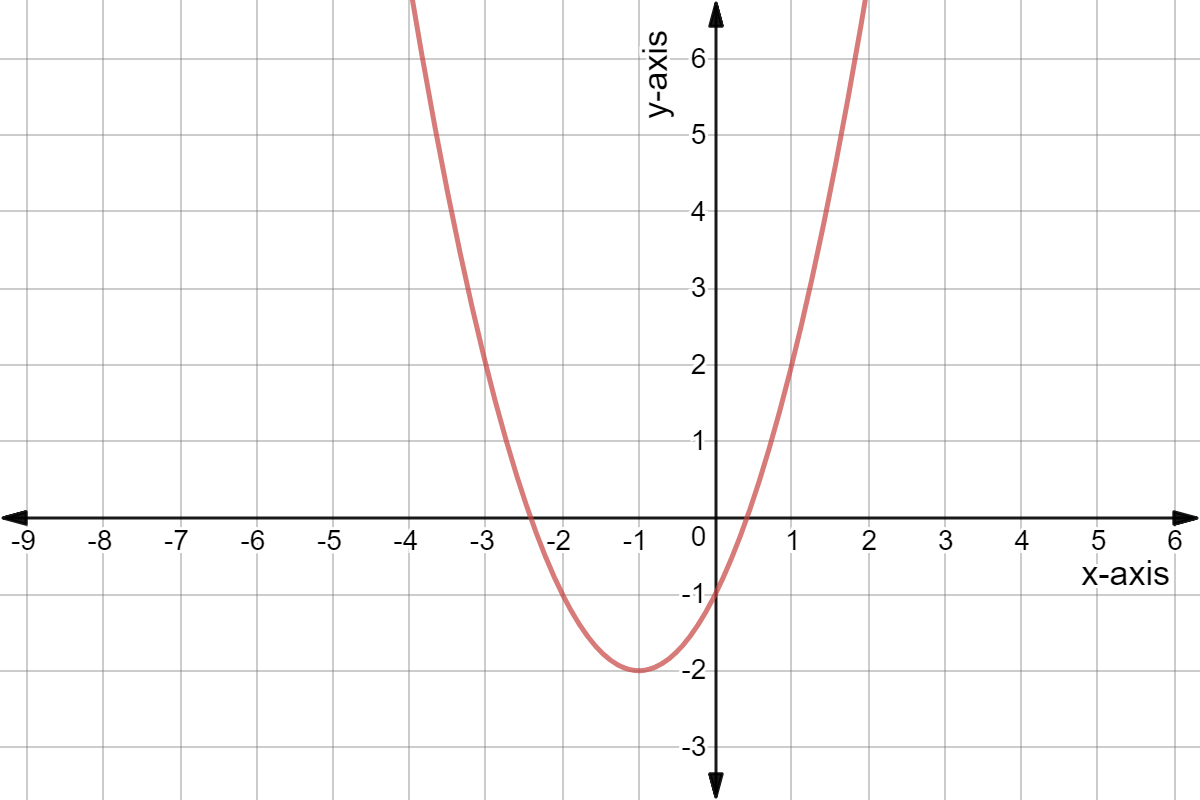
First, look at this graph:
Made using Desmos
What kind of roots do you think this quadratic equation has?
Using a simple process of elimination, we know that this equation has two real and non-equal roots because:
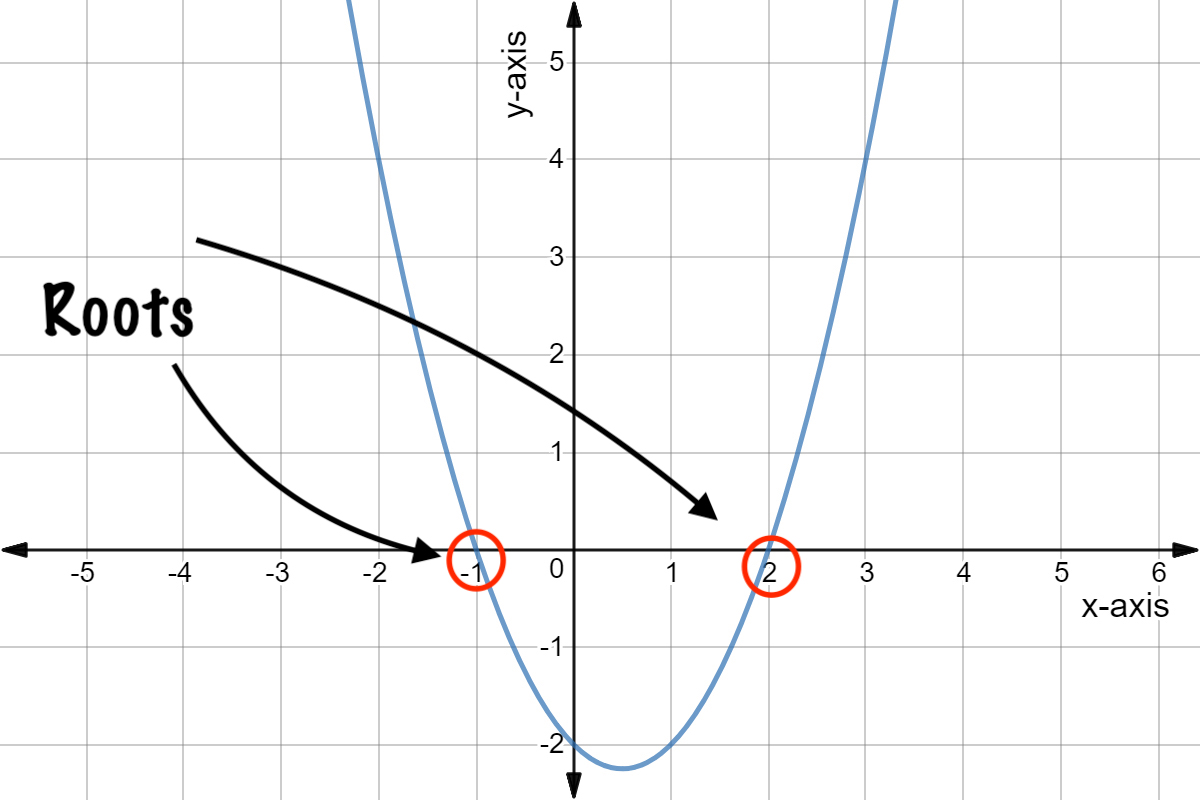
- It passes through the -axis twice. This indicates that it can be factored (if you don't believe me, try it yourself); in other words, you can solve this function and derive two values, which are the two values that this function passes through on the graph.
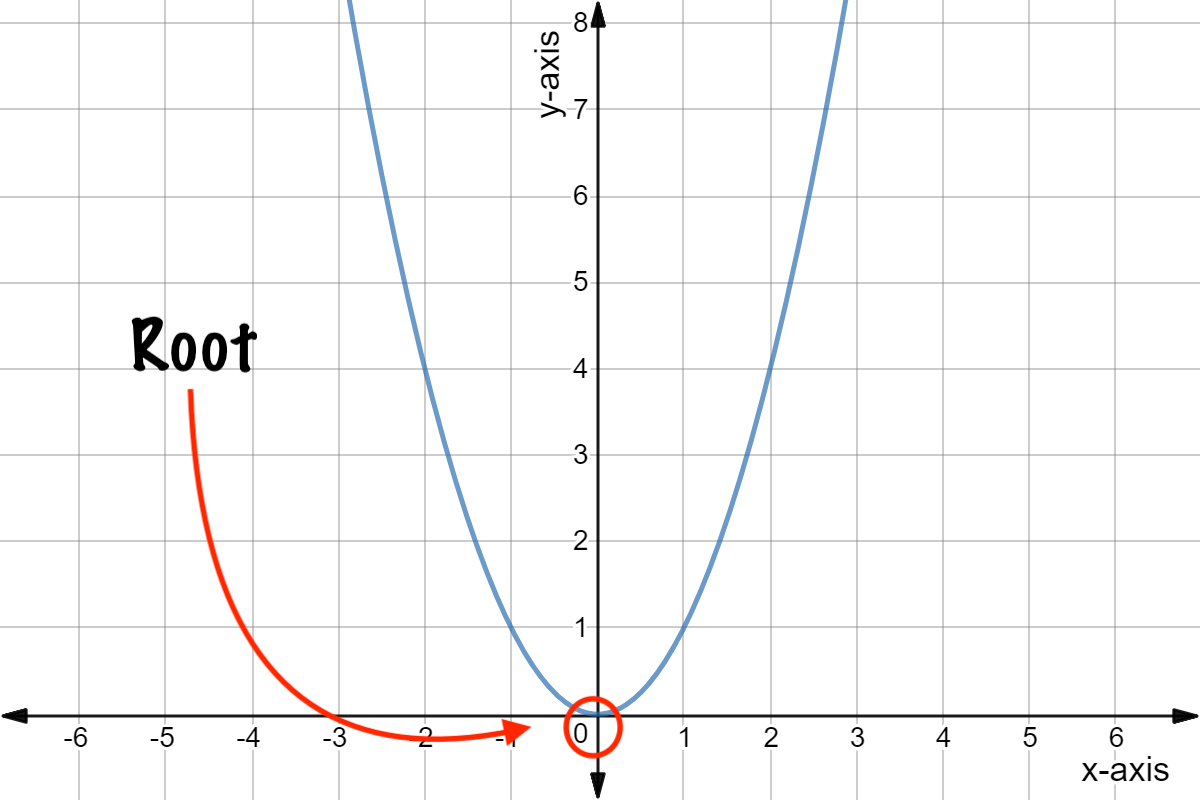
- Its vertex is not on the -axis. If it was, this would mean that the graph touches the -axis at only one point. Since it is still a quadratic equation with an term, this means that it would have only one unique root. For example, a quadratic equation with only one unique real root would look like this:
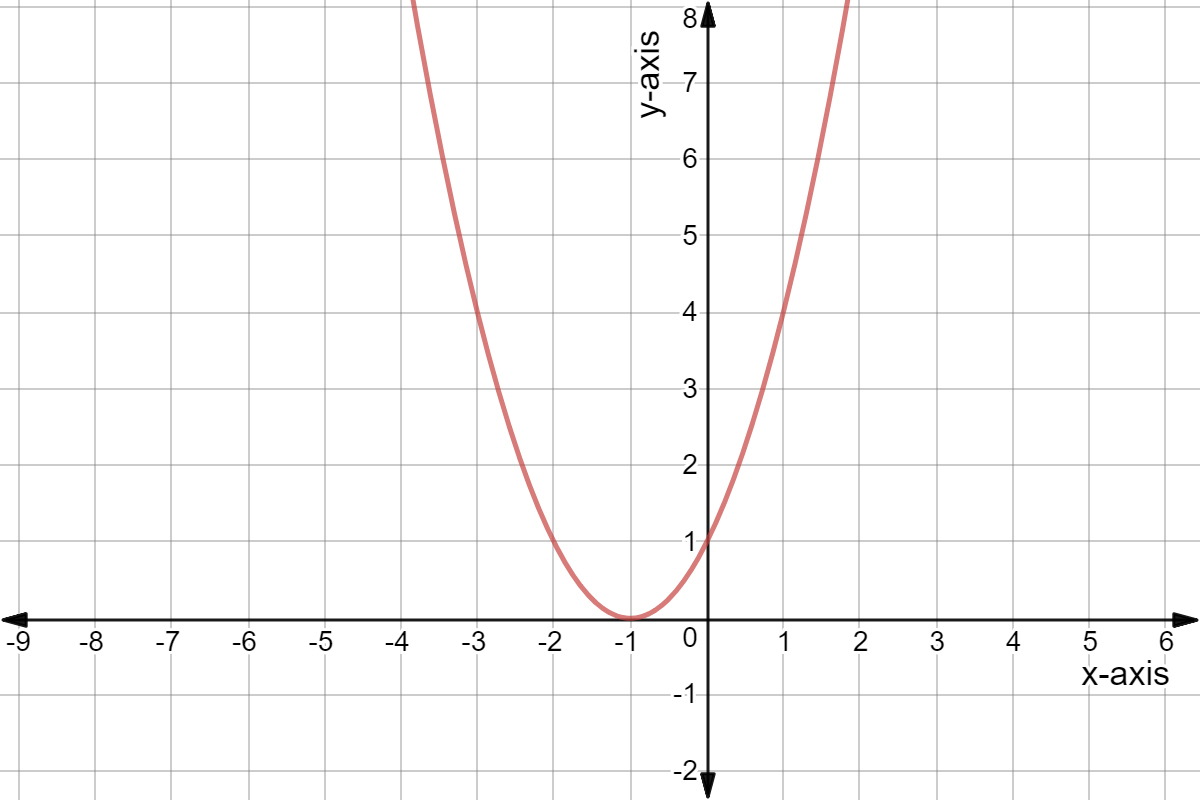
Made using Desmos
This graph touches the -axis at , which means its equation is or .
Finally, that leaves one more type of quadratic graph:
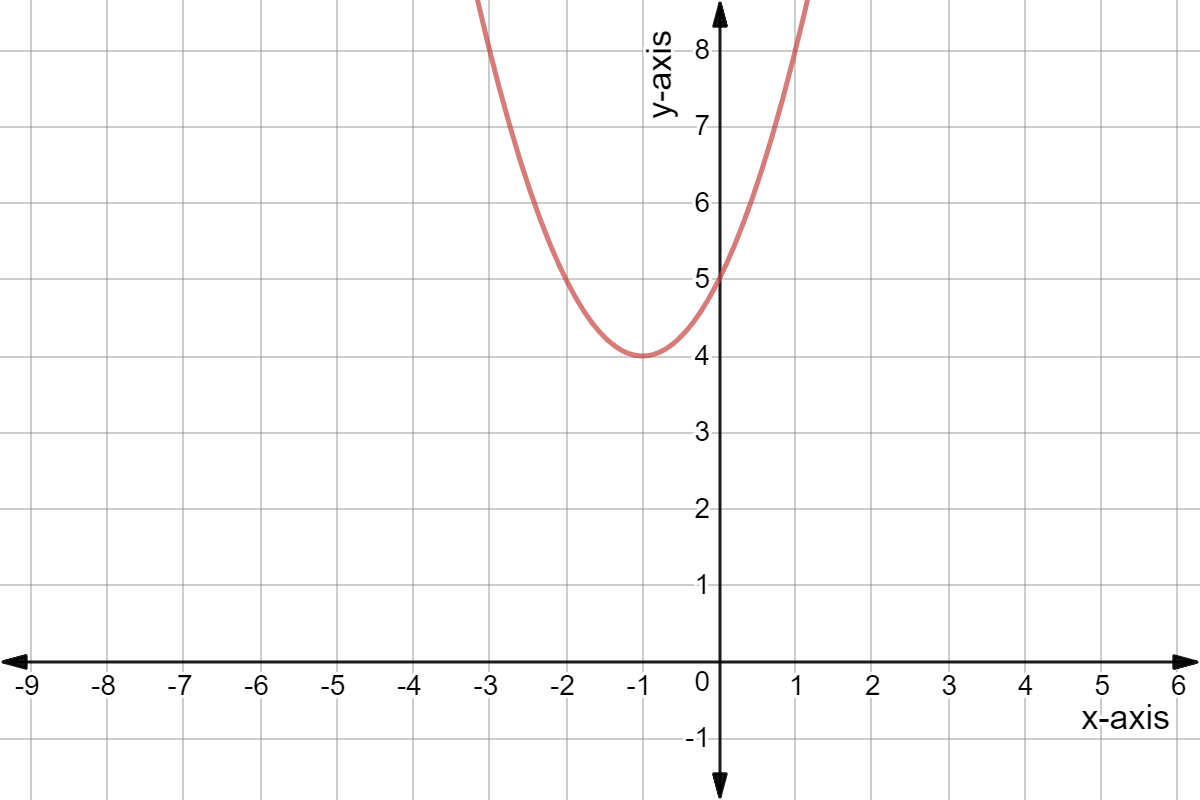
Made using Desmos
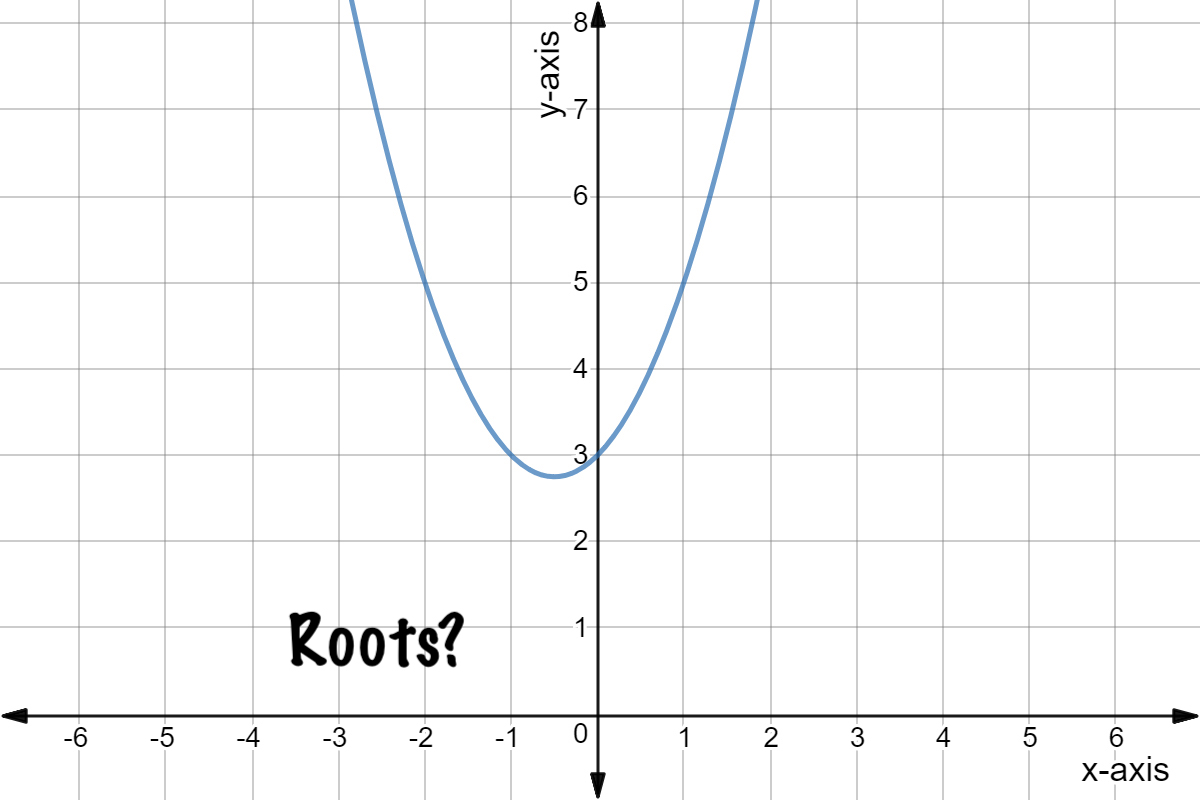
What kind of roots do you think this quadratic equation has?
This graph does not touch the -axis at any point, which means that it has no roots on the -axis, and therefore no real roots. The roots are complex and can be found using the quadratic equation.
If you are not given the graph of the quadratic equation, you can use the discriminant to determine whether or not the quadratic has real roots.
The discriminant is the value known as , where , , and are the values in the quadratic equation . It can be used to 'discriminate' what types of roots a quadratic has.
If the discriminant is negative: the quadratic has no real solutions. If you think about it, if the discriminant is negative, that means the value of the roots obtained from the quadratic equation would be of the form , where is the number remaining when is factored out of the negative square root.
If the discriminant is zero: the quadratic is one unique real solution. The discriminant would amount to nothing and therefore the single value remaining would simply be .
If the discriminant is positive: the quadratic has two unique real solutions. The discriminant would be a positive square root value that would either be added to or subtracted from , generating two unique values.