Interactive · 4 questions
+3 contributors



We have discussed limit notation and rules already. If you missed that, click on their links to learn about those before learning to evaluate!
Limits are used often in precalculus and calculus. They are an important concept to understand, and they are fairly simple. There are many ways to evaluate limits.
Now, let's discuss how to evaluate limits. The simplest way to evaluate a limit is to plug in the value we are given for into the function. Let's practice this technique.
Evaluate the following limit.
Evaluating a limit by plugging in the given value for should be the first step in evaluating any limit.
Sometimes, when you plug in the given value for , you get an undefined or indeterminate term. We will first discuss undefined terms.
An undefined term looks like or where c is any number. When you plug in the limiting value to the given function or equation and you get an undefined term, you should use algebra to manipulate the equation into a different form.
The following are some ways to manipulate these equations that produce an undefined term.
- factor
- expand
- get a common denominator
- multiple the numerator and denominator by the conjugate of the numerator
- use trig identities
If you get the undefined term , manipulate the equation until you can plug in the limit value to get your answer.
If you get the undefined term , you manipulate the equation; however, you will not get a number as the answer. The only answers you can get from a limit with the undefined term are positive infinity, negative infinity, or that the limit does not exist.
Let's try a couple practice problems with undefined terms.
Evaluate the following limit.
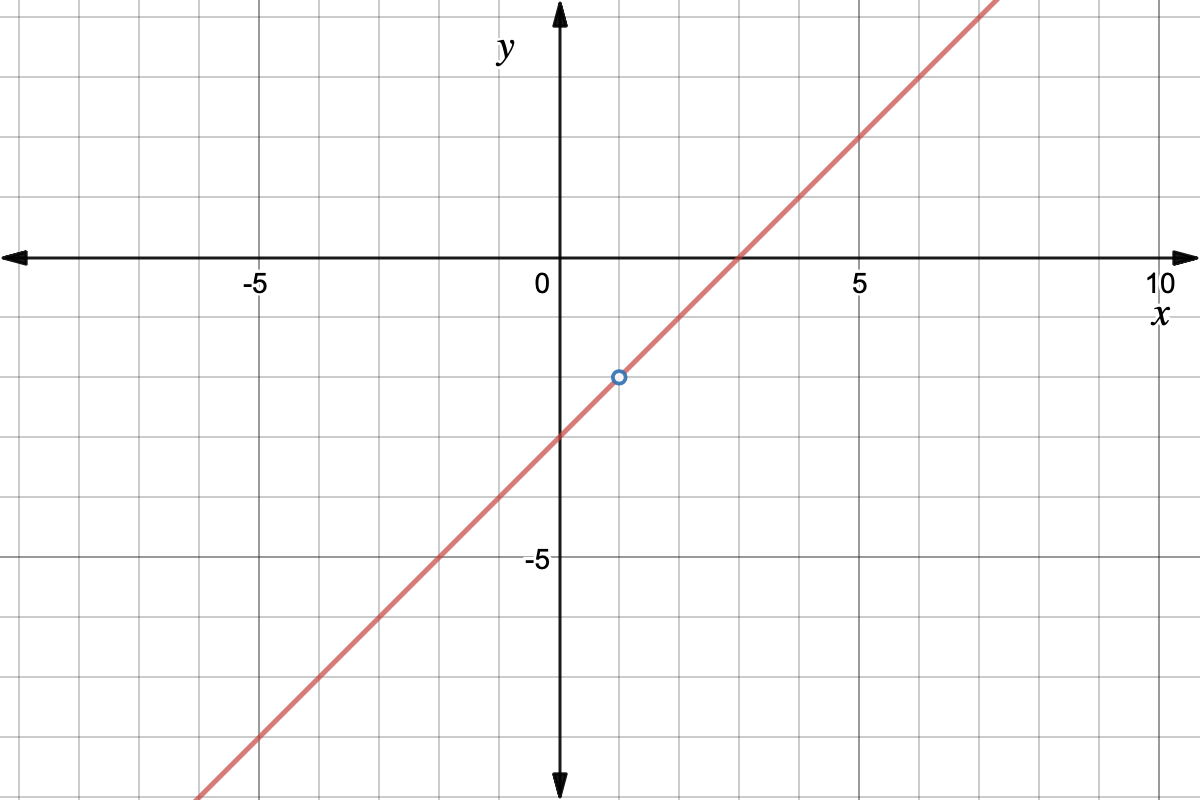
For this problem, you just had to factor the numerator and see that cancels from the numerator and denominator. The final step is to plug in for . We see,
Therefore,
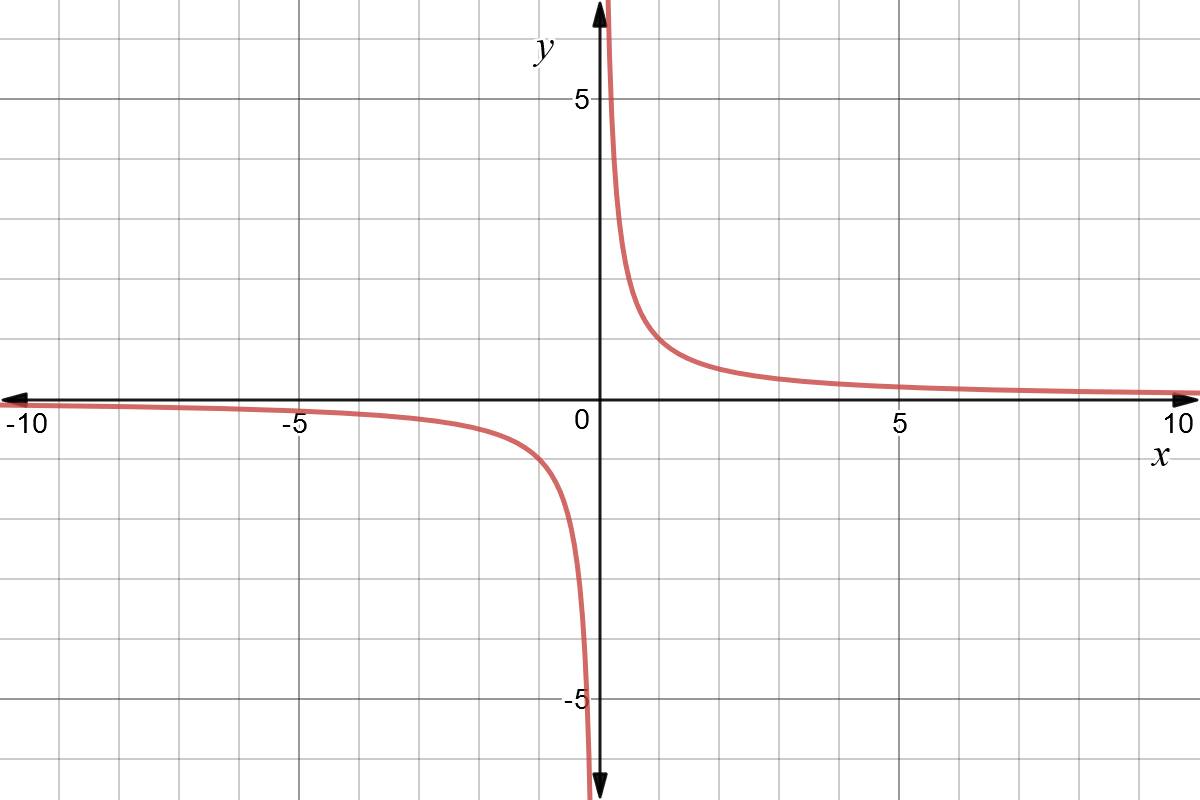
Now, for the undefined term , we most often have to find the limit from the left and from the right. Let's look at an example of this. When we plug in for , we get . We cannot factor, expand, find the common denominator, or multiply by anything that would help simplify the limit to get an answer. Instead, lets look at the limit as approaches from the left and the limit as approaches from the right. If you need to, review the notation of left and right limits here.
When we find the limit from the left, we think about the really small numbers that are just to the left of . These numbers are . If we plugged in for into the limit , we write it as where means those really small numbers just to the left of . If you have divided by a really small negative number, you get a really large negative number,
So, .
When we find the limit from the right, we think about the really small numbers that are just to the right of . These numbers are . If we plugged in for into the limit , we write it as where means those really small numbers just to the right of . If you have divided by a really small positive number, you get a really large positive number, .
So, .
Since the limit from the left does not equal the limit from the right, the answer is that the limit .
Let's try a practice problem with the undefined term .
Evaluate the following limit.
We want to evaluate the following limit.
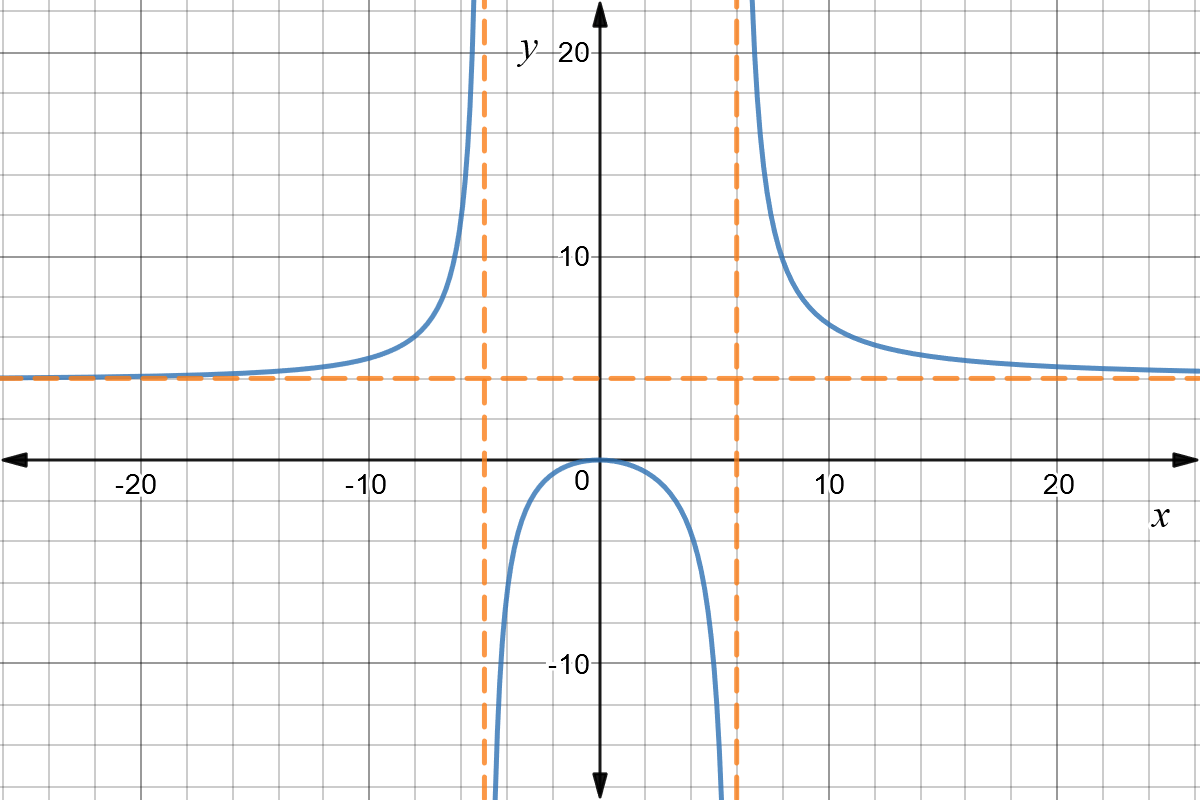
When we plug in for , we get . We use algebra to manipulate the equation in anyway that is helpful. Instead, lets look at the limit as approaches from the left and the limit as approaches from the right.
When we find the limit from the left, we think about the really small numbers that are just to the left of . These numbers are . If we plugged in for into the limit , we write it as where means those really small numbers just to the left of . If you have divided by a really small negative number, you get a really large negative number, . Then, that large negative number is squared, which makes it a large positive number, .
So, .
When we find the limit from the right, we think about the really small numbers that are just to the right of . These numbers are . If we plugged in for into the limit , we write it as where means those really small numbers just to the right of . If you have divided by a really small positive number, you get a really large positive number, . Then, that large positive number is squared, which makes it a large positive number, .
So, .
Since the limit from the left and right both equal , .
Now, let's discuss the indeterminate term. The indeterminate term looks like , , or .
The following are a couple ways to manipulate these equations that produce an indeterminate term.
- factor
- divide by the highest power in the denominator
Let's try a practice problem with an indeterminate term. For this one, divide each term by the largest power of the denominator.
Evaluate the following limit.
To solve this limit, we divide each term by . We see,
So the answer to the limit is .
Now you know how to evaluate more complicated limits as well as some rules for operations and limits. One of the best ways to learn and understand limits is to do practice problems and use the techniques you have learned. I recommend that you hit that "practice" button and try some of the limit practice problems next!