The Modern Periodic Table — Overview & Importance

Before this, knowMendeleev — Early Periodic Table & Periodic Law

Illustrated · 1 min

ইলিমেন্ট হচ্ছে মৌলিক পদার্থের ইংরেজি প্রতিশব্দ।

মৌলিক পদার্থ হচ্ছে এমন এক ধরনের পদার্থ যা একই রকমের অসংখ্য ক্ষুদ্র ক্ষুদ্র পরমানু দ্বারা গঠিত। মৌলিক পদার্থকে যদি ভাঙ্গা যেত তবে ওই নির্দিষ্ট পরমানু ছাড়া আর অন্য কোন ধরনের পরমানু পাওয়া যেত না। এখন পর্যন্ত প্রায় ১১৮ টি মৌলিক পদার্থ আবিষ্কৃত হয়েছে। অর্থাৎ ১১৮ ধরনের পরমানু রয়েছে। যেখানে পরমানুর বৈশিষ্ট্য প্রকাশ পায় তার প্রোটন সংখ্যা বা পারমানবিক সংখ্যার মাধ্যমে।

মৌলিক পদার্থের একটা উদাহরন দিতে পারি।
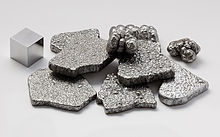
যেমনঃ বিশুদ্ধ লোহা। এটি আমাদের অনেক পরিচিত। বিশুদ্ধ লোহার মাঝে রয়েছে Fe বা আয়রনের অসংখ্য পরমানু। যারা ধাতব বন্ধন দ্বারা যুক্ত হয়ে এই বিশুদ্ধ লোহা বা আয়রন তৈরি করেছে। এখানে বিশুদ্ধ লোহা একটি মৌলিক পদার্থ। কারন এখানে Fe বাদে অন্য কোন ধরনের (অন্য মৌলের ) পরমানু নেই।


Illustrated · 1 min

Image of the Periodic Table of Elements

By Armtuk - Own work, CC BY-SA 3.0, Wikimedia Commons

In order to fully understand elements, you need to understand how their chemical properties relate to each other. The Periodic Table of Elements is nothing more than a guide to these elemental relationships.

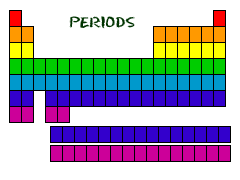
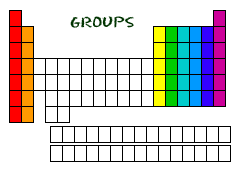
The table is organized in rows, called periods, and columns, called groups.

The reason why the periods are the size that they are is something called the octet rule, which we will cover later. Essentially, each period represents a new "outer shell" of electrons, starting from group 1, at the far left, which contains one outer shell electron, to group 8, which contains a "full" outer shell with 8 electrons.

The amount of outer shell electrons influences the ability of an atom to form bonds, directly influencing its chemical properties. The elements in each group have the same amount of outer shell electrons, and therefore tend to share properties.

There are chemical trends which help to organize the table. These trends were first discovered by Dmitri Mendeleev in 1863.

Interactive · 1 question

When two atoms have the same number of protons, they are the same element. This means that they will have the same properties. There are currently 118 known chemical elements, and they are organized into the periodic table (shown below). Only these substances are considered to be elements. Most things we encounter in our day to day lives, such as water and steel, are combinations of these elements. Understanding this table and its elements is essential in studying both pure and applied chemistry.

The periodic table of elements.

Image source: By Armtuk CC BY 2.0, via Wikimedia Commons\\ \\For more in depth information on the table and its elements, please refer to our section on how to read it.

Elements are defined only by their proton count. Another name for this is atomic number. In the picture above, you will see that each element has a number above it. This number is the atomic number—the number of protons. For example, potassium, K, has atomic number 19, so it has 19 protons.

With all this talk of protons you may be wondering about neutrons and electrons. The number of neutrons and electrons does not make an impact on the elemental identity. When the number of neutrons varies, it creates different isotopes, a concept closely related to radioactivity. When the number of electrons varies, it creates different ions, positively and negatively charged particles.

The variation in the number of neutrons and electrons accounts for the different properties of elements. This is easily seen with ions, since they carry an electric charge, but neutrons also make a difference. If there are too many or too few neutrons, then the atom becomes radioactive. Different isotopes may have different magnetic properties as well. These magnetic differences are often taken advantage of in analytical techniques such as proton nuclear magnetic resonance.

If an element has an atomic number of 15, this means there are 15 protons‾\underline{\phantom{protons}}

Choose one answer

Video

(Video) How Does the Periodic Table Work

by FuseSchool - Global Education

This video will give you an introduction to the periodic table, including electronic configurations. It will also show you some of the trends you can find in the table, including metallic character, atomic radius, ionization energy, and electronegativity.

The video also introduces several element families, including alkali metals, halogens, and noble gases.

Illustrated · 1 min

What Are Periods and Groups?

The periodic table is a chart with all the known chemical elements.

Each row is called a period, and each column is called a group. Each period of elements has the same number of atomic orbitals. Elements in the top row have one orbital for its electrons, and the number of orbitals increases by one down the row. There are currently seven orbitals. Elements in each group have the same number of electrons in their outer orbitals. Electrons in the outer orbital are also called valence electrons. Usually elements in the same group share similar chemical properties.

Elements with similar properties are also grouped into families, including metalloids, lanthanides and actinides, and alkaline earth metals.

The number at the top corner of each element is the element's atomic number, which is the number of protons in the atom of an element. The number at the bottom of each element is the atomic weight.

Type a concept, like “slope” or “photosynthesis”.

↑ ↓ to choose · Enter to openSearch explanations and problems