In this video by patrickJMT he explains the basic idea of limits.
A limit is a value that a function approaches as the input approaches a value.
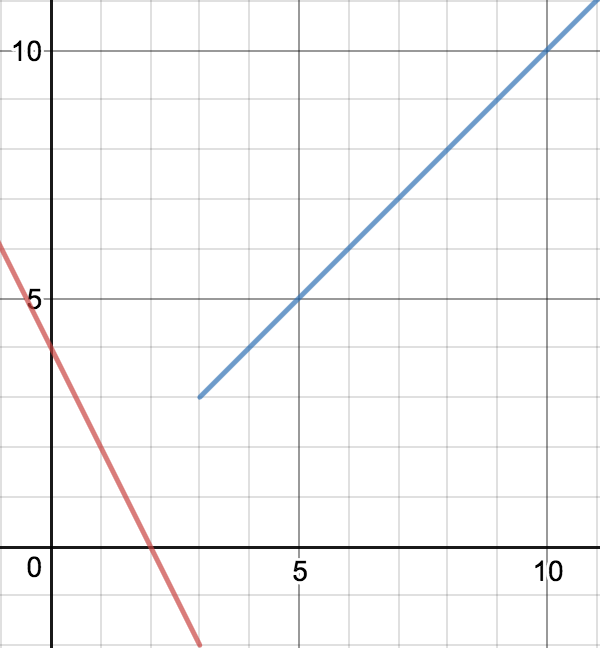
He starts by looking at the example y=x−4. So if we start putting in numbers close 5 (like 5.1, 5.01, 5.001, 4.9, 4.99, 4.999, etc.) we get out numbers close to 1.
x4.94.994.99955.0015.015.1f(x)0.90.990.99911.0011.011.1
This is basically the fundamental idea of a limit. We put in numbers close to a specific number and we see what numbers we get out of our function.
We denote this as:
x→5limx−4=1
Read: The limit as x approaches 5 of the function x−4 approaches 1. The general way we write this is:
x→alimf(x)=L
The number we get out is known as the limit of the function. So in the previous example, 1 would be the limit of the function.
There are different ways in which we deal with limits.
- x approaches a finite number limx→af(x)=L
- x approaches positive or negative infinity limx→±∞f(x)=L This just means that we're putting in very very large numbers and seeing what we get out or putting in very very small numbers and seeing what we get out.
The basic idea on how you do a limit is plug and chug. You plug in values approaching a certain number and see what values come out, and what those values approach. In our last example we could easily plug in 5 and solve to get 1. Usually though, with limits, when we plug in the number we get outputs we can't solve like:
- 00
- ZeroNonzero
There are some good common tricks we can use to help us find the limit of a function:
- Factor
- Common Denominator
- Expand
- Multiply by Conjugate
- Others (problems that don't fit into the first 4)