Illustrated · 1 min
Precipitation
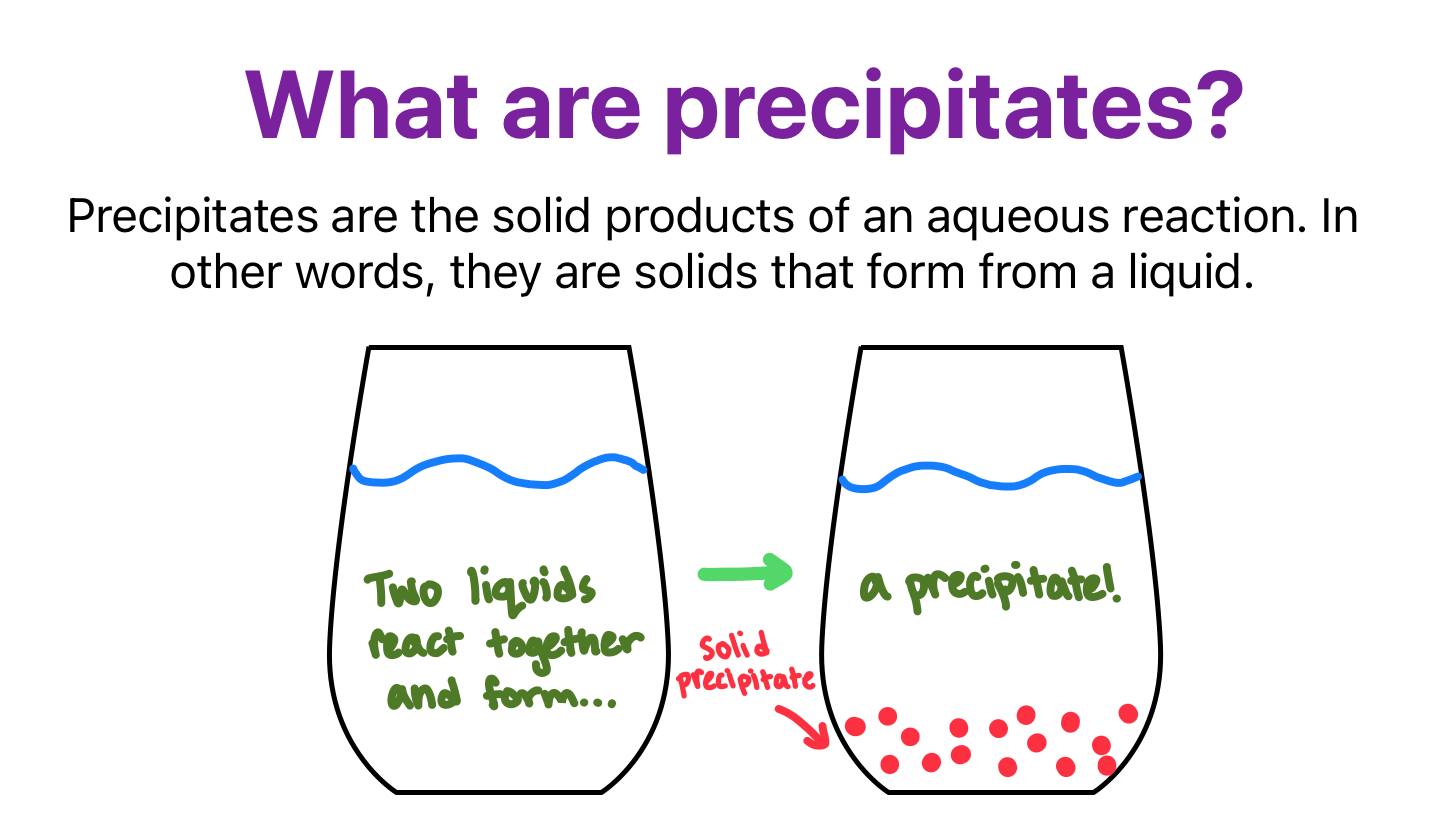
Precipitation in chemistry is a term which describes the formation of a solid from homogenous liquid solution. The solid forming out of solution is the precipitate.

Precipitates are solids formed from a solution.
Image source: By Cassie Gates
Precipitate formation is dependent on the solute and solvent combination. It is important to understand the identities of these species are when preventing or creating precipitates.
How Do Precipitates Form?
There are a few ways precipitates can form:
-
Increased concentration - if the solvent is boiled or evaporated away, the solute concentration increases. If the solution is concentrated enough, the solid solute can form.
-
Solvent changes - a second solvent can be added to the solution to cause a precipitate. If the solute is polar and a non-polar solvent is added in enough quality, a precipitate forms.
-
Precipitation reaction - this occurs when two solutions are mixed and a new chemical species is formed which is insoluble in the solvent.
These are main ways precipitates form in chemical solutions.
Precipitation Reactions
Precipitation reactions are commonly performed with aqueous solutions. Two soluble salt reactions are mixed. The salts undergo an ion exchange to create a new insoluble salt. This insoluble salt precipitates out of solution.

These two solutions mix and a reaction occurs. Lead iodide forms, which is insoluble in water. It precipitates as a yellow solid.
Image source: By Cassie Gates