Interactive · 1 question

Domain and Range of Inverses
Graphs of inverse functions have a domain and range just like any other graph of a function. The domain of an inverse function is the range of the original, and the range of an inverse function is the domain of an original. This is an important thing to remember as it will help in understanding and graphing inverse functions.
This is very easy to find for some functions that already have a domain and range of all real numbers, such as linear functions. Take a look at the following example showing the graph of as well as its inverse function .
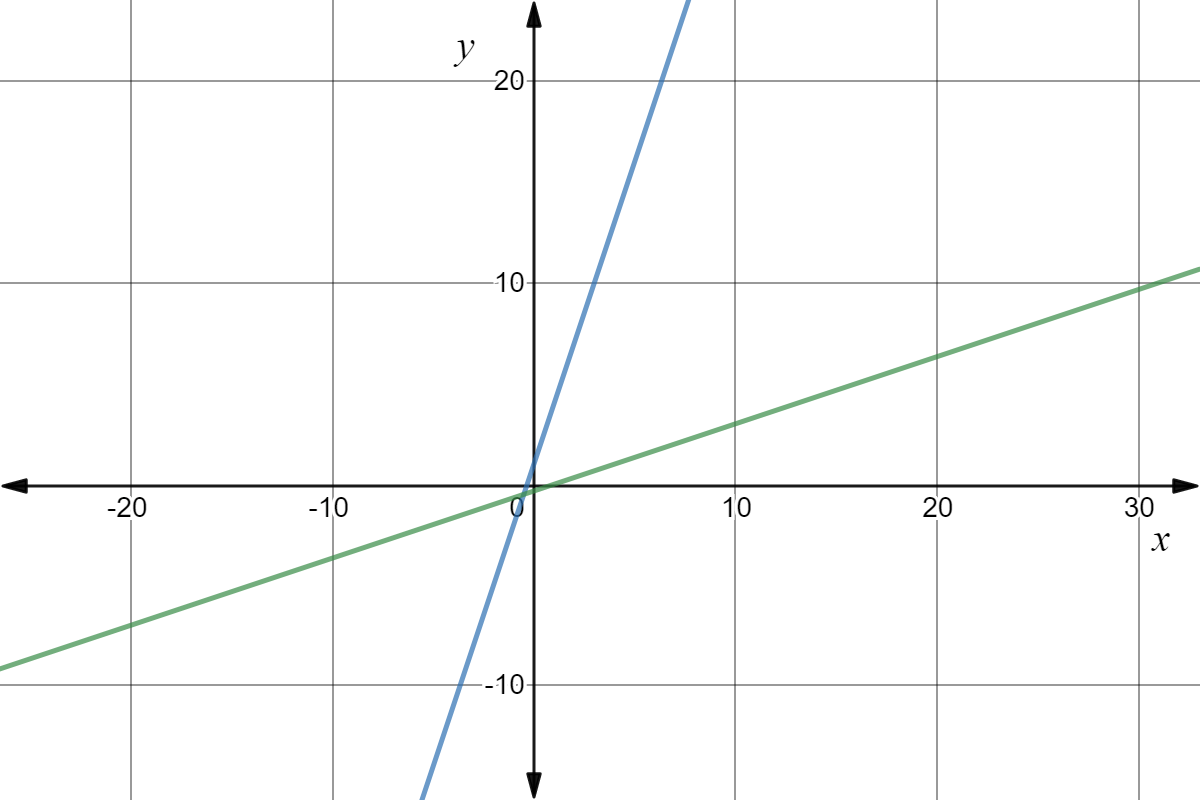
in blue and
Made with Desmos
It is easy to see the domain and range of both functions. The original function has a domain of as well as a range of . This means that the inverse function also has a domain and range of .
There are some cases where the domain and range of the original function are essential to the graph of the inverse. Let's look at the case of .
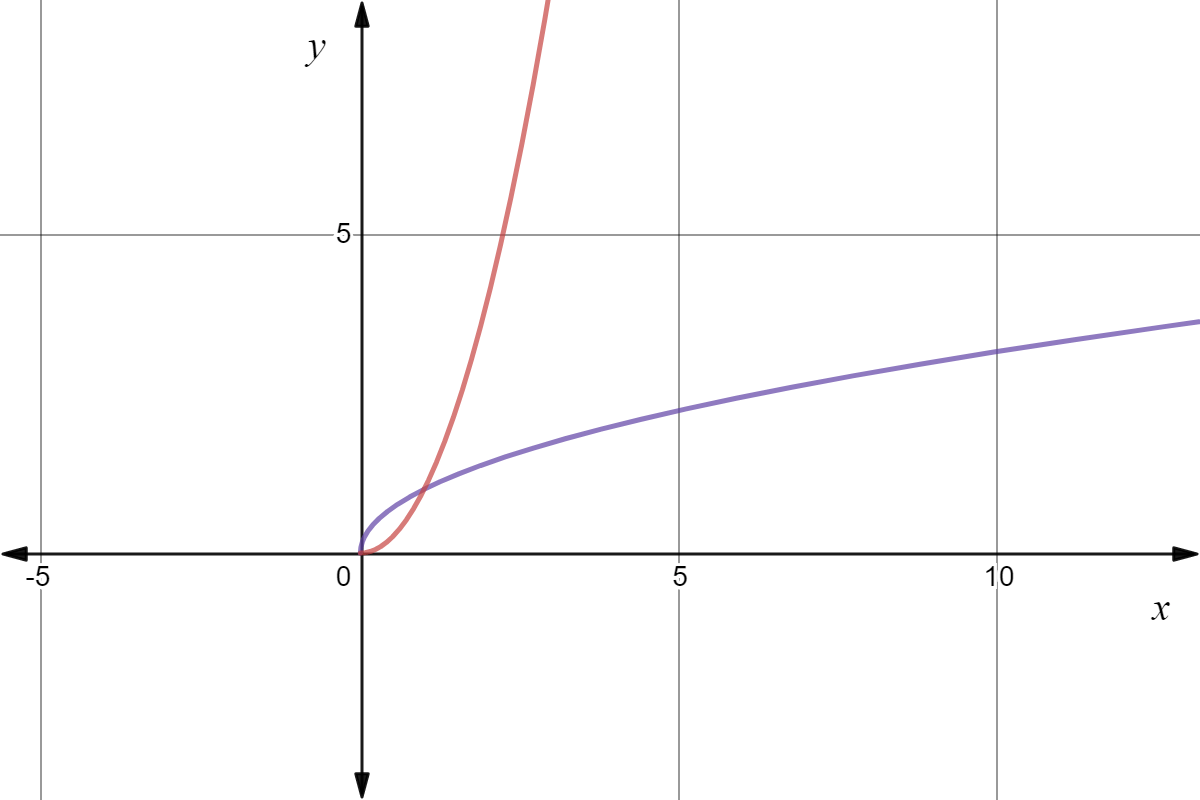
Graph of and it's inverse
Made with Desmos
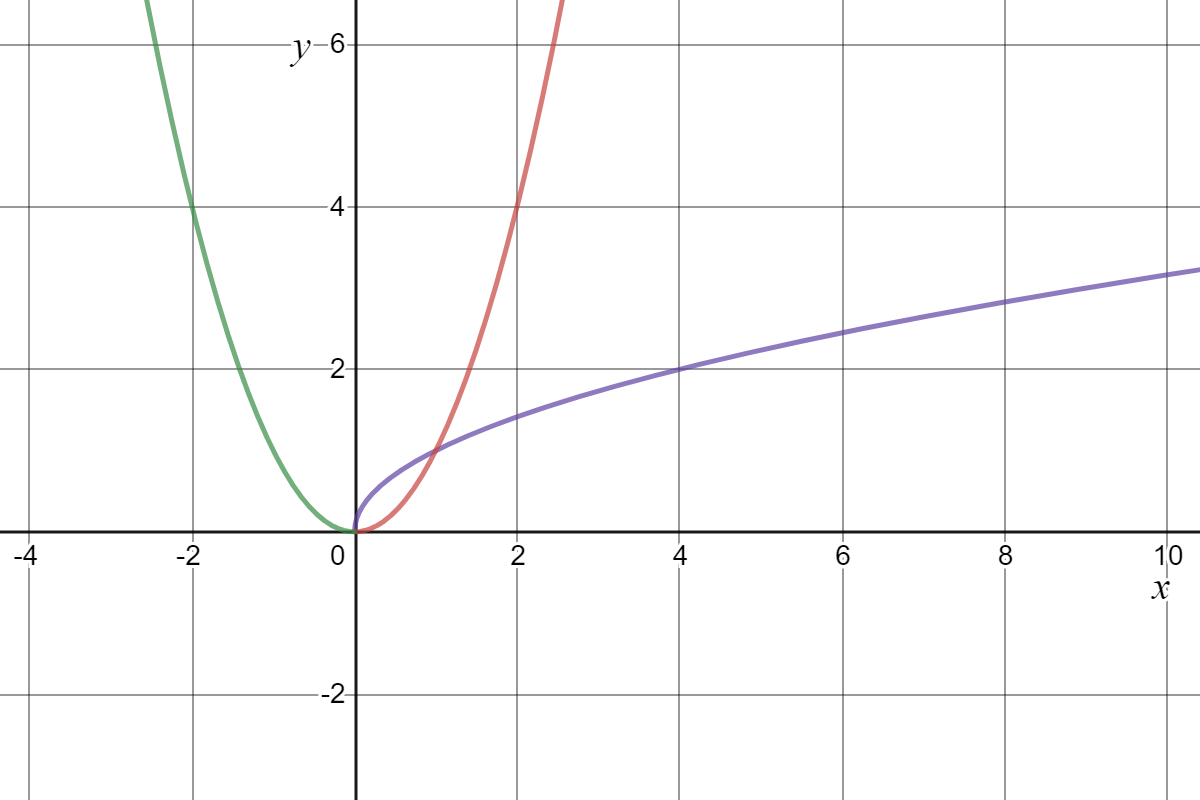
The purple square root graph is something we have worked with before, but the red inverse isn't exactly familiar. We can see that they are symmetrical across , and that the range of the square root graph is , and the domain of the inverse graph is so it matches what we've learned so far. However, we still aren't familiar with the graph of an inverse square root function. If you look closely you can see that it is half of a parabola!
Made with Desmos
The only reason that can be the inverse of is because we can limit the domain to . If we don't limit the domain we get the entire parabola which doesn't pass the horizontal line test, doesn't have the reverse of the domain and range from the original function, and isn't symmetrical across the line .
Try one for yourself:
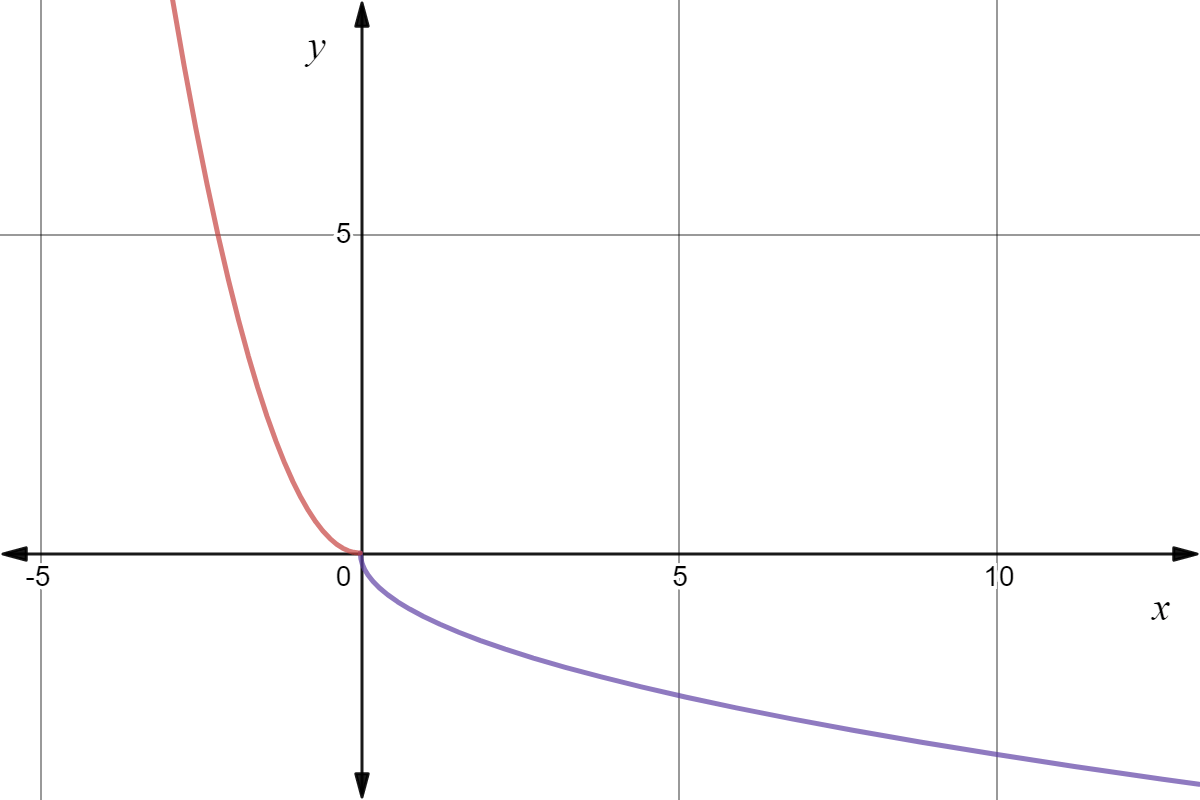
What is the equation, domain, and range of the function ?
First we're going to calculate the inverse function of .
The domain of is and the range is . This means that the domain of our inverse function is and our range is . Lets look at the graph.
Made with Desmos
The functions are symmetrical across the line and both pass the horizontal and vertical line test.
Wrap Up
Remember that the domain and range of a function switch when you find the inverse function. The domain and range can also be used to force certain functions into working with inverse rules when they normally wouldn't such as .