This by mathman1024 that shows how to employ the difference of squares method in factoring binomials.
Summary
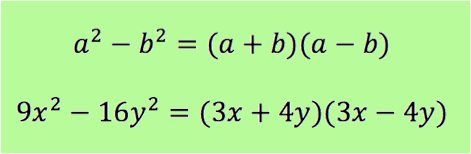
This method makes use of the difference of squares equation, which states the following:
a2−b2=(a+b)(a−b)
The first binomial that our instructor factors is:
x2−25
However, you might notice that we can rewrite this binomial like so:
(x)2−(5)2
As our instructor points out, we can let x be our a in our difference of squares equation, and we can let 5 be our b in our difference of squares equation. Then, we just have to substitute those terms into the right-hand side of our equation:
(x+5)(x−5)
He then goes over some additional problems, and some of them are more complex than others. See how many you can figure out on your own, and then watch the video above to see if you were correct.
- x2−49
- 4x2−9
- x2−64121
- x10−16
- 49x4−81y12
- 100x7−25x3y4 (Hint: do the terms in this binomial have a GCF?)
- x4−81 (Hint: can either of this binomial's factors be factored again?)