Interactive · 2 questions

The central limit theorem (CLT) states: "For a large sample size nn, the sampling distribution of the mean xˉ\bar{x} of an independent variable is approximately normal with mean of the independent variable and ."

For example, let the random variable XX be the number of pages in a randomly chosen book from the entire population of books. Let the mean μ\mu of this distribution be 300300 and the standard deviation be 5050.

Say I take a simple random sample of 100 books from the population. The central limit theorem states that the distribution of the mean number of pages from this book is approximately normal.

By the central limit theorem, what is the approximate value of μ\mu?

Choose one answer

Video · + 1 min read

(Video) Central limit theorem

by 365 Data Science

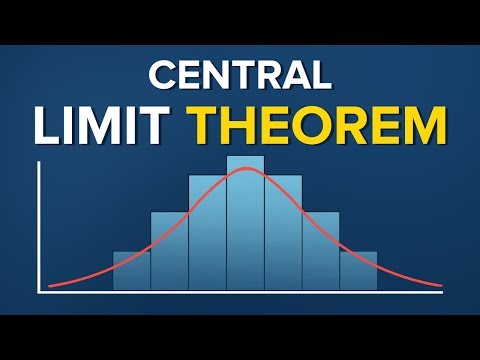
Check out this video by 365 Data Science to learn more about the central limit theorem!

Like 365 Data Science explains in the video, the central limit theorem states that it doesn't matter how the data is distributed, (binomial, random, etc.), the means of the sample will approximate a normal distribution. As the number and size of the samples increase, the closer to a normal distribution the sample means will be.

Let's think about why this theorem would be useful in real life data sampling and analysis!

Well, this theorem tells us that the sample mean, with a sufficient sample size, will have the same mean as the original data set, at a much smaller sample size.

If we want to know how many people in the world prefer pop music over jazz, we could not realistically ask every single person on Earth. However, this theorem tells us we do not have to because a sample taken with sufficient size will largely follow a normal distribution and we will receive the same mean value as we would have if we could sample everyone on Earth.

Illustrated · 1 min

The Central Limit Theorem

In theoretical probability, we have an important theorem that we use for large numbers.

Central Limit Theorem
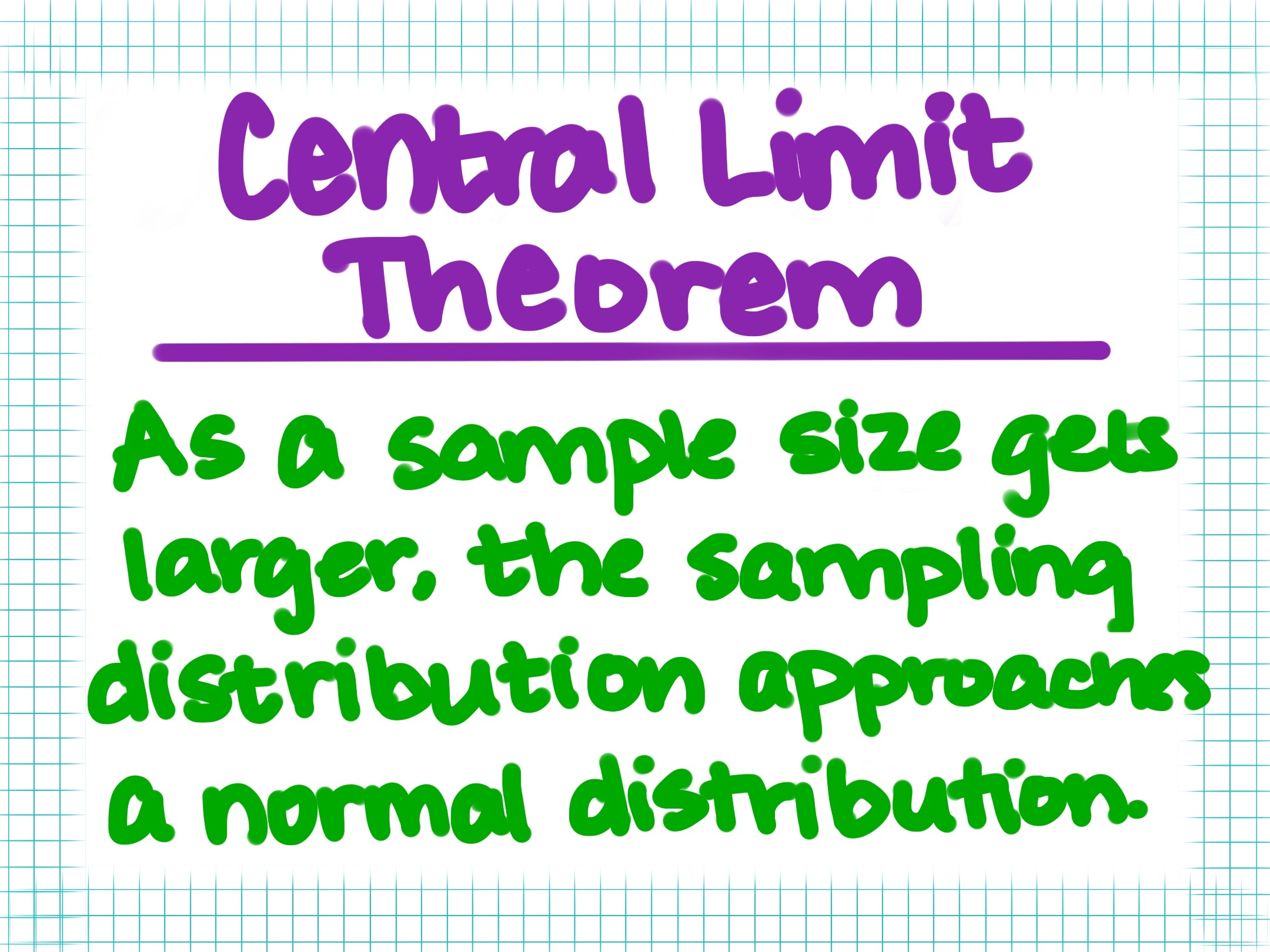
As a sample size gets larger, the sampling distribution approaches a normal distribution.

Image source: by Anusha Rahman

Proven by Pierre Simon Laplace, the Central Limit Theorem states that as a sample size gets larger, the sampling distribution approaches a normal distribution. In essence, that means that as you repeat the number of trials and as you plot the results, the graph will begin to look more and more like a bell curve - the normal distribution.

So: even if the population distribution of random independent variables isn't normally distributed, as you can increase the number of the population, it will be.

Type a concept, like “slope” or “photosynthesis”.

↑ ↓ to choose · Enter to openSearch explanations and problems