
Illustrated · 1 min

By this point you're probably familiar with how sine, cosine, and tangent are defined. These are the "foundational trig functions" because we define the other trig functions using these ones, and the most commonly used trigonometric identities involve sine, cosine, and tangent.
From here on we will abbreviate sine as cosine as and tangent as
Now let's introduce the reciprocal functions. The secant is the reciprocal of cosine, and is abbreviated We define as
The cosecant is the reciprocal of sine, and is abbreviated We define as
Finally, the cotangent is the reciprocal of tangent, and is abbreviated We define as
In practice, we often use this formula combined with the fact that Thus another very useful identity to know is
One other thing to keep in mind: all three definitions, those of secant, cosecant, and cotangent, involve dividing something that might be zero. For instance, if then isn't defined because we'd be dividing by zero. This causes secant, cosecant, and cotangent to have "holes" in their domains. To see what I mean, take a look at graphs of all three functions.
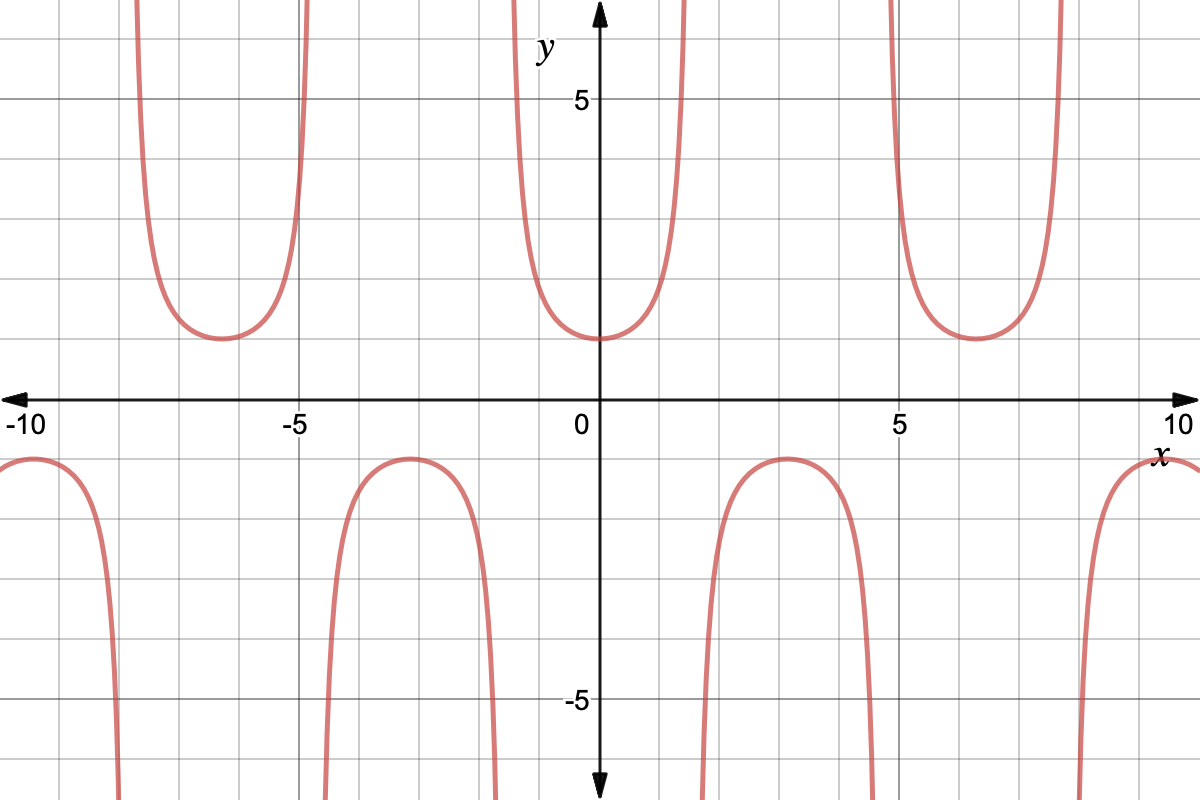
Graph courtesy of Desmos
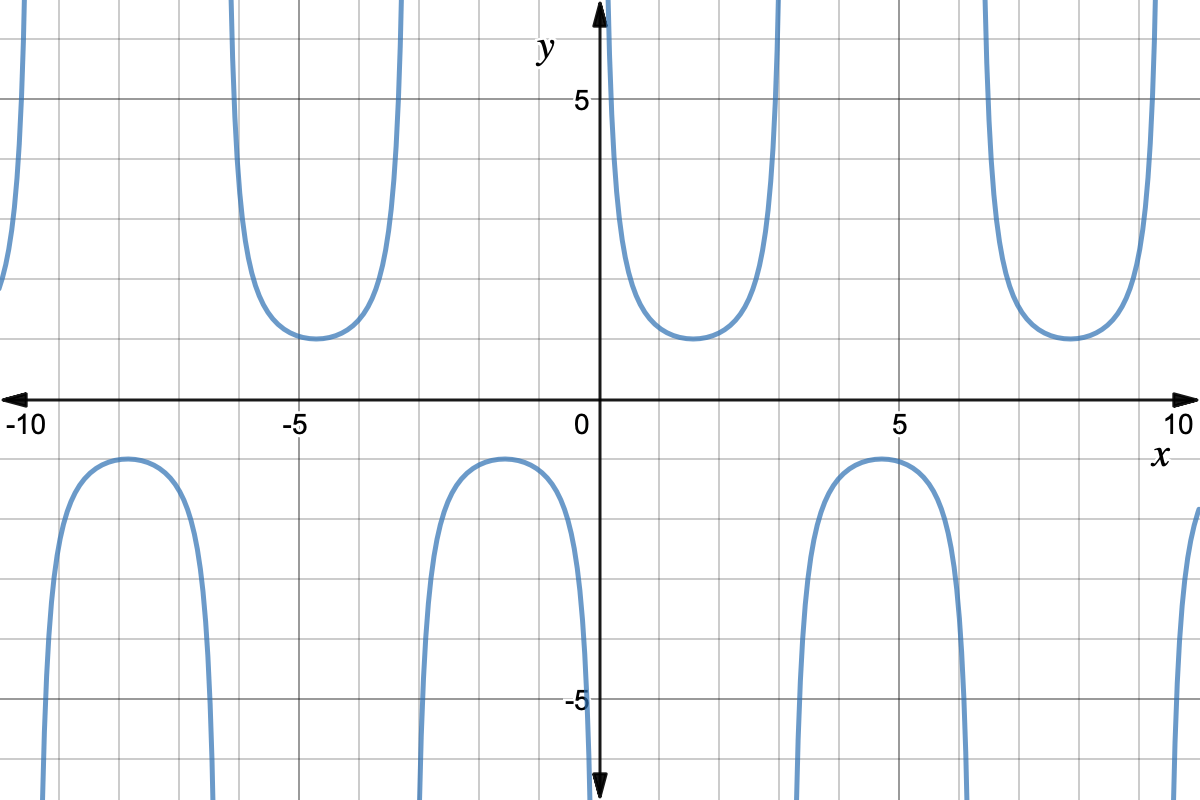
Graph courtesy of Desmos

Graph courtesy of Desmos


