
Illustrated · 2 min

+1 contributors

Firstly, a Two Sample t-Test is used to determine whether there is a significant difference between the means of two populations. The type of t-Test used (paired or unpaired) depends on the type of experiment we plan to conduct.
We would use an two sample t-test, when the two populations being compared are unique from each other. For example, if you are measuring the effect of a certain drug on different groups, such as on a sample of men vs. on a sample of women. Another example would be if you have half of the sample undergoing different treatments, such as a treatment group which receives the medication, and a control group which receives a placebo. We would use an unpaired t-test in cases like this.
For an two sample t-test, we would use it in cases where the two populations being compared remains the same throughout the experiment. For example, say we are conducting an experiment that aims to measure the effect of a certain medication on the weight of participants. Here, the before and after weight of the patient would be tracked and the population remains the same, so in cases similar to this we would utilize the paired t-test.
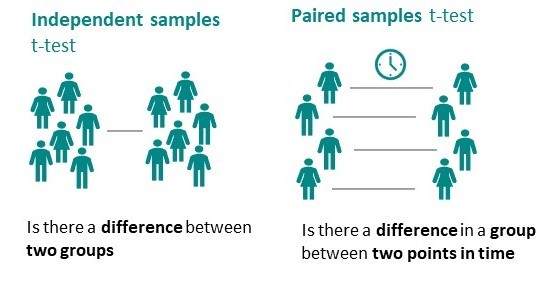
Image source: DATAtab
After determining which test we will use we can then establish:
(1). null and alternate hypothesis
(2). value
(3). degrees of freedom
(4). critical value
These are the steps which are used to determine whether the potential difference between two mean in due to chance. The processes are very similar for One sample t-tests, where we are checking whether the our value is larger smaller than the critical value, and Two sample t-tests, where we're testing whether the is the critical value from both sides.
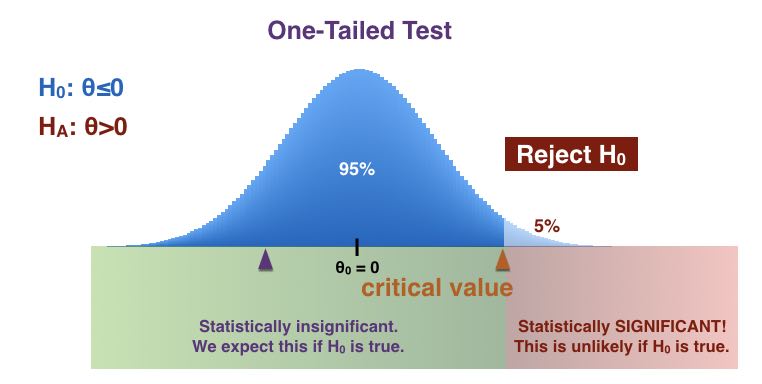
Image source: PrepNuggets
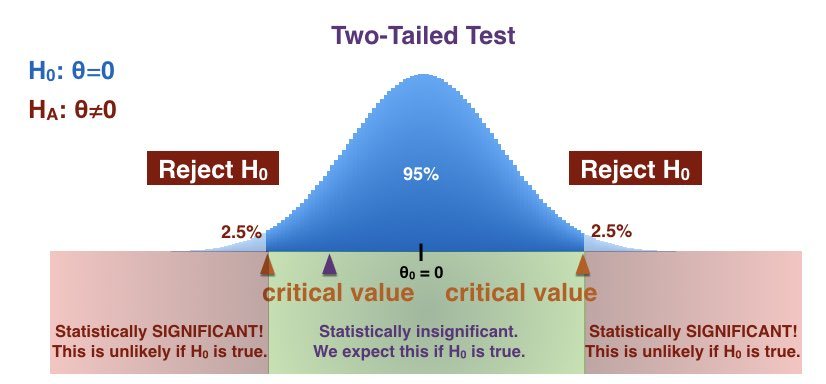
Image source: PrepNuggets
