In this video, SmithMathAcademy goes over how to find the area of squares, rectangles, general parallelograms, and irregular polygons.
Summary
Finding the Area of a Square
A square has four sides of equal lengths. Let's say each side has length s.
Then A, the area, is given by the following equation:
Aor A=s⋅s=s2
Finding the Area of a Rectangle
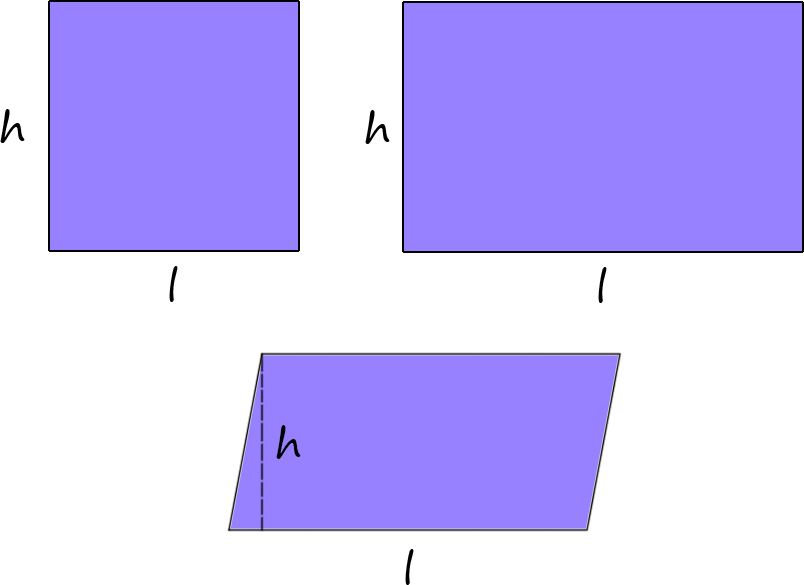
Let's say a rectangle has a base of length b and a height of length h. (Note: you can also say that the rectangle has length b and width h.)
Then A, the area, is given by the following equation:
A=bh
Finding the Area of a Parallelogram
Say you're given a parallelogram with a base of length b and a height of length h.
Then A, the area, is given by the following equation:
A=bh
Finding the Area of Irregular Polygons
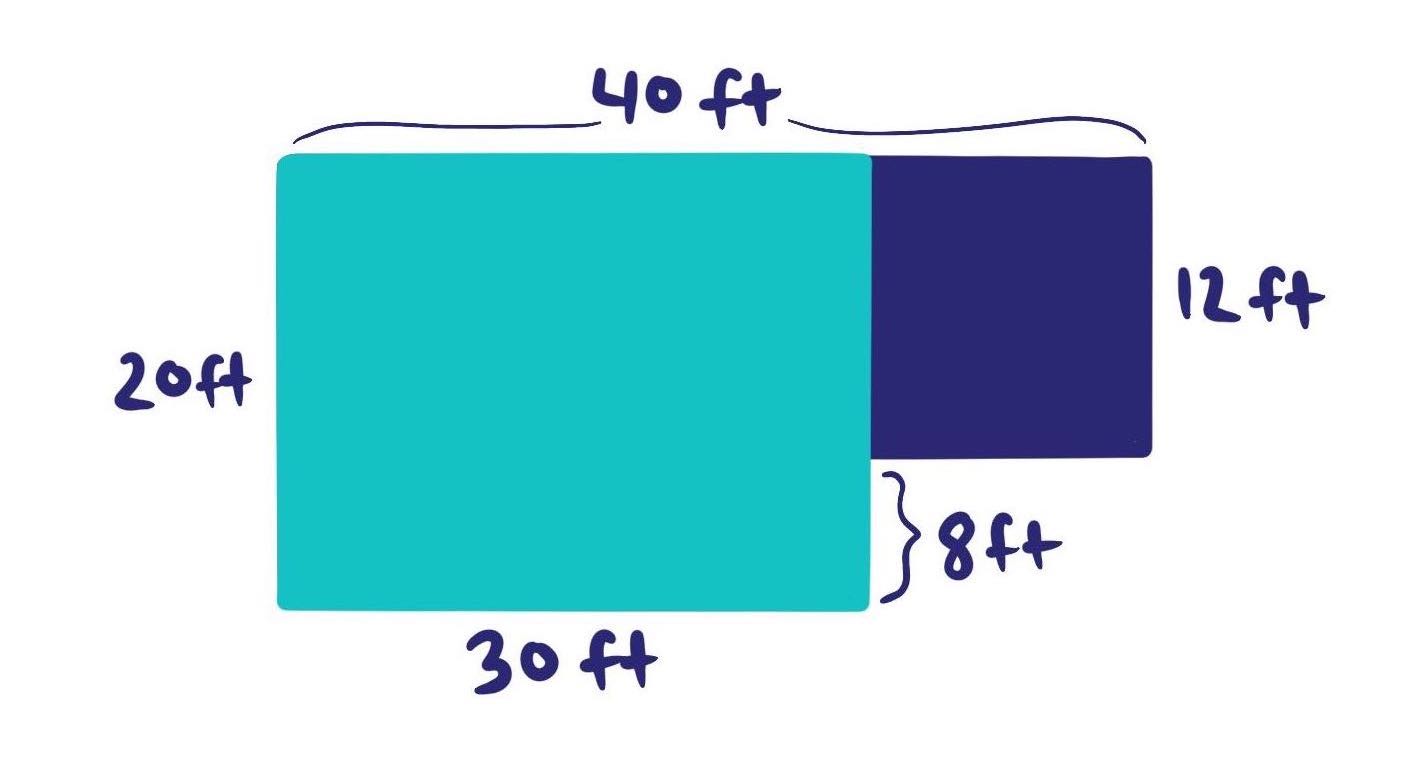
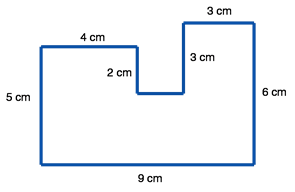
To find the area of an irregular polygon, simply break down the shape into smaller polygons, and find the area of those. Let's look at an example where we find the area of the following polygon from the video:
There are multiple ways of breaking this irregular polygon down into smaller quadrilaterals. Here's one way from the video:
We have broken the irregular polygon into two rectangles: a blue one and a purple one. To find the area of the big irregular polygon, we simply add the areas of these smaller rectangles.
The blue rectangle has a base of 30ft and a height of 20ft. Using our area formula for rectangles, we can find the area of the blue rectangle:
A=bh=30 ft×20 ft=600 ft2
Notice how the top side of the big irregular polygon is 40 ft and the bottom side is 30 ft. What happened to the remaining 10 ft?
The remaining 10 ft is actually the length of the base of the purple rectangle! This rectangle also has a height of 12 ft. Using our area formula for rectangles, we can find the area of the purple rectangle:
A=bh=10 ft×12 ft=120 ft2
The area of the big irregular polygon, A, is equal to the sum of the areas of the blue and purple rectangles. Thus:
A=600 ft2+120 ft2=720 ft2
The irregular polygon has an area of 720 ft2.