Bioquimica

Illustrated · 1 min

How Does Biochemical Evidence Support Evolution?

What Does It Mean That Humans Share Genes with Trees?
Genes are sequences of DNA. All living things use the molecule DNA as a heredity code. Genes code for proteins. Since people and trees share some genes, they must also share some proteins. This is biochemical evidence for evolution: species not closely related share some of the same molecules, from DNA to proteins.

Image source: By Valeri Natole

There are certain key molecules and biochemical mechanisms shared by incredibly different organisms. For example, all organisms use DNA and/or RNA for their genetic code.

Photosynthesis, cellular respiration, transcription, and translation are all identical or very similar in various types of organisms. When we look closer, we can see that there are many biochemical molecules which are identical in nearly all life forms.

A classic example is cytochrome c, which is found in all life forms. Although the genetic coding of this molecule varies among species, it performs all the same functions everywhere. This highly conserved protein is a key component of the electron transport chain, which is a part of cellular respiration. Cytochrome c also has a function in many other reactions, including initiating programmed cell death.

Two somewhat related molecules are hemoglobin and myoglobin. Hemoglobin is a molecule used to transport oxygen, and myoglobin is used to store oxygen. Another very common molecule is trypsin, a protease involved in the absorption of protein during digestion.

All these molecules perform essential functions in cells, which is why it would make sense that most organisms have them. However, it would not make sense if each of these molecules appeared independently in each species. That would be impossible. These shared biochemical molecules and pathways provide strong evidence for common descent and evolution.

Illustrated · 2 min

Why Didn't Darwin Discuss Biochemical Evidence for Evolution?

At the time Darwin proposed evolution, biochemistry was a budding field of science. Scientists of that time didn't understand heredity or how traits are passed down through generations. DNA wouldn't be discovered for almost another hundred years. Seriously, we only figured out the entire sequence of human DNA in 2003 after 15 years of putting the pieces together.

With all of that in mind, we can see why Darwin didn't talk about biochemical evidence for evolution.

What Is the Biochemical Evidence for Evolution?

Luckily for us, modern science has given us explanations for those past unknowns, mostly through the fields of biochemistry and genetics. By examining the chemical make-up of different living things, we can see how closely they are related.

One class of biochemical evidence of evolution, homologous molecules, is biochemicals that are very similar in structure and function in all organisms. An example of a homologous protein is cytochrome c. This protein is found in almost all living cells and plays a key role in cellular respiration.

Another example of biochemical evidence is metabolism. All life forms use the same methods of trapping and processing energy, then converting that energy into proteins and amino acids.

The endosymbiotic theory: Infoldings in the plasma membrane of an ancestral prokaryote gave rise to endomembrane components including a nucleus and endoplasmic reticulum. In a first endosymbiotic event, the ancestral eukaryote consumed aerobic bacteria that evolved into mitochondria. In a second endosymbiotic event, the early eukaryote consumed photosynthetic bacteria that evolved into chloroplasts.

Image source: By Phil Schatz CC BY-SA 4.0, via Wikimedia Commons

The endosymbiotic theory is another piece of evidence we can look at. It suggests that organelles such as mitochondria and chloroplasts began as prokaryotes that had symbiotic relationships with larger cells. Over time, these structures became a defining feature of eukaryotic cells. The endosymbiotic theory is supported by the unique, independent DNA inside of mitochondria.

Vocabulary Review:\color{#8925AE}{\text{Vocabulary Review:}}

Fossil\color{#8925AE}{\text{Fossil}} : The remains or stone impression of a long-deceased organism

Vestigial Structure\color{#8925AE}{\text{Vestigial Structure}} : Inherited structures that have lost most of, if not all of their original functions

Homologous Structure\color{#8925AE}{\text{Homologous Structure}} : Structures that are shared between different organisms and that originated with a common ancestor

Analogous Structure\color{#8925AE}{\text{Analogous Structure}} : The exact opposite of homologous structures; they have very different structures but the same function

Video

(Video) What Is the RNA World Hypothesis?

by Stated Clearly

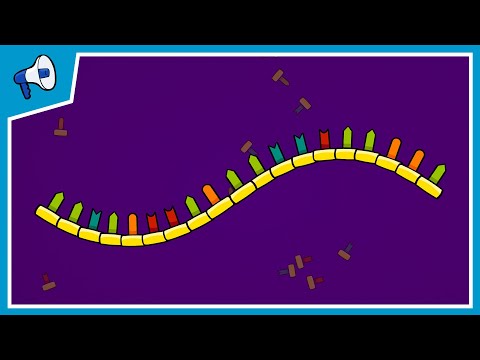
In this video, Stated Clearly discusses biochemical evolution. In particular, they look at RNA and the RNA World Hypothesis.

Type a concept, like “slope” or “photosynthesis”.

↑ ↓ to choose · Enter to openSearch explanations and problems