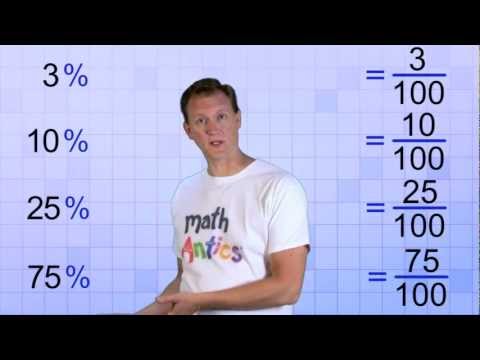
If a percent is just a fraction, with 100 as the denominator, why make a special thing of it? Why not just have fractions?
Fractions can be hard to compare, but percents make comparison at a glance much easier.
Suppose the pupils at two different schools voted on whether to abolish school holidays, and the votes in favor were like this:
At School A, 457 pupils out of a total of 985 voted to abolish holidays.
At School B, 518 out of 1137 voted to abolish holidays.
Which school had the larger proportion of pupils voting against school holidays? And was there a majority against holidays in either school?
The problem here is that the denominators of the two fractions are different. It's not so easy to compare 985457 (School A) to 1137518 (School B).
But, when we translate those fractions into percentages—we see this:
At School A, 46.4% voted to abolish holidays.
At School B, 45.6% voted to abolish holidays.
We have forced those two awkward fractions into forms which are easy to compare—and we can see that a slightly higher proportion of pupils at School A are against them, than at School B.
We were also asked if a majority of students voted to abolish holidays at either school. Both percentages are less than 50%. So, the answer to this question is no.
The price we pay for this convenience is a loss of information. These results are rounded, and we don't know how many students were in each school.
But it's much easier to compare the opinions of the two schools when we put things in percentages. If we were comparing more than two schools, we would appreciate the convenience of percentages even more.