Interactive · 5 questions
+3 contributors



Converting Repeating Decimals to Fractions
As with converting a non-repeating (i.e., "normal") decimal to a fraction, there are a few simple steps to follow to convert repeating decimals to fractions.
Think of a repeating decimal like a caterpillar. It's pretty gross looking, you don't really want to touch it, and it's made up of repeating parts. Same thing as a repeating decimal, at least to me.
Then, think of the fraction like a beautiful butterfly. Definitely preferable, much easier to handle. Our job is to get the caterpillar to transform into a butterfly.

Image source: By Clker-Free-Vector-Images CC0, via pixabay.com
Image source: By Shemesh CC0, via publicdomainpictures.net
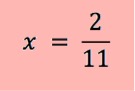
Let's walk through the steps of this conversion using the repeating decimal below:

Even though our decimal looks short here, you should think of it like . Don't be fooled.

What is the repeating segment in our decimal?

How many digits repeat in our decimal?
This means that we need to multiply our decimal by how many times?
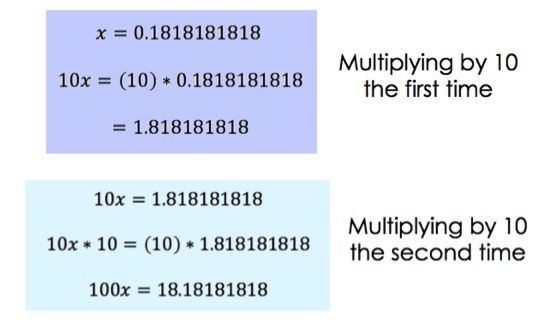
Notice that we have equations now. They are the first and last lines in the blue boxes above:
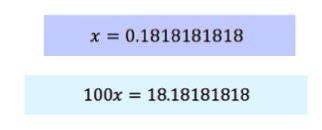


When we do this subtraction, what equation are we left with?
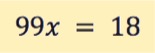

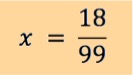
What is the greatest number that both the numerator () and the denominator () can be divided by?